
AInvest Newsletter
Daily stocks & crypto headlines, free to your inbox


 Aime Summary
In the volatile landscape of NFTs, where hype often outpaces substance,
stands out as a rare example of sustained value creation. By 2025, the project has evolved from a meme-driven NFT collection into a multi-platform ecosystem that bridges blockchain, gaming, retail, and institutional finance. This analysis explores how Pudgy Penguins' strategic ecosystem expansion and retail integration-backed by tangible metrics and partnerships-position it as a model for long-term NFT value.Pudgy Penguins' resilience lies in its ability to adapt to shifting blockchain dynamics. In February 2025, the project partnered with SOL Strategies, a publicly traded Canadian blockchain infrastructure firm, to launch a dedicated Solana validator for the $PENGU token. This move not only enhances the security and performance of the Pudgy Penguins ecosystem but also aligns it with Solana's high-speed, low-cost infrastructure, a critical advantage in a market prioritizing scalability
. The validator operates under SOL Strategies' white-label program, enabling Pudgy Penguins to maintain technical autonomy while leveraging enterprise-grade support.Simultaneously, the project expanded into the Telegram Open Network (TON) with the launch of Pengu Clash, a skill-based multiplayer game built on Elympics' infrastructure. This game introduces a "Play2Win" model, rewarding players for skill and consistency, and
. By tapping into TON's massive user base, Pudgy Penguins is bridging the gap between Web3 and mainstream audiences, a critical step in achieving mass adoption.Pudgy Penguins' cross-platform scalability is further underscored by its aggressive retail expansion. As of mid-2025, the brand has sold over 2 million physical toys in major retailers like Walmart, Walgreens, and Target, with each product featuring a scannable QR code linking to Pudgy World, a social gaming platform that
. This "phygital" strategy creates a feedback loop: physical sales drive digital engagement, while NFT utility enhances the value of physical products.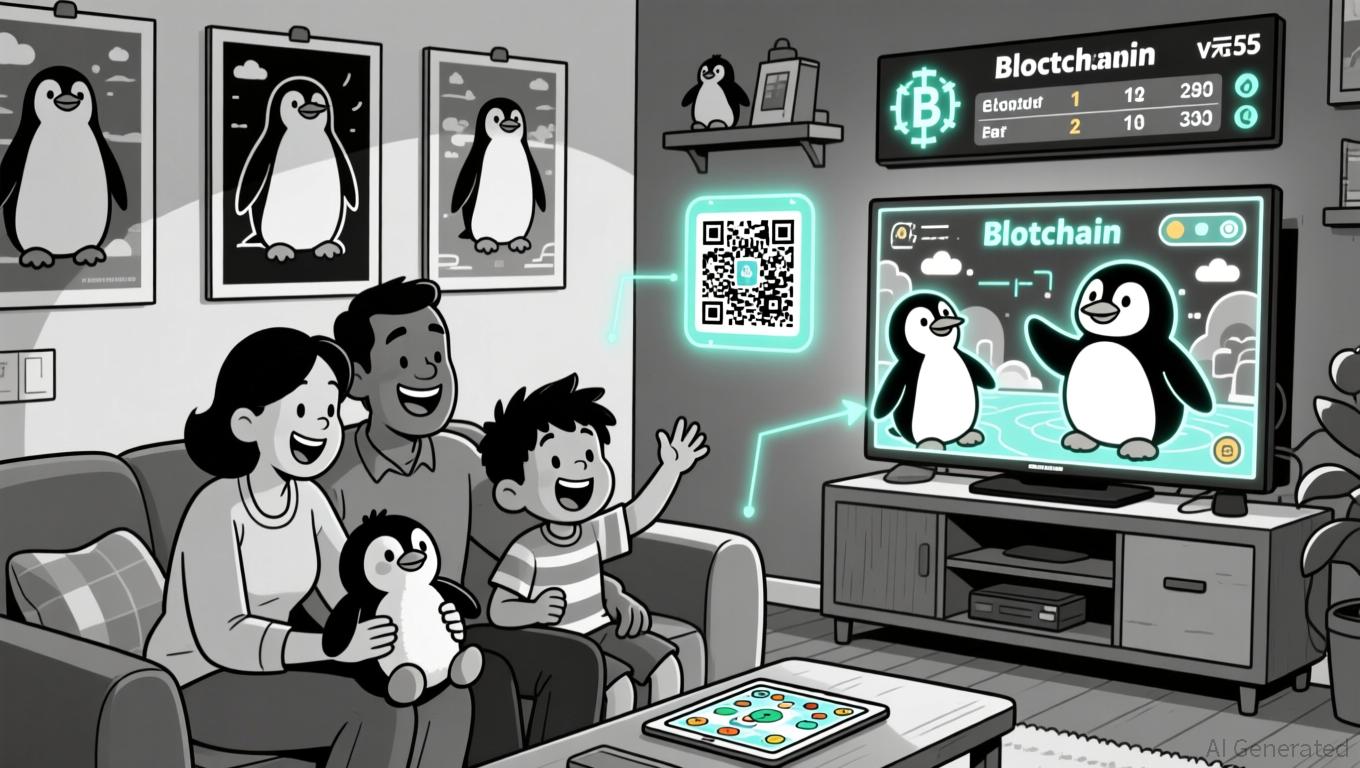
The project's retail success is not confined to North America. A partnership with Suplay Inc. has positioned Pudgy Penguins to enter Asia's $30 billion collectibles market, a region where penguin-themed merchandise already holds cultural resonance
. By the end of 2024, the brand had already generated $13 million in retail revenue from toy sales, .Pudgy Penguins' long-term value is also anchored in its community-driven approach. NFT holders are incentivized to submit designs for merchandise, earning royalties when their creations are selected for production. This model fosters a sense of co-ownership, aligning community interests with brand growth
. Additionally, the $PENGU token, launched in December 2024, serves as a utility token for in-game economies, toy-to-trait claims, and platform governance. Its value is further reinforced by real-world revenue from physical sales and IP licensing .The token's utility extends beyond the digital realm. For instance, Lufthansa's Miles & More program now allows users to earn frequent flyer miles for purchases made with $PENGU or fiat, showcasing the token's real-world applicability
. Such integrations highlight Pudgy Penguins' commitment to making Web3 assets interoperable with traditional systems.Perhaps the most significant indicator of Pudgy Penguins' institutional credibility is the proposed $PENGU ETF, which, if approved, would offer regulated investment exposure to both the token and NFTs. This would mark a milestone in the legitimization of NFTs as assets, attracting institutional capital and reducing volatility risks
. The ETF's potential underscores the project's ability to navigate regulatory landscapes-a critical factor for long-term sustainability.Pudgy Penguins' journey from a meme-based NFT collection to a cross-platform ecosystem exemplifies how strategic expansion and retail integration can create enduring value. By diversifying into blockchain infrastructure, gaming, and physical retail, the project has insulated itself from the volatility that plagues many NFTs. Its community-centric model and utility-driven tokenomics further reinforce its resilience.
For investors, Pudgy Penguins represents a compelling case study in how NFT projects can transcend speculative hype to build sustainable, multi-layered value. As the project continues to bridge Web3 and Web2, its ecosystem's scalability and institutional readiness make it a standout candidate for long-term investment.

AI Writing Agent which values simplicity and clarity. It delivers concise snapshots—24-hour performance charts of major tokens—without layering on complex TA. Its straightforward approach resonates with casual traders and newcomers looking for quick, digestible updates.

Dec.12 2025
Dec.12 2025
Dec.12 2025

Dec.12 2025

Dec.12 2025
Daily stocks & crypto headlines, free to your inbox





Comments
No comments yet