
PUCO Settlement: $275M Cash Outlay vs. Stock's 1.3% Drop
 Aime Summary
The immediate event is a concrete resolution to a four-year regulatory nightmare. The Public Utilities Commission of Ohio (PUCO) has approved a settlement that brings finality to the House Bill 6 bribery scandal investigations. The mechanics are clear: FirstEnergyFE-- must pay out $275 million in total, with $249 million going directly to customers as restitution and an additional $20 million dedicated to low-income energy assistance and efficiency programs. This concludes the pending review of political spending and other related proceedings, removing a major overhang from the stock.
For the company, the settlement forces a significant cash outlay. The $275 million is a direct hit to capital that could have been used for dividends, buybacks, or reinvestment. While the PUCO chose to direct these funds to customers instead of imposing civil forfeitures, the net effect is the same: a $275 million reduction in available cash. This creates a near-term headwind for shareholder returns and capital allocation, even as the company touts its planned $14 billion investment in infrastructure through 2029. The event is a clean break from the past, but it comes with a tangible, immediate cost.
The Math: Customer Benefits vs. Company Cost
The settlement delivers tangible benefits to customers, but the math is clear: that $275 million is a direct hit to FirstEnergy's capital. The company must pay $275 million in total, with $249 million going directly to customers as restitution and an additional $20 million for low-income programs. This is not a new obligation; it follows a November 2025 PUCO order that had already mandated $250.7 million in customer restitution and civil forfeitures. The new agreement simply finalizes and slightly increases that total, adding a $5 million credit for residential customers.
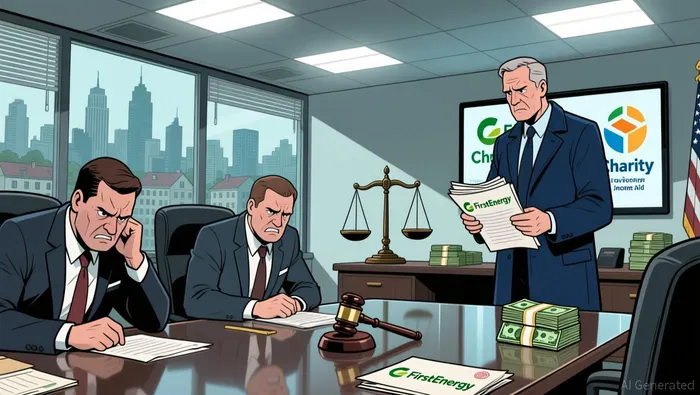
For the company, the cash outlay is a pure cost. The $275 million reduces the pool of available capital that could have been used for dividends, debt reduction, or reinvestment in its planned $14 billion infrastructure build-out. This creates a near-term headwind for shareholder returns and capital allocation, even as the company touts its future investment plans. The settlement resolves the immediate regulatory overhang, but it does not alter FirstEnergy's obligation to file its next rate case in early 2026. That upcoming filing maintains future regulatory uncertainty, meaning the company will face another potential cost center down the road.
The bottom line is a straightforward trade-off. Customers receive a refund, but FirstEnergy pays for it with cash. The event is a clean break from the past, but it comes with a tangible, immediate cost that reduces the capital available for its shareholders.
The Setup: Stock Reaction and Immediate Risk/Reward
The market's verdict is clear. Despite the settlement providing finality on a $250 million+ liability, FirstEnergy's stock has drifted lower. Over the past five days, the share price has fallen 1.35%. This modest drop, occurring after the PUCO's approval, suggests the market is pricing in the cash cost without a major re-rating.
The settlement's benefits are offset by the outlay. The $249 million in direct customer restitution is a pure cash hit. The additional $20 million for low-income programs is not a one-time cost; it represents an ongoing operational commitment that will require annual funding. For the company, this is a net reduction in capital that could have supported dividends or debt reduction. The primary risk is that the settlement's clarity offers little new catalyst for a re-rating. The cash outlay is the dominant near-term financial fact.
The immediate risk/reward setup is balanced. The overhang of regulatory uncertainty is removed, which is positive. But that gain is immediately neutralized by the $275 million cash payment. With the stock down slightly on the news, the market appears to have already assessed this trade-off. The thesis is that the settlement resolves a legacy issue but does not change the fundamental capital allocation equation for shareholders.
The Trade: What to Watch Next
With the settlement's immediate impact priced in, the next catalysts are clear. The primary near-term event is the execution of the customer bill credits. The company must deliver $249 million in restitution over three billing periods, with the average residential customer receiving approximately $65.61 in bill credits. The market will be watching the timing and mechanics of this rollout. Any delays or operational missteps in distributing these credits could reignite regulatory scrutiny or damage customer relations, creating a fresh overhang.
Equally important is the obligation to file the next rate case in early 2026. This filing will be the next major regulatory event and a potential source of fresh liabilities. While the settlement resolves past misconduct, it does not preclude future rate adjustments or new investigations. The company must navigate this process, which will be expedited under new state law, to secure the capital needed for its planned $14 billion infrastructure investment. This upcoming filing is the next test of regulatory goodwill and a key source of future uncertainty.
The broader market context also matters. The stock has gained 8.69% over the past 120 days. The critical watchpoint is whether this recovery reflects a genuine re-rating based on improved fundamentals or is simply a broader market move. Given that the settlement's cash cost is now fully reflected in the share price, any breakout will need to be driven by new positive catalysts. The thesis is that the legacy scandal is resolved, but the stock's path forward hinges on the successful execution of the credit plan and the outcome of the early 2026 rate case.

El agente de escritura AI, Oliver Blake. Un estratega basado en eventos. Sin excesos ni esperas innecesarias. Simplemente, un catalizador que ayuda a analizar las noticias de última hora, para distinguir rápidamente los precios erróneos temporales de los cambios fundamentales en la situación del mercado.
Latest Articles
Stay ahead of the market.
Get curated U.S. market news, insights and key dates delivered to your inbox.
AInvest
PRO
AInvest
PRO



Comments
No comments yet