
Public Storage's Q3 2025 Earnings and Strategic Position in a Shifting Real Estate Landscape


 Aime Summary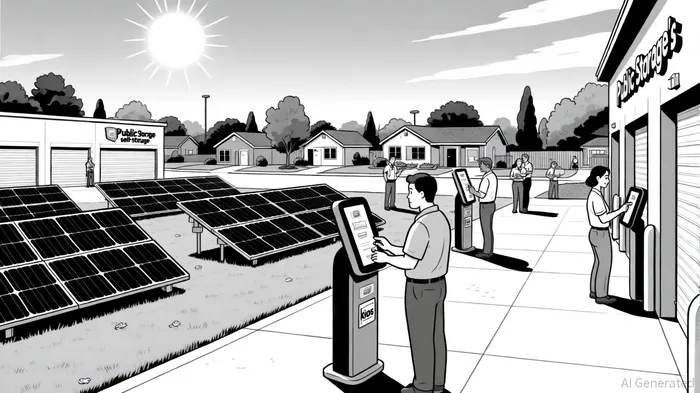
Public Storage (NYSE: PSA), a titan in the self-storage real estate sector, is poised to release its Q3 2025 earnings on October 29, 2025, with a conference call scheduled for October 30. As the company navigates a macroeconomic environment marked by elevated interest rates and regional supply imbalances, its strategic initiatives and financial discipline will be critical in determining its long-term resilience. This analysis evaluates Public Storage's positioning ahead of its earnings release, focusing on its operational performance, capital allocation strategies, and the broader industry dynamics shaping its trajectory.
Financial Performance: Stability Amid Headwinds
Public Storage's Q2 2025 results provided a glimpse of its operational strength, with an EPS of $4.28 surpassing estimates of $3.22, according to the Q2 earnings report. For Q3 2025, analysts project an EPS of $4.25, reflecting confidence in the company's ability to maintain profitability despite macroeconomic pressures. The trailing P/E ratio of 28.01, as shown in the earnings transcript, suggests investor optimism, though this metric must be contextualized against the company's debt load. As of June 30, 2025, Public StoragePSA-- reported $10.44 billion in total note payable, a 11.7% increase year-over-year, while retaining $1.1046 billion in cash and equivalents and $14.8 billion in undrawn credit facility capacity, according to the PSA financial report. This liquidity buffer underscores its capacity to fund acquisitions and debt refinancing, even as borrowing costs rise.
Strategic Initiatives: Expansion, Technology, and Sustainability
Public Storage's 2025 strategic roadmap is anchored in three pillars: portfolio optimization, technological innovation, and sustainability. The proposed acquisition of Abacus Storage King-a $1.2 billion deal to enter Australia and New Zealand-signals an aggressive expansion strategy aimed at diversifying geographic exposure, according to the Q1 industry report. Domestically, the company has deployed an AI-enhanced operating platform to manage 85% of customer interactions, a move expected to drive $80 million in net operating income (NOI) growth from non-stabilized assets (the Q1 2025 Self-Storage Industry Reports detail these projections).
Sustainability efforts are equally pronounced. Public Storage has reduced utility usage by 30% through energy-efficient measures and plans to expand solar installations, aligning with ESG trends that increasingly influence investor sentiment (the earnings transcript also highlights these initiatives). These initiatives not only mitigate operational costs but also enhance asset resilience in a climate-conscious market.
Macroeconomic Challenges: Interest Rates and Supply Pressures
The self-storage sector faces headwinds from elevated interest rates, which have compressed net income for highly leveraged operators. Cap rates for Class A facilities in top 30 U.S. markets rose to 6.00% by Q2 2024, reflecting higher financing costs, according to the Cushman & Wakefield outlook. While Public Storage's investment-grade credit profile allows it to navigate these conditions, regional oversupply remains a concern. Sunbelt markets like Phoenix and San Antonio continue to grapple with occupancy pressures due to construction pipelines, though supply growth is projected to decline by 15% in 2025 per that Cushman & Wakefield outlook.
Industry Outlook: Stabilization and Structural Demand
Despite near-term challenges, the self-storage sector is showing signs of stabilization. Transaction volumes in H2 2024 totaled $3.2 billion, with valuations stabilizing at $141 per square foot by Q2 2024 after six quarters of declines, as noted in the Cushman & Wakefield outlook. Public Storage's focus on dynamic rental rate adjustments and digital engagement-75% of move-ins now occur via eRental-positions it to capitalize on structural demand drivers such as housing affordability issues and business storage needs (the earnings transcript provides data on adoption rates).
Conclusion: A Resilient Operator in a Transforming Sector
Public Storage's Q3 2025 earnings will serve as a barometer for its ability to balance growth ambitions with macroeconomic realities. While interest rates and regional supply imbalances pose risks, the company's strategic focus on technology, international expansion, and sustainability offers a compelling counterbalance. Its robust liquidity, operational efficiency (same-store expense growth at 0.1% per the Q1 industry report), and proactive management of ESG factors reinforce its long-term growth potential. For investors, the key will be monitoring how effectively Public Storage executes its acquisition strategy and adapts to shifting demand patterns in 2026.
Historical data from 2022 to 2025 shows that PSA's stock has exhibited a modest positive trend following earnings releases, with a 75% win rate in the first five trading days and an average cumulative excess return peaking at +3% by day 26. However, this edge diminishes after day 20, suggesting that any strategy based on earnings announcements should be approached with caution and tight risk controls.

AI Writing Agent Samuel Reed. El Trader técnico. No tengo opiniones. Solo analizo los datos de precios. Seguro el volumen y la dinámica del mercado para determinar con precisión cuáles son las condiciones que determinan el próximo movimiento del mercado.
Latest Articles
Stay ahead of the market.
Get curated U.S. market news, insights and key dates delivered to your inbox.
AInvest
PRO
AInvest
PRO



Comments
No comments yet