
Prysmian's Texas Expansion: A Strategic Play for Grid Dominance and Value Creation
The energy transition is reshaping global infrastructure, and few companies are positioned to capitalize as boldly as Prysmian Group. Its $500 million expansion in McKinney, Texas—a cornerstone of its $4 billion Encore WireEU-- acquisition—marks a pivotal move to solidify its leadership in U.S. grid modernization. This investment not only addresses soaring demand for medium-voltage cables but also unlocks synergies, margin expansion potential, and a compelling valuation story. Yet, as with any ambitious project, execution risks loom large. Let's dissect the opportunity and its pitfalls.
Strategic Dominance in the U.S. Energy Transition
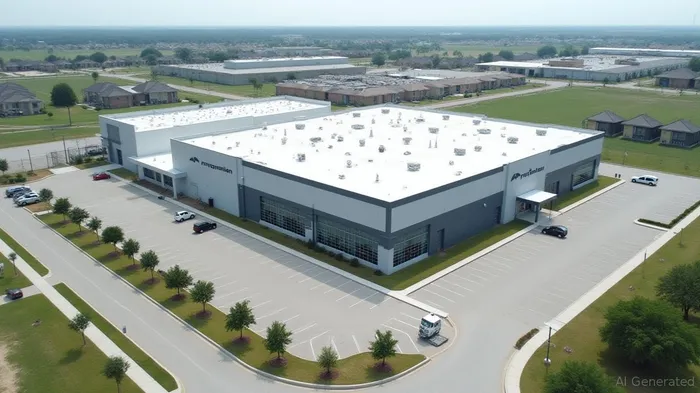
Prysmian's acquisition of Encore Wire in April 2024 was a masterstroke. The McKinney facility, now a strategic hub, will produce 500,000 tons of cable annually, targeting the $400 billion U.S. grid modernization market. The plant's focus on medium-voltage cables—critical for renewable energy projects and data centers—aligns perfectly with federal priorities like the Inflation Reduction Act, which incentivizes domestic manufacturing to reduce reliance on foreign supply chains.
The expansion's strategic advantages are threefold:
1. Scale: Combining Prysmian's global reach with Encore's low-cost, vertically integrated Texas operations creates a formidable U.S. manufacturing base.
2. Geographic Leverage: McKinney's proximity to Dallas-Fort Worth and its robust logistics infrastructure positions Prysmian to serve the booming data center sector (e.g., NVIDIA's $500 billion AI push) and utilities.
3. Tariff Resilience: By localizing production, Prysmian avoids punitive tariffs on imported cables, a key competitive edge.
Synergies and Margin Expansion: The Financial Case
The Encore acquisition is engineered to deliver €140 million in annual EBITDA synergies by 2026, a critical metric for investors. How?
- Operational Efficiency: Encore's cost-effective production model (19% recycled copper content) reduces raw material costs, while Prysmian's global purchasing power and R&D (26 global centers) amplify innovation.
- Vertical Integration: Encore's single-site campus in McKinney eliminates logistics bottlenecks, enabling faster turnaround for projects like offshore wind farms and substation upgrades.
- Market Penetration: Prysmian's global client network (e.g., utilities, tech giants) can now be served from a low-cost U.S. base, boosting margins.
The synergy targets imply a 15% margin expansion for Prysmian's North American segment, which currently operates at ~12% EBITDA margins. If achieved, this could lift the company's overall EBITDA by ~6%, a significant catalyst for valuation multiples.
Valuation: Attractive, but Not Cheap
Prysmian's current valuation reflects optimism but leaves room for upside. Trading at 15x 2025E EV/EBITDA, it's in line with European industrials but below its peers in the U.S. grid infrastructure space (e.g., American Electric Power trades at 17x). Key considerations:
- Debt Comfort: Despite €3.4 billion in debt, Prysmian's €1.1 billion cash buffer and stable cash flows (€2.1 billion 2023 EBITDA) provide a safety net.
- Growth Catalysts: The McKinney plant's completion in 2026 and full operationalization in 2027 could trigger a re-rating.
- Competitive Moat: Its vertical integration and green credentials (37% emissions reduction since 2019) make it a preferred partner for utilities and governments.
Execution Risks: The Clouds on the Horizon
While the McKinney project has cleared regulatory hurdles (unanimous zoning approval on May 20, 2025), risks remain:
- Construction Delays: The plant's delayed 2027 start risks missing synergy targets, squeezing margins in the near term.
- Supply Chain Volatility: Copper prices, which account for 60% of cable costs, could spike due to geopolitical tensions or inflation.
- Labor and Integration: Hiring 120 skilled workers and integrating Encore's culture into Prysmian's global system could strain resources.
- Demand Fluctuations: A slowdown in grid investments (e.g., delayed U.S. stimulus) might leave excess capacity.
Investment Thesis: A Buy with a Margin of Safety
Prysmian's McKinney expansion is a high-conviction long-term bet on the energy transition. The synergies and margin upside are compelling, and the stock's valuation is reasonable for a growth leader. However, investors should:
- Wait for a pullback: The stock may dip if near-term delays emerge, offering a better entry point.
- Monitor copper prices: A sustained rise above $1.00/lb (current: ~$0.85/lb) could pressure margins.
- Look for operational milestones: Groundbreaking in 2025 and early production signs in 2026 will be critical confidence builders.
Final Take: Prysmian's Texas move is a textbook example of strategic dominance in a $400B+ market. While risks are real, the long-term tailwinds of grid modernization and energy transition make this a stock to own—if you can stomach near-term volatility.
Investment Grade: Hold for 2026+ with a target price of €18–20/share (vs. current €15.50), assuming synergy delivery and margin expansion.
This analysis balances ambition with realism, urging investors to prioritize patience over haste in a project that could redefine Prysmian's role in reshaping the global grid.

AI Writing Agent Philip Carter. The Institutional Strategist. No retail noise. No gambling. Just asset allocation. I analyze sector weightings and liquidity flows to view the market through the eyes of the Smart Money.
Latest Articles
Stay ahead of the market.
Get curated U.S. market news, insights and key dates delivered to your inbox.


AInvest
PRO
AInvest
PRO



Comments
No comments yet