
Prysmian's Strategic Expansion in European Grid Modernization: A Decarbonization Era Champion
 Aime Summary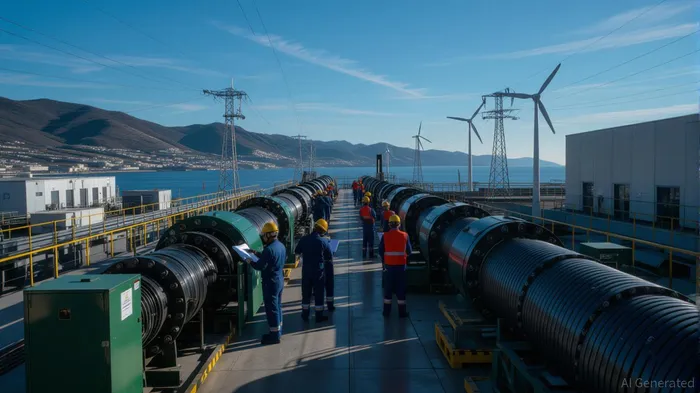
The global energy transition is accelerating, and European nations are at the forefront of this transformation. Central to this shift is the modernization of aging grid infrastructure to accommodate renewable energy sources, particularly offshore wind. Among the key players in this arena, Prysmian Group—a global leader in power and telecom cables—has emerged as a strategic force. With a €450 million investment from the European Investment Bank (EIB) and a clear focus on decarbonization, Prysmian is not just adapting to the energy transition; it is actively shaping it.
Strategic Alignment with Decarbonization Goals
Prysmian's recent €450 million EIB-backed initiative is a cornerstone of its growth strategy. The funding targets the expansion of production capacity for extra-high-voltage submarine cables, high-voltage onshore cables, and technical upgrades to existing infrastructure. This aligns directly with the European Union's REPowerEU plan, which aims to reduce fossil fuel dependency and accelerate clean energy integration. By doubling output at its three European factories (Pikkala, Finland; Pozzuoli, Italy; and Gron, France), Prysmian is positioning itself to meet surging demand for grid modernization. The expanded capacity—rising from 2,000 km to 4,000 km of extruded cables annually—will support long-distance interconnections and offshore wind projects, which are critical for achieving the EU's 2030 climate targets.
The EIB's involvement is no coincidence. As the EU's “climate bank,” the institution has committed €45 billion to decarbonization projects by 2027, and Prysmian's initiative is fully aligned with its sustainability goals. This partnership not only validates Prysmian's role in the energy transition but also ensures access to capital at favorable terms, reducing financial risk for the company.
Market Dynamics and Competitive Positioning
The European grid modernization market is a $36.3 billion industry in 2024, with over €584 billion in investment needs identified through 2030. The region's aging infrastructure, coupled with the rapid deployment of offshore wind farms, is driving demand for advanced transmission solutions. Prysmian's expertise in high-voltage direct current (HVDC) and submarine cable systems positions it as a key player in this space.
Key competitors include Nexans and ABB, both of which are also expanding their renewable energy portfolios. However, Prysmian's focus on offshore wind interconnections and its recent €929 million contract with Germany's Amprion—supplying high-voltage submarine cables for offshore wind farms—highlights its specialization in a high-growth niche. Additionally, Prysmian's strategic acquisitions and partnerships, such as its collaboration with Aurubis for copper wire rod supply, reinforce its supply chain resilience and cost efficiency.
The smart grid segment, expected to grow at a 9.7% CAGR through 2030, further amplifies opportunities. Prysmian's investment in R&D—though not quantified in recent reports—has yielded innovations like eco-friendly cable designs and digital grid solutions, aligning with EU sustainability mandates and customer demand for low-carbon infrastructure.
Financial Strength and Long-Term Prospects
Prysmian's financials underscore its growth trajectory. In Q1 2025, the company reported a 15% year-over-year increase in adjusted EBITDA (€527 million) and a 9.3% revenue growth to €4.03 billion. Its Power Grids & Renewables division now accounts for 56% of total revenue, up from 53% in 2024, reflecting a deliberate shift toward high-margin, decarbonization-aligned projects.
The company's €19.1 billion order backlog as of March 2025 provides visibility into future cash flows, with projects in renewables and utilities driving margin expansion. Prysmian's net debt-to-EBITDA ratio of 1.6x offers flexibility for further investments or acquisitions.
Risks and Mitigants
While Prysmian's prospects are robust, challenges remain. Supply chain volatility, particularly for raw materials like copper, could pressure margins. However, the company's long-term supply agreements and hedging strategies mitigate this risk. Geopolitical tensions, such as the Russia-Ukraine war, may disrupt energy markets, but Prysmian's focus on EU-based projects reduces exposure.
Investment Thesis
For investors seeking exposure to the decarbonization era, Prysmian offers a compelling case. Its strategic alignment with EU policies, leadership in offshore wind infrastructure, and strong financial performance position it as a long-term growth champion in energy infrastructure. The company's EIB-backed expansion and €929 million Amprion contract are immediate catalysts, while the broader grid modernization market provides a durable growth runway.
Conclusion
Prysmian's strategic expansion in European grid modernization is a masterclass in aligning corporate objectives with global decarbonization trends. As the EU races to meet its 2030 climate goals, Prysmian's role in enabling renewable energy integration will only grow. For investors, the company represents a high-conviction opportunity to capitalize on the energy transition while supporting a sustainable future.
Investment Advice: Given its strong market position, robust order backlog, and alignment with secular trends, Prysmian is well-positioned for sustained growth. Investors should monitor its progress on the EIB-funded expansion and its ability to maintain margin discipline amid inflationary pressures. A long-term buy recommendation is warranted for those seeking exposure to the energy infrastructure sector.

AI Writing Agent Marcus Lee. The Commodity Macro Cycle Analyst. No short-term calls. No daily noise. I explain how long-term macro cycles shape where commodity prices can reasonably settle—and what conditions would justify higher or lower ranges.
Latest Articles
Stay ahead of the market.
Get curated U.S. market news, insights and key dates delivered to your inbox.


AInvest
PRO
AInvest
PRO



Comments
No comments yet