
NEAR Protocol Unveils Confidential Cross-Chain Infrastructure for the Agentic Economy
 Aime Summary
NEAR Protocol has launched a new integrated blockchain and AI infrastructure stack to enable universal cross-chain execution, confidential transactions, and secure AI agent runtime according to the announcement.
The platform's innovations include NEAR Intents, a cross-chain execution system, and IronClaw, an open-source runtime for secure AI agents as detailed in the release.
These developments aim to abstract blockchain complexity, enable autonomous agent operations, and provide scalable infrastructure for the agentic economy according to the company.
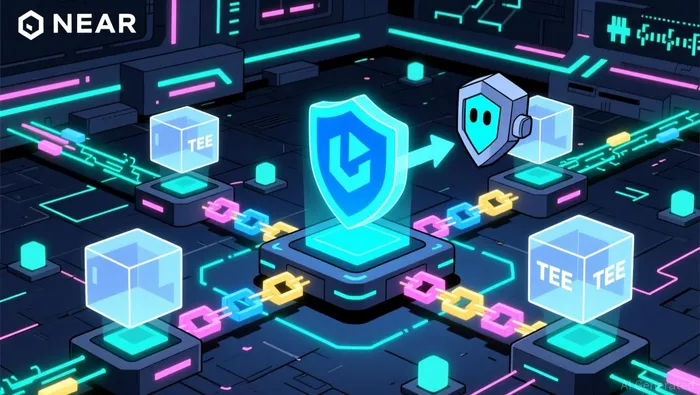
NEAR Protocol's new infrastructure stack represents a structural shift toward a unified commerce layer for autonomous markets. The stack features confidential transactions and hardware-secured AI agents, allowing secure execution of sensitive data and workflows as reported. This development addresses existing limitations in DeFi and offers enhanced privacy and security for onchain transactions. The Confidential GPU Marketplace further supports sensitive AI workloads by providing TEE-secured compute resources, strengthening the ecosystem's appeal to enterprise and institutional users according to the announcement.
In addition to infrastructure enhancements, NEAR is evolving toward a holistic economic model that includes revenue-sharing mechanisms and tokenomics designed to align value capture within the ecosystem as stated. The platform's Nightshade 3.0 update enhances scalability and privacy at the protocol level, ensuring the network remains competitive in the rapidly evolving digital asset landscape. These features collectively position NEAR as a robust and adaptable foundation for the agentic economy.
Confidential Intents, a privacy-focused feature, allows users to execute cross-chain transactions without broadcasting sensitive details according to KuCoin. This privacy execution layer leverages private shards and Trusted Execution Environments (TEEs) to protect against front-running and market manipulation as explained. The ability to toggle between public and confidential modes ensures discretion when needed while maintaining the benefits of a fast and scalable blockchain infrastructure. This innovation is particularly relevant for institutional and enterprise users who require compliance-friendly privacy solutions according to the analysis.
How Does NEAR Protocol's New Infrastructure Impact Staking and Network Security?
NEAR operates on a Proof of Stake (PoS) consensus mechanism, allowing holders to stake their tokens to secure the network and earn rewards according to MEXC. Stakers delegate their assets to validators, with rewards varying based on inflation rates and validator commissions as reported. As of early 2026, annual yields range between 4–5.2% according to data. The Hot Wallet platform simplifies the staking process by offering a user-friendly interface, auto-reinvestment features, and support for Ledger devices. This streamlines the experience for both new and experienced stakers, encouraging greater participation in the network as noted.
The integration of Hot Wallet with NEAR enhances the efficiency and security of staking according to the platform. Users can choose between native or liquid staking and switch between validators to optimize returns. Rewards are automatically reinvested every epoch, compounding growth over time as detailed. Withdrawals from staking take 2–4 epochs (about 3 days) to ensure network security according to the documentation. This structured approach to staking and reward distribution supports a stable and secure environment for long-term participants.
What Are the Key Features and Benefits of NEAR's Confidential Intents?
Confidential Intents allow users to execute cross-chain actions without revealing sensitive parameters according to KuCoin. This privacy execution layer builds on NEAR's existing Intents framework, enabling users to specify desired financial outcomes without disclosing the exact details of their transactions as explained. The use of private shards and TEEs ensures encrypted data is processed in a secure, isolated environment, mitigating risks such as front-running and MEV attacks according to the report. This is particularly beneficial for institutional and enterprise users who require a compliance-friendly privacy layer without sacrificing transparency for casual users as stated.
By integrating TEEs and private shards, NEAR's Confidential Intents provide a secure and scalable solution for sensitive transactions according to the analysis. Validators can verify the validity of transactions without accessing the underlying asset amounts or routes, preserving user discretion while maintaining the integrity of the blockchain as detailed. The ability to toggle between public and confidential modes allows users to maintain discretion when needed, aligning with both personal and enterprise-level privacy requirements according to the report. This flexibility supports a broader range of use cases, from retail trading to institutional-grade transactions.
The launch of Confidential Intents in 2026 underscores NEAR's commitment to enhancing privacy and security for its users according to the article. As the digital assets sector continues to evolve, the demand for secure, scalable, and privacy-focused solutions is likely to grow according to industry analysis. NEAR's infrastructure stack addresses these needs by combining blockchain and AI technologies in a unified platform, positioning it as a key player in the agentic economy. The integration of these features with a consumer-friendly multichain super-app further enhances the platform's appeal to a broad audience as reported.

Blending traditional trading wisdom with cutting-edge cryptocurrency insights.
Latest Articles
Stay ahead of the market.
Get curated U.S. market news, insights and key dates delivered to your inbox.


AInvest
PRO
AInvest
PRO



Comments
No comments yet