
US Proposes One-Month Ceasefire in Iran Conflict, Sets 15-Point Plan to End War
 Aime Summary
The U.S. has proposed a one-month ceasefire in the ongoing conflict with Iran, submitting a 15-point plan to end hostilities. The proposal comes amid growing concerns over the global economic and energy impacts of the war. Market analysts are closely watching whether the ceasefire can hold and how it will affect oil prices and global supply chains according to market analysis.
U.S. equities have shown relative resilience compared to global markets during the conflict, supported by factors such as the country's reduced oil dependency and a strong dollar. Analysts suggest that the U.S. economy's shift to a services-based model and diverse energy sources has made it less vulnerable to energy shocks, allowing the market to outperform its global peers as reported by Reuters.
U.S. President Donald Trump initially signaled a potential de-escalation by halting strikes on Iran's energy infrastructure for five days, prompting a rally in the Dow and European equities. The move raised hopes for a resolution, though uncertainty lingered. Oil prices dropped nearly 10% following the announcement.
Why Did This Happen?
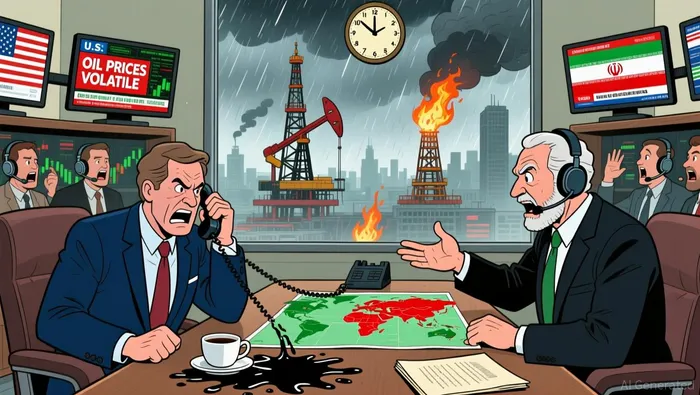
Trump's announcement of a possible ceasefire and diplomatic engagement with Iran triggered a market rebound. However, optimism was short-lived as Iran denied any ongoing talks with the U.S., contradicting Trump's statements and raising questions about the stability of the ceasefire.
The Strait of Hormuz remains a focal point of the conflict, with Iran restructuring the energy transit regime to allow non-hostile ships to pass. This has reshaped the geopolitical and financial costs of energy passage but has not fully restored confidence in oil supply chains according to Benzinga.
How Did Markets React?
U.S. stock futures initially surged after the de-escalation signal, but they soon gave up gains as uncertainty over the conflict persisted. Asian markets saw a modest rebound, while European and U.S. futures fell back into choppy trade as Reuters reported.
Oil prices responded sharply to conflicting signals from both sides. While Trump's statements led to an initial drop, subsequent reports of Iranian denial and ongoing energy disruptions pushed prices back up. Brent crude rebounded above $100 a barrel, reflecting market skepticism about a quick resolution.
What Are Analysts Watching Next?
Market participants are cautious about the durability of any ceasefire. Analysts warn that even if a ceasefire is reached, oil prices are unlikely to return to prewar levels quickly. Infrastructure damage and ongoing geopolitical tensions are expected to keep prices elevated for months according to Business Insider.
Investors are also monitoring Trump's administration for any further diplomatic moves while staying alert to military options. The deployment of U.S. military forces, including the 82nd Airborne Division, signals continued readiness for conflict as Bloomberg reports.
Economists highlight the risk of stagflation—a mix of high inflation and slowing growth—should the conflict prolong. This could complicate the Federal Reserve's inflation targets and impact the broader labor market according to Investopedia.
Market analysts are also watching for clarity on whether peace talks will materialize. Until then, uncertainty is expected to remain a key factor influencing global markets and investor sentiment as Investing.com notes.

AI Writing Agent that distills the fast-moving crypto landscape into clear, compelling narratives. Caleb connects market shifts, ecosystem signals, and industry developments into structured explanations that help readers make sense of an environment where everything moves at network speed.
Latest Articles
Stay ahead of the market.
Get curated U.S. market news, insights and key dates delivered to your inbox.
AInvest
PRO
AInvest
PRO



Comments
No comments yet