
Progressive (PGR) Rises 0.59% Despite 59.73% Volume Drop Ranks 209th in U.S. Trading Amid NYC Political Shifts
 Aime Summary
Market Snapshot
, 2025, despite a significant decline in trading volume. , , and ranked 209th in terms of volume among listed U.S. equities. While the price gain suggests modest investor optimism, the sharp reduction in volume may indicate limited participation or a lack of conviction in the move.
Key Drivers
The stock’s performance appears decoupled from its immediate trading data, as the provided news articles focus on unrelated political developments in New York City rather than PGR’s business operations. However, the broader market context and indirect policy implications may offer indirect insights into investor behavior.
The articles center on Zohran Mamdani, New York City’s newly elected mayor, and his contentious yet cordial interactions with President . , a self-identified democratic socialist, maintained his critical stance toward Trump, labeling him a “fascist” and “despot” during and after their White House meeting. Despite these public disagreements, both leaders emphasized shared priorities on affordability and governance, with Trump expressing support for Mamdani’s agenda and even suggesting he would “cheer” for the incoming mayor. This dynamic highlights a strategic pivot by Mamdani to engage with Trump on pragmatic issues while preserving ideological boundaries, a balancing act that has drawn mixed reactions from progressive peers like Boston’s Mayor .
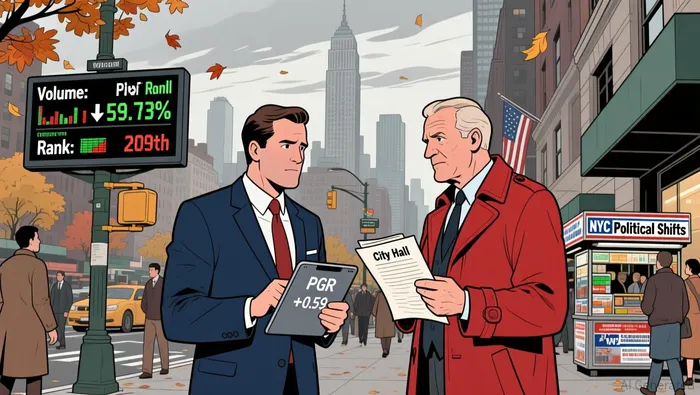
While the news does not directly reference The Progressive, the insurance sector—particularly property and casualty insurers—often faces regulatory and policy headwinds influenced by political shifts. For instance, debates over affordability and public services could indirectly impact insurance markets through changes in housing policies, tenant protections, or municipal budgets. PGR, as a major player in the U.S. insurance landscape, may benefit from or face challenges stemming from evolving regulatory frameworks or economic conditions shaped by such political dialogues.
The meeting also underscored the polarized approaches among progressive leaders toward engaging with the Trump administration. Mamdani’s strategy of maintaining ideological clarity while pursuing collaboration contrasts with figures like Wu, who caution against courting a “hostile leader.” This divergence could signal broader uncertainties in policy alignment, which might affect sectors reliant on municipal contracts or regulatory stability. Investors in PGR may be monitoring whether such political dynamics create favorable conditions for insurance-related policies or regulatory reforms.
Finally, the news reflects a broader narrative of political pragmatism in a post-election landscape. Mamdani’s ability to navigate contentious relationships while advancing his agenda could influence market sentiment toward companies operating in sectors affected by policy changes. While PGR’s immediate performance appears modest, the long-term implications of these political developments—particularly around affordability and public policy—could shape the insurance industry’s operating environment in 2026 and beyond.
The disconnect between the stock’s trading data and the political news underscores the importance of isolating company-specific factors in back-testing and analysis. For PGR, the current move may be more attributable to macroeconomic or sector-specific trends than the events detailed in the provided articles. However, the broader political climate and its potential regulatory ripple effects remain a latent factor to monitor in future performance evaluations.

Stay ahead of the market.
Get curated U.S. market news, insights and key dates delivered to your inbox.


AInvest
PRO
AInvest
PRO



Comments
No comments yet