
The Productivity Monitoring Surge: Growth Opportunities Amid Regulatory Crosscurrents
The shift to hybrid and remote work models, accelerated by the pandemic, has created a seismic shift in how organizations manage employee productivity. As companies grapple with the challenges of monitoring output in a distributed workforce, the demand for employee productivity monitoring software has skyrocketed. This sector is now poised for explosive growth, driven by technological innovation and evolving workplace dynamics. However, regulatory risks loom large, threatening to disrupt the trajectory of this nascent industry. For investors, the question is clear: How can one capitalize on the boom while mitigating compliance pitfalls?
The Growth Engine: Remote Work, Tech, and Market Momentum
The employee productivity monitoring software market has grown from $1.12 billion in 2021 to an estimated $648.8 million in 2025—a figure that understates its potential. By 2032, it is projected to hit $1.465 billion, fueled by a 12.3% CAGR (). This growth is not merely about monitoring; it reflects a broader transformation toward algorithmic management, where AI-driven tools analyze workflows, predict bottlenecks, and even gamify task completion.
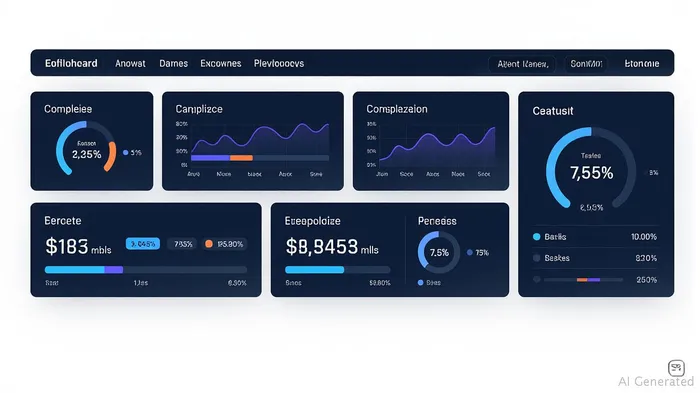
Key drivers include:
- Remote Work Paranoia: Over 85% of employers now express concerns about productivity gaps, per Microsoft's 2022 report. This has spurred a 75% surge in searches for monitoring tools since 2020.
- AI and Cloud Integration: Platforms like Oracle Fusion Cloud HCM and Asana's AI tools are automating workflows and offering predictive analytics, reducing operational friction.
- Regulatory Compliance Needs: With data breaches costing companies an average of $4.45 million (IBM's 2023 report), tools that monitor insider threats are becoming critical for risk mitigation.
The productivity management software market, a broader category encompassing these tools, is even larger, valued at $74.95 billion in 2024 and set to hit $155.59 billion by 2029 (). This reflects a sector in hyperdrive, driven by hybrid work, cybersecurity demands, and the need for data-driven performance insights.
Regulatory Risks: The Elephant in the Dashboard
While the growth story is compelling, regulatory headwinds could cap upside. The General Data Protection Regulation (GDPR) in the EU and California's CCPA have already forced companies to adopt strict data consent protocols. For example, Veriato Inc. faced scrutiny in 2023 for its keystroke-logging tool, which required explicit employee opt-ins—a hurdle for adoption.
The risks go beyond compliance costs:
- Employee Backlash: Over-surveillance can erode trust, leading to higher turnover or lawsuits. A 2024 Gallup study found that 70% of remote workers feel “monitored excessively” dampens their morale.
- Emerging Regulations: Proposals like the EU's AI Act, which classifies “worker surveillance” systems as “high-risk,” could impose caps on data usage and require third-party audits.
Navigating the Landscape: Where to Invest
Despite these risks, the sector offers rich opportunities for investors who focus on defensible, compliant, and multi-functional platforms. Here's how to position for upside:
1. Cloud-Based Solutions
- Why? Over 76% of businesses now use cloud platforms for real-time monitoring, prioritizing scalability and cost efficiency.
- Top Picks:
- Microsoft (MSFT): Its Azure cloud integrates with productivity tools like Teams and Power BI, offering end-to-end solutions.
- Salesforce (CRM): Its Einstein analytics suite analyzes employee performance data without invasive surveillance.
2. AI-Driven Predictive Analytics
- Why? Tools like Pendo's Pendo Adopt and Asana's AI reduce the need for “Big Brother” monitoring by predicting workflow inefficiencies.
- Top Picks:
- Adobe (ADBE): Its Workfront platform uses AI to optimize project timelines and resource allocation.
- Zoho Corporation: Its Zoho One suite offers integrated productivity tracking with minimal privacy intrusions.
3. Compliance-First Firms
- Why? Companies like Teramind Inc. and Trackops are building GDPR-compliant frameworks, making them more palatable to regulated industries (e.g., healthcare, finance).
4. Avoid Over-Surveillance Players
- Firms relying solely on keystroke logging or screen recording (e.g., Kisi) face regulatory and reputational risks. Diversify into platforms that emphasize transparency and employee consent.
Conclusion: A Balancing Act
The employee productivity software market is a high-reward, high-risk arena. While its $155 billion valuation by 2029 is within reach, investors must prioritize firms that blend innovation with compliance. The winners will be those that treat employees as partners in productivity, not subjects of surveillance.
Final Take: Allocate to cloud-native, AI-powered platforms with strong compliance track records. Avoid pure-play surveillance vendors. The future belongs to tools that enhance productivity while respecting autonomy—and that's a growth story worth betting on.

Delivering real-time insights and analysis on emerging financial trends and market movements.
Latest Articles
Stay ahead of the market.
Get curated U.S. market news, insights and key dates delivered to your inbox.
AInvest
PRO
AInvest
PRO



Comments
No comments yet