
Procter & Gamble's Sustainable Packaging Revolution: Navigating Policy Headwinds and Seizing Market Leadership
The global push for sustainability has transformed environmental policy compliance from a cost center into a strategic imperative. For consumer goods giants like Procter & Gamble (P&G), the challenge is twofold: to align with tightening regulations while differentiating their brands in a crowded market. P&G's recent pivot toward sustainable packaging—rooted in innovation, policy advocacy, and circular economy principles—offers a blueprint for how companies can turn regulatory pressures into competitive advantages.
Environmental Policy Compliance: A Necessity, Not a Choice
The regulatory landscape for packaging is evolving rapidly. The European Union's 2025 directive mandates that 10% of packaging must be reusable by 2027, while Portugal aims for 30% reusable packaging by 2030. Globally, a binding UN treaty on plastic pollution, supported by P&G, seeks to harmonize standards and enforce Extended Producer Responsibility (EPR). Against this backdrop, P&G's compliance strategy is both proactive and comprehensive.
By 2023, P&G had achieved zero manufacturing waste to landfills across 100 sites, diverting 676,000 metric tons of waste. Its commitment to reducing virgin plastic by 50% (vs. 2017 levels) has made measurable progress—though it still faces headwinds, having reduced usage by just 13% as of 2023. The company's endorsement of EPR frameworks, particularly in regions with robust recycling systems, underscores its willingness to share accountability for post-consumer waste.
Market Differentiation: Turning Sustainability into a Brand Asset
P&G's true edge lies in its ability to translate environmental goals into consumer-facing value. Consider its award-winning innovations:
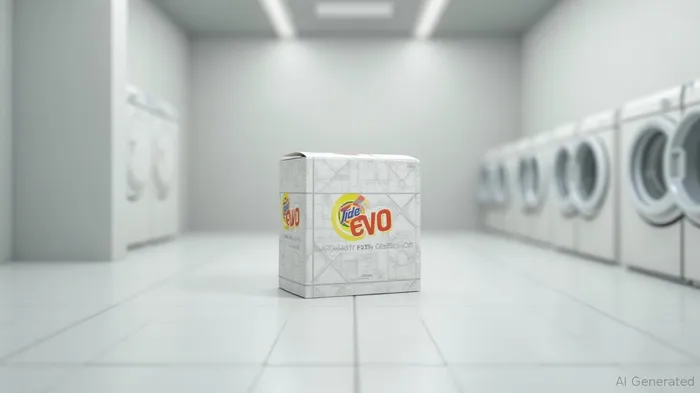
- Tide evo: A detergent tile that eliminates liquid packaging, reducing plastic use by 90% and winning the 2025 PAC Global “Best in Show” award.
- Air Capsule: A flat, recyclable e-commerce package that inflates into a rigid container, cutting transport emissions by 25%.
- Dawn Powerwash: A reusable spray trigger design that reduces plastic waste by 65%, paired with refillable options.
These products not only meet regulatory demands but also cater to a growing consumer base prioritizing eco-conscious choices. P&G's partnerships—such as its $100 million investment in Circulate Capital's waste infrastructure fund—further signal its commitment to systemic solutions, enhancing brand trust.
Challenges and Risks: The Uncharted Terrain of Flexible Plastics
Despite progress, P&G faces hurdles. Flexible plastics—accounting for 19% of its packaging—remain a stubborn challenge due to poor recyclability. While innovations like VersoVita™ (a polypropylene recycling technology) are promising, scaling these solutions requires collaboration with governments and competitors.
Financially, P&G's Q3 FY2025 results highlight the tension between sustainability and profitability. Net sales dipped 2% to $19.8 billion, though organic sales grew 1% due to pricing. Core EPS rose 1% to $1.54, but currency headwinds ($200M projected for 2025) and commodity costs pose risks.
Investment Implications: A Long-Term Play on Sustainability Leadership
P&G's strategic shift aligns it with a $1 trillion global circular economy opportunity, as outlined by the Ellen MacArthur Foundation. Its early adoption of reusable/reducible packaging designs positions it to capitalize on regulatory tailwinds, such as the EU's 2025 packaging laws. Meanwhile, its premium innovations (e.g., Olay's tactile symbols for accessibility) cater to niche markets, boosting margins.
Investors should monitor two key metrics:
1. Progress toward 2030 goals: Achieving 100% recyclable/reusable packaging and a 50% reduction in virgin plastic will be critical to maintaining regulatory compliance and market share.
2. Cost management: P&G's ability to offset rising commodity and currency costs through productivity gains (e.g., 90 basis points of operating margin improvement in Q3) will determine its profitability trajectory.
Conclusion: A Sustainable Future, Priced for Caution
P&G's pivot to sustainable packaging is not merely a response to policy—it is a strategic bet on consumer and regulatory alignment. While risks like flexible plastics and economic uncertainty linger, the company's track record of innovation and its leadership in circular economy partnerships suggest it is well-positioned to navigate this transition. For investors, P&G remains a core holding in consumer staples, but its valuation (currently trading at 21x forward P/E) demands patience. Monitor progress on 2030 milestones; success could unlock a secular growth story in an increasingly sustainability-driven world.
Investment recommendation: Hold P&G for long-term sustainability leadership, but proceed cautiously amid near-term margin pressures.

Stay ahead of the market.
Get curated U.S. market news, insights and key dates delivered to your inbox.


AInvest
PRO
AInvest
PRO



Comments
No comments yet