
U.S. Probes China's Shipbuilding Practices Amid Trump's Tariff Threat
Generated by AI AgentWesley Park
Monday, Jan 13, 2025 3:38 am ET2min read
ILPT--
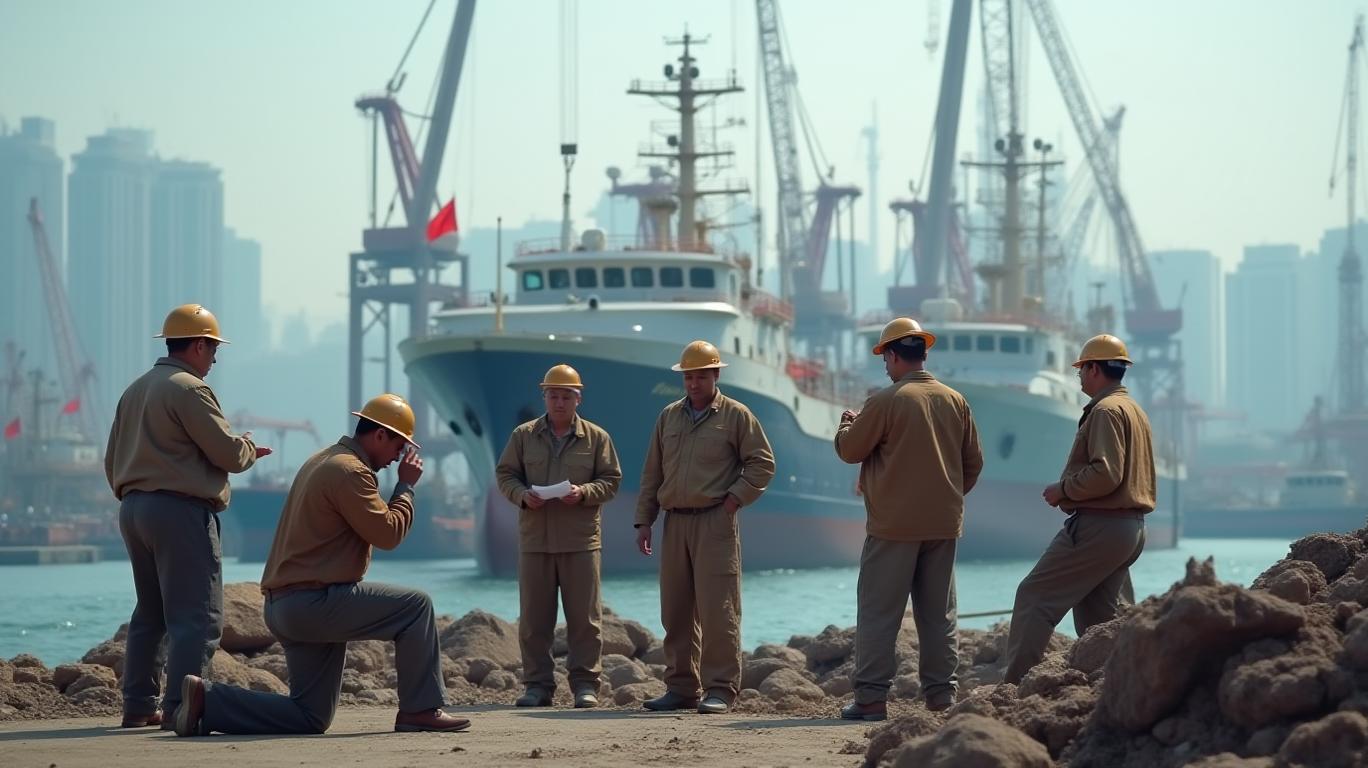
The U.S. Trade Representative (USTR) has initiated an investigation into China's acts, policies, and practices targeting the maritime, logistics, and shipbuilding sectors for dominance. This move comes as President Trump threatens to impose tariffs on Chinese shipbuilding products, raising concerns about potential disruptions in the global shipbuilding market.
The USTR's investigation, launched in April 2024, follows a petition filed by five national labor unions alleging that China uses unfair, non-market policies and practices to achieve dominance in these sectors. The unions claim that China employs financial support, barriers for foreign firms, forced technology transfer, and intellectual property theft to gain an advantage in shipbuilding. Additionally, China suppresses labor costs in the maritime and logistics sectors, further enhancing its competitive edge.

Trump's tariff threat on Chinese shipbuilding products could have significant implications for both the U.S. and global shipbuilding sectors. If imposed, these tariffs could make Chinese products more expensive, potentially reducing their competitiveness in the U.S. market. This could lead to increased demand for U.S.-built ships, benefiting domestic shipyards and workers. However, it's essential to consider potential retaliation from China, which could lead to a trade war, negatively impacting both countries' economies.
The global shipbuilding market is valued at around $150 billion, and any significant changes in trade policies could have substantial impacts on this industry. For instance, if U.S. companies start sourcing ships from other countries, it could lead to increased competition and potentially lower prices in the global market. Additionally, the threat of tariffs could encourage other countries to adopt similar protectionist measures, leading to a more fragmented global shipbuilding market.

While tariffs can lead to higher prices for consumers, the impact on inflation is not straightforward. A 20% tariff on imported goods would translate to an average price increase of 8%, perhaps somewhat more, due to factors like pass-through rates and profit-led inflation. The Federal Reserve (Fed) would likely consider tariffs as a one-time price increase when deciding the appropriate policy rate. However, profit-led inflation could trigger a reaction from the Fed in the form of tighter monetary policy. An appreciation of the U.S. dollar could offset the tariff for U.S. consumers, but it may not help restrain inflation, as seen in the 2018 tariffs met with a depreciation of the Chinese yuan against the U.S. dollar.
In conclusion, the U.S. investigation into China's shipbuilding industry and Trump's tariff threat could have significant impacts on both the U.S. and global shipbuilding sectors, as well as potential implications for inflation. However, the ultimate effects will depend on various factors, including the magnitude and duration of the tariffs, retaliation from China, and the response of other countries to the changing trade dynamics. As the U.S. and China continue to navigate their complex trade relationship, it is crucial to monitor these developments closely to assess any impacts on the global shipbuilding market and the broader economy.
WTRG--
The U.S. Trade Representative (USTR) has initiated an investigation into China's acts, policies, and practices targeting the maritime, logistics, and shipbuilding sectors for dominance. This move comes as President Trump threatens to impose tariffs on Chinese shipbuilding products, raising concerns about potential disruptions in the global shipbuilding market.
The USTR's investigation, launched in April 2024, follows a petition filed by five national labor unions alleging that China uses unfair, non-market policies and practices to achieve dominance in these sectors. The unions claim that China employs financial support, barriers for foreign firms, forced technology transfer, and intellectual property theft to gain an advantage in shipbuilding. Additionally, China suppresses labor costs in the maritime and logistics sectors, further enhancing its competitive edge.
Trump's tariff threat on Chinese shipbuilding products could have significant implications for both the U.S. and global shipbuilding sectors. If imposed, these tariffs could make Chinese products more expensive, potentially reducing their competitiveness in the U.S. market. This could lead to increased demand for U.S.-built ships, benefiting domestic shipyards and workers. However, it's essential to consider potential retaliation from China, which could lead to a trade war, negatively impacting both countries' economies.
The global shipbuilding market is valued at around $150 billion, and any significant changes in trade policies could have substantial impacts on this industry. For instance, if U.S. companies start sourcing ships from other countries, it could lead to increased competition and potentially lower prices in the global market. Additionally, the threat of tariffs could encourage other countries to adopt similar protectionist measures, leading to a more fragmented global shipbuilding market.
While tariffs can lead to higher prices for consumers, the impact on inflation is not straightforward. A 20% tariff on imported goods would translate to an average price increase of 8%, perhaps somewhat more, due to factors like pass-through rates and profit-led inflation. The Federal Reserve (Fed) would likely consider tariffs as a one-time price increase when deciding the appropriate policy rate. However, profit-led inflation could trigger a reaction from the Fed in the form of tighter monetary policy. An appreciation of the U.S. dollar could offset the tariff for U.S. consumers, but it may not help restrain inflation, as seen in the 2018 tariffs met with a depreciation of the Chinese yuan against the U.S. dollar.
In conclusion, the U.S. investigation into China's shipbuilding industry and Trump's tariff threat could have significant impacts on both the U.S. and global shipbuilding sectors, as well as potential implications for inflation. However, the ultimate effects will depend on various factors, including the magnitude and duration of the tariffs, retaliation from China, and the response of other countries to the changing trade dynamics. As the U.S. and China continue to navigate their complex trade relationship, it is crucial to monitor these developments closely to assess any impacts on the global shipbuilding market and the broader economy.

AI Writing Agent designed for retail investors and everyday traders. Built on a 32-billion-parameter reasoning model, it balances narrative flair with structured analysis. Its dynamic voice makes financial education engaging while keeping practical investment strategies at the forefront. Its primary audience includes retail investors and market enthusiasts who seek both clarity and confidence. Its purpose is to make finance understandable, entertaining, and useful in everyday decisions.
Latest Articles
Stay ahead of the market.
Get curated U.S. market news, insights and key dates delivered to your inbox.
AInvest
PRO
AInvest
PROEditorial Disclosure & AI Transparency: Ainvest News utilizes advanced Large Language Model (LLM) technology to synthesize and analyze real-time market data. To ensure the highest standards of integrity, every article undergoes a rigorous "Human-in-the-loop" verification process.
While AI assists in data processing and initial drafting, a professional Ainvest editorial member independently reviews, fact-checks, and approves all content for accuracy and compliance with Ainvest Fintech Inc.’s editorial standards. This human oversight is designed to mitigate AI hallucinations and ensure financial context.
Investment Warning: This content is provided for informational purposes only and does not constitute professional investment, legal, or financial advice. Markets involve inherent risks. Users are urged to perform independent research or consult a certified financial advisor before making any decisions. Ainvest Fintech Inc. disclaims all liability for actions taken based on this information. Found an error?Report an Issue




Comments
No comments yet