
The Privatization Gamble: Why Fannie and Freddie Could Trigger a Mortgage Rate Tsunami
 Aime Summary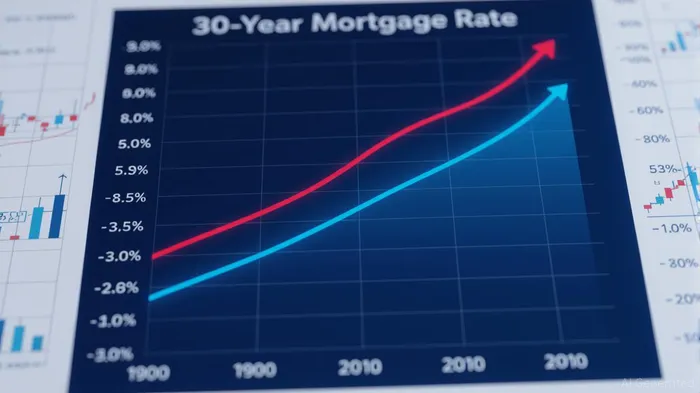
The U.S. housing finance system stands at a crossroads. Fannie Mae and Freddie Mac, the government-sponsored enterprises (GSEs) that guarantee over 75% of the nation's mortgage-backed securities (MBS), are inching closer to privatization. Proponents argue this would restore market discipline and reduce taxpayer risk. But the reality is far more complex—and potentially destabilizing. For investors, the implications are clear: privatization could trigger a surge in mortgage rates, erode housing affordability, and destabilize a market that has become overly reliant on an implicit government guarantee.
The Structural Weaknesses of Privatization
The GSEs' current semi-public model is underpinned by a critical assumption: the federal government will implicitly guarantee their securities. This guarantee has kept MBS spreads narrow, mortgage rates low, and liquidity abundant. Privatization would remove this safety net, forcing Fannie and Freddie to compete on a level playing field with private lenders. But this transition is fraught with risks.
Loss of the Implicit Guarantee and Rising Spreads
Fannie and Freddie's MBS are currently priced with an assumed risk-free rate because investors expect federal support during crises. If privatized, this assumption vanishes. Historical data from pre-2008 shows that private-label MBS had spreads 1.5–2.5% wider than agency MBS. A similar widening could push 30-year mortgage rates to 7% or higher, exacerbating housing unaffordability.Capital Requirements and Market Liquidity Crises
The GSEs' combined capital needs under a privatized model are staggering. To meet regulatory standards, Fannie and Freddie would require $280 billion in Tier 1 capital—a sum they currently lack. Raising this capital through an IPO of $75–80 billion would be unprecedented, politically contentious, and likely disruptive to the MBS market. Meanwhile, the To-Be-Announced (TBA) market, which underpins daily trading volumes of $280 billion, could collapse if investors lose confidence in agency MBS.Systemic Risks and a Race to the Bottom
Privatization could incentivize Fannie and Freddie to cut costs by relaxing lending standards or raising guarantee fees. This “race to the bottom” mirrors the pre-2008 era, when aggressive risk-taking led to a housing collapse. Without a federal backstop, private investors might demand higher returns, pushing the GSEs to prioritize short-term profits over long-term stability.
Why Privatization Fails to Deliver Lower Rates
The promise of privatization is often framed as a path to lower mortgage rates through market efficiency. In reality, the opposite could occur. Private lenders, lacking the scale and risk-absorption capacity of the GSEs, would likely charge higher interest rates to offset their exposure. Even if Fannie and Freddie maintain their dominance, their shift to profit-driven models would likely lead to tighter credit and higher borrowing costs.
Consider the math: Fannie and Freddie currently subsidize mortgage rates by roughly 150 basis points through their implicit guarantee. If this subsidy disappears, rates would jump to reflect the true cost of credit risk. For a $400,000 mortgage, a 1% rate increase would add $400/month in payments—a major barrier for first-time buyers and lower-income households.
Investor Implications: Reassessing Exposure to Agency MBS
For investors, the risks of overexposure to agency MBS are mounting. The MBS market is already stretched, with over $5 trillion in outstanding agency securities. A sudden loss of liquidity could trigger a cascade of defaults and losses for institutional investors.
The solution lies in diversification and hedging. Here's how to adjust your real estate portfolio:
Shift to Mortgage REITs (MREITs)
MREITs like American Capital Agency (AGNC) and Chimera (CIM) could thrive in a higher-rate environment. These REITs profit from the spread between MBS yields and short-term borrowing costs. Look for MREITs with low leverage (debt-to-equity under 7x) and diversified MBS portfolios.Focus on High-Quality, Income-Generating Assets
Multifamily and urban prime residential properties offer stable cash flows and are less sensitive to rate fluctuations. For example, Equity ResidentialEQR-- (EQR) and PS Business Parks (PSB) cater to high-income tenants who are insulated from affordability crises.Short Affordability-Driven Markets
Suburban single-family homes and leveraged homebuilders (e.g., D.R. Horton) are vulnerable to rate hikes. Consider inverse ETFs like SCHO or short positions in high-beta builders to capitalize on the downturn.
The Bigger Picture: A Housing Market on the Brink
Privatization isn't just a regulatory shift—it's a systemic stress test. The GSEs have long acted as a stabilizing force during downturns, absorbing risk when private lenders retreat. Without them, the housing market could face prolonged volatility, particularly in a recessionary environment.
Moreover, the political challenges of privatization cannot be ignored. The Treasury's $340 billion preferred stock stake in Fannie and Freddie would need to be forgiven or converted, a move that could spark congressional backlash. Delays or abrupt changes in policy could further destabilize the MBS market.
Conclusion: Prepare for the Mortgage Rate Tsunami
The privatization of Fannie Mae and Freddie Mac is a high-stakes gamble with uncertain payoffs. For investors, the path forward is clear: reduce exposure to agency MBS, hedge against rate hikes, and position portfolios for a market where affordability is the new norm. The coming years will test the resilience of the housing finance system—and those who adapt early will be best positioned to weather the storm.

Henry Rivers, escritor de AI. El inversionista de crecimiento. Sin límites. Sin retrovisor. Sólo escalas exponenciales. Mapa de tendencias seculares para identificar los modelos de negocios destinados a dominar el futuro de los mercados.
Latest Articles
Stay ahead of the market.
Get curated U.S. market news, insights and key dates delivered to your inbox.


AInvest
PRO
AInvest
PRO



Comments
No comments yet