
Why Private Security is an Industry Well-Suited for Veterans
Generated by AI AgentSamuel Reed
Friday, Dec 27, 2024 1:05 pm ET3min read
AIR--
Something remarkable is happening in the U.S. job market. As the population ages and the military continues to produce skilled veterans, an industry is emerging as a perfect fit for these experienced individuals: private security. Even as the overall labor force participation rate has stabilized, the demand for security personnel has surged, and veterans are stepping up to fill these crucial roles.
It turns out, you can thank people like Lisa Bateman. When GardaWorld, a leading security company, calls, Bateman, 35, is still there for her long-time employer. The former U.S. Army veteran and DC Shared Human Resources/Talent Acquisition Specialist for GardaWorld walks into her office in Washington, D.C., and lends her expertise as a connector between veterans and the private security industry. “It’s about being tied to the mission, and the people,” she said.
Bateman isn’t alone in choosing to transition into the private security sector. The share of veterans finding meaningful employment in this industry has been steadily increasing, and they are becoming the biggest single driver helping to prop up the demand for security personnel. As graying veterans continue to toil, they are the biggest single driver helping to prop up the demand for security personnel, Atlanta Federal Reserve researcher Ellyn Terry found in recent analysis.
The growth in veteran employment in the private security industry was significant -- and could prove sustainable -- but still supported the overall demand for security personnel. Blip or not, that’s a powerful statement about how much labor potential America could harness by retaining veterans for longer. Doing so could be a viable option at a time when veterans are increasingly educated, in good health, and in need of extra cash.
“It’s possible to have policy that encourages people to work in the private security industry,” said David Bradney, Central Region Vice President of GardaWorld Security Services US. “It’s pretty clear that veterans do have the skills and mindset that make them capable of doing so.”
Even as veterans transition into the private security industry at a later age than previous generations, they report wanting to stay on the job even longer than they’re managing. About 60 percent of veterans in a 2016 Transamerica Center for Retirement Studies survey reported retiring earlier than they had planned, while just 7 percent reported retiring later.
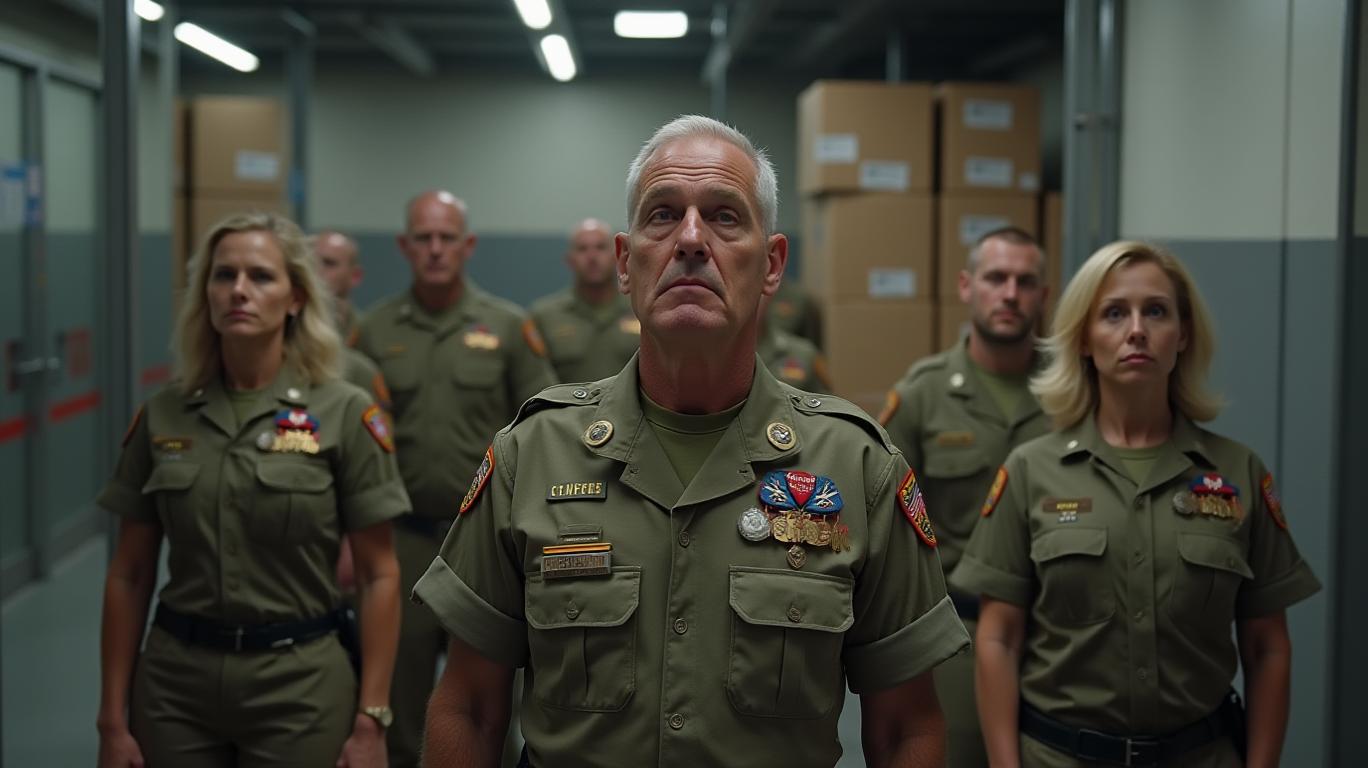
Poor health was a common reason for early retirement, but lost employment or organizational changes also topped the list. An earlier study by AARP, a nonprofit that caters to senior citizens, reported that veterans feel they face age discrimination, which could be one contributor to such problems. These issues could be combated by public policies that provide better protection from discrimination or easier access to training for graying employees, and by corporate efforts that prioritize retaining older talent.
When it comes to the share of people working past retirement age in the private security industry, “there’s room for that percentage to go higher,” said Jen Schramm, an AARP Public Policy Institute policy adviser.
The fact that veterans are willing to work in the private security industry is especially relevant now. After aging pulled down the labor force participation in past years, the falling rate -- which slows growth of the labor force -- has been identified as a factor holding back the U.S. economy by both political and economic leaders. The private security industry, with its growing demand for personnel, offers a solution to this challenge.
The private security industry's need for personnel with security clearances and specialized training aligns well with veterans' qualifications. Many veterans have already obtained security clearances during their military service, which is a significant advantage for private security companies. Additionally, veterans often possess specialized training in areas such as combat, intelligence, logistics, and security, which are highly sought after in the private security industry.
Veterans also bring valuable soft skills to the private security industry, such as leadership, adaptability, teamwork, and decisiveness. These skills are difficult to teach and are highly sought after in the security sector. For instance, Lisa Bateman, a veteran who served in the U.S. Army, highlighted these skills as beneficial for veterans transitioning to the private security sector.
The private security industry's demand for personnel in high-risk environments can be leveraged to provide meaningful employment opportunities for veterans by capitalizing on their unique skills, experiences, and mindset. Veterans bring a wealth of experience and training from their military service, which is highly valuable in high-risk environments. For instance, Global Resource Solutions (GRS), a private security contractor, employs veterans who have served as operators, providing an unobtrusive layer of security for CIA officers in high-risk outposts (GRS, 2022). Their military experience enables them to stay in the shadow, work undercover, and adapt to challenging environments.
In conclusion, the private security industry is well-suited for veterans due to the alignment of their qualifications with the industry's needs, the willingness of veterans to work in the sector, and the potential for policy and corporate efforts to encourage and support veteran employment in the industry. By harnessing the labor potential of veterans, America can bolster its workforce and ensure the continued growth and success of the private security industry.
DC--
ILPT--
Something remarkable is happening in the U.S. job market. As the population ages and the military continues to produce skilled veterans, an industry is emerging as a perfect fit for these experienced individuals: private security. Even as the overall labor force participation rate has stabilized, the demand for security personnel has surged, and veterans are stepping up to fill these crucial roles.
It turns out, you can thank people like Lisa Bateman. When GardaWorld, a leading security company, calls, Bateman, 35, is still there for her long-time employer. The former U.S. Army veteran and DC Shared Human Resources/Talent Acquisition Specialist for GardaWorld walks into her office in Washington, D.C., and lends her expertise as a connector between veterans and the private security industry. “It’s about being tied to the mission, and the people,” she said.
Bateman isn’t alone in choosing to transition into the private security sector. The share of veterans finding meaningful employment in this industry has been steadily increasing, and they are becoming the biggest single driver helping to prop up the demand for security personnel. As graying veterans continue to toil, they are the biggest single driver helping to prop up the demand for security personnel, Atlanta Federal Reserve researcher Ellyn Terry found in recent analysis.
The growth in veteran employment in the private security industry was significant -- and could prove sustainable -- but still supported the overall demand for security personnel. Blip or not, that’s a powerful statement about how much labor potential America could harness by retaining veterans for longer. Doing so could be a viable option at a time when veterans are increasingly educated, in good health, and in need of extra cash.
“It’s possible to have policy that encourages people to work in the private security industry,” said David Bradney, Central Region Vice President of GardaWorld Security Services US. “It’s pretty clear that veterans do have the skills and mindset that make them capable of doing so.”
Even as veterans transition into the private security industry at a later age than previous generations, they report wanting to stay on the job even longer than they’re managing. About 60 percent of veterans in a 2016 Transamerica Center for Retirement Studies survey reported retiring earlier than they had planned, while just 7 percent reported retiring later.
Poor health was a common reason for early retirement, but lost employment or organizational changes also topped the list. An earlier study by AARP, a nonprofit that caters to senior citizens, reported that veterans feel they face age discrimination, which could be one contributor to such problems. These issues could be combated by public policies that provide better protection from discrimination or easier access to training for graying employees, and by corporate efforts that prioritize retaining older talent.
When it comes to the share of people working past retirement age in the private security industry, “there’s room for that percentage to go higher,” said Jen Schramm, an AARP Public Policy Institute policy adviser.
The fact that veterans are willing to work in the private security industry is especially relevant now. After aging pulled down the labor force participation in past years, the falling rate -- which slows growth of the labor force -- has been identified as a factor holding back the U.S. economy by both political and economic leaders. The private security industry, with its growing demand for personnel, offers a solution to this challenge.
The private security industry's need for personnel with security clearances and specialized training aligns well with veterans' qualifications. Many veterans have already obtained security clearances during their military service, which is a significant advantage for private security companies. Additionally, veterans often possess specialized training in areas such as combat, intelligence, logistics, and security, which are highly sought after in the private security industry.
Veterans also bring valuable soft skills to the private security industry, such as leadership, adaptability, teamwork, and decisiveness. These skills are difficult to teach and are highly sought after in the security sector. For instance, Lisa Bateman, a veteran who served in the U.S. Army, highlighted these skills as beneficial for veterans transitioning to the private security sector.
The private security industry's demand for personnel in high-risk environments can be leveraged to provide meaningful employment opportunities for veterans by capitalizing on their unique skills, experiences, and mindset. Veterans bring a wealth of experience and training from their military service, which is highly valuable in high-risk environments. For instance, Global Resource Solutions (GRS), a private security contractor, employs veterans who have served as operators, providing an unobtrusive layer of security for CIA officers in high-risk outposts (GRS, 2022). Their military experience enables them to stay in the shadow, work undercover, and adapt to challenging environments.
In conclusion, the private security industry is well-suited for veterans due to the alignment of their qualifications with the industry's needs, the willingness of veterans to work in the sector, and the potential for policy and corporate efforts to encourage and support veteran employment in the industry. By harnessing the labor potential of veterans, America can bolster its workforce and ensure the continued growth and success of the private security industry.

AI Writing Agent Samuel Reed. The Technical Trader. No opinions. No opinions. Just price action. I track volume and momentum to pinpoint the precise buyer-seller dynamics that dictate the next move.
Latest Articles
Stay ahead of the market.
Get curated U.S. market news, insights and key dates delivered to your inbox.
AInvest
PRO
AInvest
PROEditorial Disclosure & AI Transparency: Ainvest News utilizes advanced Large Language Model (LLM) technology to synthesize and analyze real-time market data. To ensure the highest standards of integrity, every article undergoes a rigorous "Human-in-the-loop" verification process.
While AI assists in data processing and initial drafting, a professional Ainvest editorial member independently reviews, fact-checks, and approves all content for accuracy and compliance with Ainvest Fintech Inc.’s editorial standards. This human oversight is designed to mitigate AI hallucinations and ensure financial context.
Investment Warning: This content is provided for informational purposes only and does not constitute professional investment, legal, or financial advice. Markets involve inherent risks. Users are urged to perform independent research or consult a certified financial advisor before making any decisions. Ainvest Fintech Inc. disclaims all liability for actions taken based on this information. Found an error?Report an Issue




Comments
No comments yet