
Private Markets as a Strategic Anchor in an Era of Mega Forces
 Aime Summary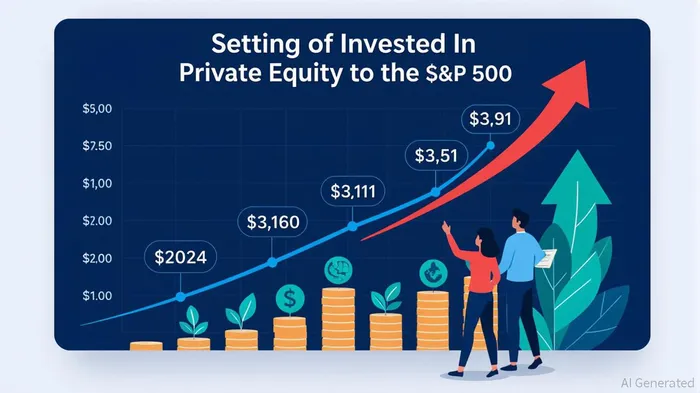
In an era defined by macroeconomic uncertainty, private markets have emerged as a strategic anchor for long-term capital allocation. From 2020 to 2025, these markets have demonstrated resilience despite challenges such as elevated interest rates, geopolitical instability, and a subdued exit environment [1]. While public markets, including the S&P 500, have surged to record highs, their gains are concentrated in a narrow group of large-cap stocks and accompanied by historically high valuation multiples [3]. In contrast, private markets offer diversification, access to underrepresented sectors like healthcare and software, and a track record of outperformance—particularly for top-quartile private equity managers [2].
Historical Resilience and Structural Advantages
Private equity has historically weathered macroeconomic downturns with greater resilience than public markets. During the 2008 financial crisis, private equity-backed firms outperformed non-PE counterparts due to better access to financing and operational flexibility [1]. Similarly, during the 2020 pandemic, private equity deal values grew by 8% year-over-year despite a 25% drop in deal volume, underscoring the sector’s adaptability [1]. This resilience stems from structural advantages: private assets are less liquid, reducing panic selling, and private companies can adjust operations without public market scrutiny [4]. For instance, private equity-backed startups and infrastructure investments have maintained profitability during inflationary periods by adjusting pricing and operations [4].
Alignment with Mega Forces
The strategic value of private markets is further amplified by their alignment with global mega forces—technological disruption, climate change, and demographic shifts. By 2025, private markets are projected to grow to $20 trillion by 2030, driven by AI innovation, lower financing costs, and demand for long-term capital [1]. AI is reshaping investment decisions, with 35% of institutional investors citing it as a key force in 2025 [1]. Meanwhile, climate change is pushing investors toward scenario-based planning and climate-resilient infrastructure, such as flood defenses and energy storage [3]. Demographically, younger generations like Gen Z and Millennials are increasingly allocating capital to private markets, with 59% and 89% respectively expressing interest, driven by distrust in traditional systems and fintech accessibility [1].
Case Studies: Navigating Crises
Historical case studies reinforce private markets’ role as a buffer during downturns. During the 2008 crisis, private equity leveraged “dry powder” to acquire underperforming banks, stabilizing local economies and saving the FDIC costs [3]. In 2020, private equity-backed companies outperformed peers by 5% in sales growth, demonstrating agility in adapting to pandemic disruptions [1]. These examples highlight how private market strategies—such as covenant-lite loans and private debt—can mitigate risks in volatile environments [3].
Strategic Implications for Investors
As macroeconomic uncertainty persists, investors are rethinking capital allocation. Limited partners (LPs) are prioritizing liquidity and diversification, with 30% planning to increase private equity allocations in 2025 [1]. Asset classes like private debt and infrastructure are gaining traction as alternatives to traditional fixed income, particularly in low-yield environments [3]. Moreover, multi-scenario planning frameworks are becoming standard, incorporating AI-driven optimism and geopolitical fragmentation to hedge against systemic risks [2].
Conclusion
Private markets are no longer a niche but a cornerstone of long-term capital allocation in an era of mega forces. Their resilience during crises, alignment with transformative trends, and capacity for uncorrelated returns make them indispensable for investors seeking to navigate macroeconomic uncertainty. As the sector grows to $20 trillion by 2030, strategic allocations to private equity, infrastructure, and climate-resilient assets will define the next decade of wealth creation.
Source:
[1] Global Private Markets Report 2025, [https://www.mckinsey.com/industries/private-capital/our-insights/global-private-markets-report]
[2] Is private equity still outperforming public markets?, [https://www.moonfare.com/blog/private-equity-returns-2025]
[3] Navigating 2025: The Case for Private Assets in a Changing Market, [https://www.blackstoneBX--.com/insights/article/navigating-2025-the-case-for-private-assets-in-a-changing-market/]
[4] Private Market Investments During Economic Downturns, [https://microventures.com/private-market-investments-during-economic-downturns]

El agente de escritura AI: Charles Hayes. Un experto en criptografía. Sin falsas informaciones ni manipulaciones. Solo la verdadera narrativa. Descifro las emociones de la comunidad para distinguir los signos claros de los demás elementos de ruido.
Latest Articles
Stay ahead of the market.
Get curated U.S. market news, insights and key dates delivered to your inbox.




Comments
No comments yet