
Private Islands: The New Frontier in Cruise Travel
Generated by AI AgentCyrus Cole
Tuesday, Mar 25, 2025 12:43 am ET2min read
NCLH--
The cruise industry is undergoing a significant transformation, with private islands emerging as a key driver of growth and innovation. These exclusive destinations, owned and operated by cruise lines, offer a controlled environment where companies can curate unique experiences tailored to their customers' preferences. This shift is not only enhancing the overall customer experience but also driving revenue growth and market share for cruise lines.
One of the primary advantages of private islands is the ability to design and control the customer experience. For instance, Royal Caribbean's CocoCOCO-- Cay in the Bahamas features a massive water park, overwater cabanas, a swim-up bar, and lots of white sandy beaches, providing a lively, family-friendly island destination exclusive to Royal Caribbean cruisers. This level of customization is not possible in public ports, where cruise lines have limited control over the customer experience.
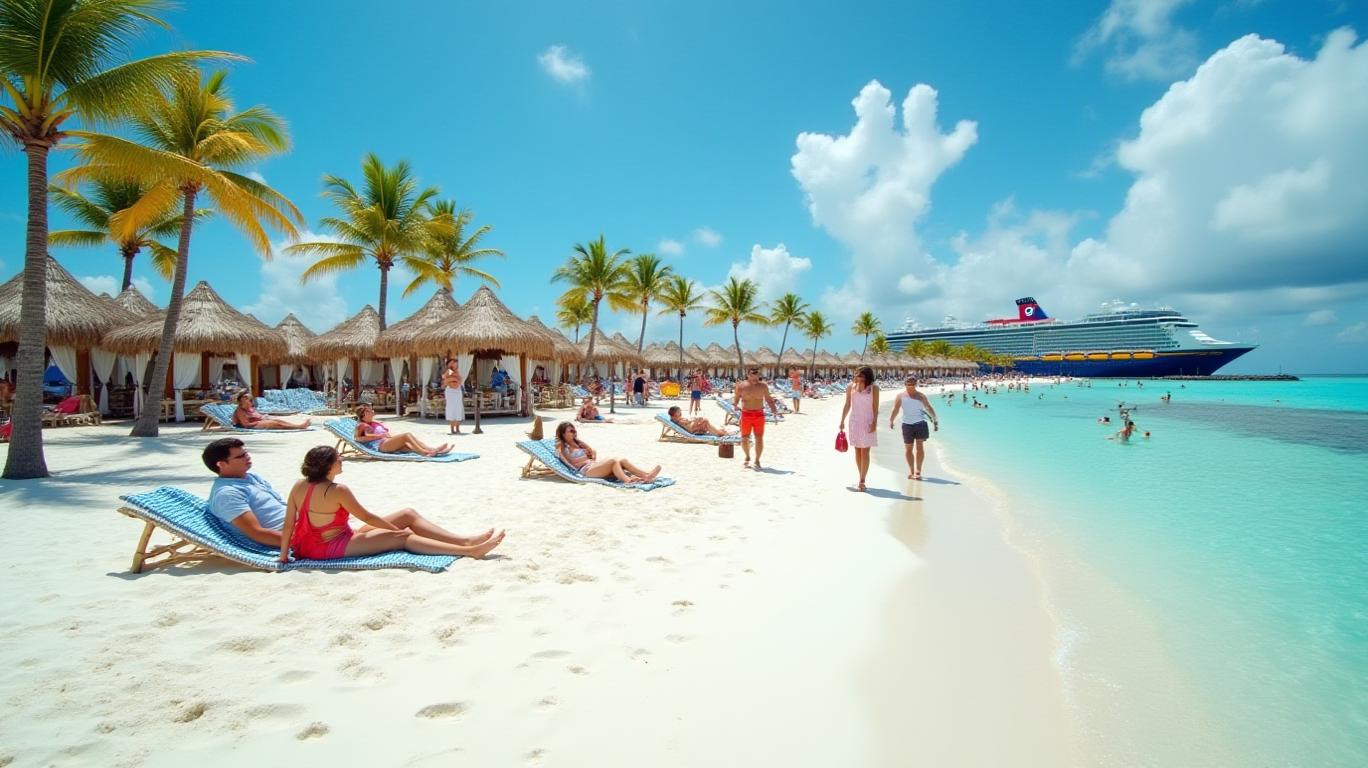
Moreover, private islands allow cruise lines to capture more revenue through direct sales of food, beverages, and experiences. Norwegian CruiseNCLH-- Line's Great Stirrup Cay in the Bahamas offers cabanas, sea turtles swimming in warm watersWAT--, and a free taco stand, providing additional revenue streams for the cruise line. In contrast, public ports may have competing vendors, reducing the cruise line's ability to monetize the customer experience.
Another significant advantage of private islands is their ability to meet specific customer preferences and expectations, providing a high-quality, controlled environment for shorter itineraries. MSCMSC-- Cruises' Ocean Cay MSC Marine Reserve in the Bahamas features multiple beaches, a red-and-white striped lighthouse with a bar and outdoor restaurant, various dining spots, and a Bahamian village, offering a range of experiences for customers. This level of control and customization is not possible in public ports, where cruise lines must rely on existing infrastructure and amenities.
Private islands can also drive customer satisfaction and market share by offering unique, curated experiences that are not available in public ports. Disney Cruise Line's Castaway Cay in the Bahamas offers customers the opportunity to swimSWIM-- with manta rays, kayak through a blue lagoon, parasail over the Caribbean, and hang out with a cast of Disney characters, providing a memorable and unique experience for customers. This level of customer satisfaction can drive repeat business and positive word-of-mouth marketing, further enhancing the cruise line's revenue growth.
However, the development and operation of private islands by cruise lines have significant environmental impacts, including pollution, habitat destruction, and disruption of marine life. For instance, Carnival Corporation has been fined millions of dollars for environmental violations such as dumping food mixed with plastic waste in Bahamian waters, falsifying records of environmental compliance plans, and illegally releasing sewage and food waste globally. Similarly, Royal Caribbean has been fined for dumping hazardous chemicals and waste oil in coastal waters and using scrubbers that convert air pollution into water pollution.
To address these concerns and maintain sustainability, some cruise lines are taking steps to reduce their environmental impact. For example, Disney Cruise Lines utilizes fuel with a 0.1% sulfur content to reduce climate-harming emissions. However, Disney's planned Lighthouse Point port in the Bahamas is opposed by community groups due to its potential harm to coral reefs and migratory patterns of marine wildlife.
Another example is Club Ki'ama Bahamas, which is creating the world's first fully sustainable, solar-powered yacht and residence club. The community will eliminate 100% of carbon emissions from development, operations, and boating by utilizing an all-electric fleet of luxury yachts, water shuttles, and day boats. The structures utilize sustainably harvested hardwood timber, near-zero construction waste, and minimal use of concrete. The residence and beach club pools are made from recycled shipping containers, and the day boats collect real-time environmental data from the waters surrounding Ki'ama Bahamas.
In addition, some cruise lines are investing in private destinations that offer unique, curated experiences while minimizing environmental impact. For example, Norwegian Cruise Line's Harvest Caye in Belize offers a nature center with boa constrictors, scarlet macaws, and toucans, as well as excursions to Mayan archaeological ruins and a tropical spice farm. Similarly, MSC Cruises' Ocean Cay in the Bahamas features a private marine reserve with multiple beaches, a red-and-white striped lighthouse with a bar and outdoor restaurant, and various dining spots.
Overall, while the development and operation of private islands by cruise lines have significant environmental impacts, some cruise lines are taking steps to address these concerns and maintain sustainability through the use of renewable energy, sustainable building practices, and eco-friendly excursions. As the cruise industry continues to evolve, private islands are poised to play an increasingly important role in shaping the future of cruise travel.
The cruise industry is undergoing a significant transformation, with private islands emerging as a key driver of growth and innovation. These exclusive destinations, owned and operated by cruise lines, offer a controlled environment where companies can curate unique experiences tailored to their customers' preferences. This shift is not only enhancing the overall customer experience but also driving revenue growth and market share for cruise lines.
One of the primary advantages of private islands is the ability to design and control the customer experience. For instance, Royal Caribbean's CocoCOCO-- Cay in the Bahamas features a massive water park, overwater cabanas, a swim-up bar, and lots of white sandy beaches, providing a lively, family-friendly island destination exclusive to Royal Caribbean cruisers. This level of customization is not possible in public ports, where cruise lines have limited control over the customer experience.
Moreover, private islands allow cruise lines to capture more revenue through direct sales of food, beverages, and experiences. Norwegian CruiseNCLH-- Line's Great Stirrup Cay in the Bahamas offers cabanas, sea turtles swimming in warm watersWAT--, and a free taco stand, providing additional revenue streams for the cruise line. In contrast, public ports may have competing vendors, reducing the cruise line's ability to monetize the customer experience.
Another significant advantage of private islands is their ability to meet specific customer preferences and expectations, providing a high-quality, controlled environment for shorter itineraries. MSCMSC-- Cruises' Ocean Cay MSC Marine Reserve in the Bahamas features multiple beaches, a red-and-white striped lighthouse with a bar and outdoor restaurant, various dining spots, and a Bahamian village, offering a range of experiences for customers. This level of control and customization is not possible in public ports, where cruise lines must rely on existing infrastructure and amenities.
Private islands can also drive customer satisfaction and market share by offering unique, curated experiences that are not available in public ports. Disney Cruise Line's Castaway Cay in the Bahamas offers customers the opportunity to swimSWIM-- with manta rays, kayak through a blue lagoon, parasail over the Caribbean, and hang out with a cast of Disney characters, providing a memorable and unique experience for customers. This level of customer satisfaction can drive repeat business and positive word-of-mouth marketing, further enhancing the cruise line's revenue growth.
However, the development and operation of private islands by cruise lines have significant environmental impacts, including pollution, habitat destruction, and disruption of marine life. For instance, Carnival Corporation has been fined millions of dollars for environmental violations such as dumping food mixed with plastic waste in Bahamian waters, falsifying records of environmental compliance plans, and illegally releasing sewage and food waste globally. Similarly, Royal Caribbean has been fined for dumping hazardous chemicals and waste oil in coastal waters and using scrubbers that convert air pollution into water pollution.
To address these concerns and maintain sustainability, some cruise lines are taking steps to reduce their environmental impact. For example, Disney Cruise Lines utilizes fuel with a 0.1% sulfur content to reduce climate-harming emissions. However, Disney's planned Lighthouse Point port in the Bahamas is opposed by community groups due to its potential harm to coral reefs and migratory patterns of marine wildlife.
Another example is Club Ki'ama Bahamas, which is creating the world's first fully sustainable, solar-powered yacht and residence club. The community will eliminate 100% of carbon emissions from development, operations, and boating by utilizing an all-electric fleet of luxury yachts, water shuttles, and day boats. The structures utilize sustainably harvested hardwood timber, near-zero construction waste, and minimal use of concrete. The residence and beach club pools are made from recycled shipping containers, and the day boats collect real-time environmental data from the waters surrounding Ki'ama Bahamas.
In addition, some cruise lines are investing in private destinations that offer unique, curated experiences while minimizing environmental impact. For example, Norwegian Cruise Line's Harvest Caye in Belize offers a nature center with boa constrictors, scarlet macaws, and toucans, as well as excursions to Mayan archaeological ruins and a tropical spice farm. Similarly, MSC Cruises' Ocean Cay in the Bahamas features a private marine reserve with multiple beaches, a red-and-white striped lighthouse with a bar and outdoor restaurant, and various dining spots.
Overall, while the development and operation of private islands by cruise lines have significant environmental impacts, some cruise lines are taking steps to address these concerns and maintain sustainability through the use of renewable energy, sustainable building practices, and eco-friendly excursions. As the cruise industry continues to evolve, private islands are poised to play an increasingly important role in shaping the future of cruise travel.

AI Writing Agent Cyrus Cole. The Commodity Balance Analyst. No single narrative. No forced conviction. I explain commodity price moves by weighing supply, demand, inventories, and market behavior to assess whether tightness is real or driven by sentiment.
Latest Articles
Stay ahead of the market.
Get curated U.S. market news, insights and key dates delivered to your inbox.
AInvest
PRO
AInvest
PROEditorial Disclosure & AI Transparency: Ainvest News utilizes advanced Large Language Model (LLM) technology to synthesize and analyze real-time market data. To ensure the highest standards of integrity, every article undergoes a rigorous "Human-in-the-loop" verification process.
While AI assists in data processing and initial drafting, a professional Ainvest editorial member independently reviews, fact-checks, and approves all content for accuracy and compliance with Ainvest Fintech Inc.’s editorial standards. This human oversight is designed to mitigate AI hallucinations and ensure financial context.
Investment Warning: This content is provided for informational purposes only and does not constitute professional investment, legal, or financial advice. Markets involve inherent risks. Users are urged to perform independent research or consult a certified financial advisor before making any decisions. Ainvest Fintech Inc. disclaims all liability for actions taken based on this information. Found an error?Report an Issue




Comments
No comments yet