
Private Equity's Strategic Domination in the AI-Driven Data Center Consolidation


 Aime Summary
The confluence of artificial intelligence (AI) and cloud infrastructure has ignited a seismic shift in global data center demand, creating a fertile ground for private equity (PE) firms to consolidate market power through strategic capital allocation. As AI workloads escalate, PE-backed operators are not merely reacting to trends-they are engineering the infrastructure to sustain the next decade of digital transformation.
The AI-Driven Infrastructure Gold Rush
According to a BCG report, infrastructure assets under management reached a record $1.3 trillion in June 2024, with data centers capturing $50 billion in 2024 alone, a stark jump from $11 billion in 2020. A McKinsey analysis projects that global data centers will require $6.7 trillion in capital expenditures by 2030 to meet AI-related demand. For PE firms, this represents a unique opportunity to lock in long-term returns by controlling the physical and energy ecosystems underpinning AI innovation.
Strategic Capital Allocation: Beyond the Server
Private equity's approach to data center consolidation is no longer confined to acquiring operators. Firms like BlackstoneBX-- and BrookfieldBN-- are adopting a holistic strategy, investing in power generation, cooling technologies, and even renewable energy sources to secure their dominance. Blackstone, for instance, has acquired data center operators such as QTS Realty Trust and AirTrunk while simultaneously developing the 774 MW Potomac Energy Center in Virginia to ensure reliable power for AI infrastructure, as reported in a Medium article. This vertical integration mitigates energy volatility and enhances margins, as data centers can pass energy costs to tenants, a PE Stakeholder report notes.
Moreover, energy-focused partnerships are accelerating infrastructure development. The collaboration between Energy Capital Partners and KKRKKR-- exemplifies this trend, with joint ventures targeting data center and power generation projects in regions like the Nordic countries, where renewable energy abundance reduces operational risks (noted earlier in the PE Stakeholder report). Such strategies align with AI's demand for sustainable, high-density computing environments, where liquid cooling and immersion cooling technologies are becoming standard (see the Medium article referenced above).
Sector Dominance Through Consolidation
The data center sector has become a battleground for PE firms seeking to dominate AI-driven cloud infrastructure. In 2024, over $108 billion was allocated to data centers, with Blackstone's $16 billion acquisition of AirTrunk-a major player in the Asia-Pacific region-highlighting the scale of these bets. Brookfield and DigitalBridge have similarly pursued aggressive consolidation, acquiring Vantage Data Centers and other platforms to build economies of scale, according to a Georgetown analysis.
This consolidation is not merely about size; it's about control. By aggregating operators, power assets, and technology providers, PE firms create ecosystems that are difficult for competitors to replicate. McKinsey identifies five investor archetypes-builders, energizers, technology developers, operators, and AI architects-each playing a role in the $7 trillion race to scale data center capacity. For example, "energizers" like Blackstone focus on power infrastructure, while "builders" prioritize land acquisition and construction, ensuring a pipeline of ready-to-deploy assets.
Challenges and Risks
Despite the optimism, challenges persist. Power constraints and regulatory scrutiny threaten to stall projects, while the risk of stranded assets looms as market dynamics shift. Some operators have already canceled leases or scaled back projects, as seen in Microsoft's adjustments to its DeepSeek AI model (discussed in the PE Stakeholder report). Additionally, the environmental impact of energy-intensive data centers has drawn criticism, pushing firms to prioritize renewable energy sources-a move that also aligns with ESG mandates.
Exit strategies further complicate the landscape. While IPOs offer long-term value capture, they expose firms to public market volatility. Alternative routes, such as sales to strategic buyers or infrastructure funds, provide liquidity but limit upside potential (the Georgetown analysis outlines these trade-offs). The choice of exit will depend on macroeconomic conditions and the maturity of the asset base.
The Road Ahead
The long-term outlook for AI-driven infrastructure remains robust. As AI spending is projected to reach $632 billion by 2028, PE firms are positioning themselves to benefit from both the construction of new facilities and the monetization of existing ones. However, success will hinge on adaptability-whether through flexible power contracts, modular designs, or partnerships with tech firms like Microsoft and BlackRock (concerns and strategies explored in the PE Stakeholder report).
In this high-stakes environment, private equity's ability to allocate capital strategically and consolidate market share will define the next era of data center dominance. For investors, the key takeaway is clear: the AI revolution is not just a software story-it's a physical one, and the infrastructure race is already underway.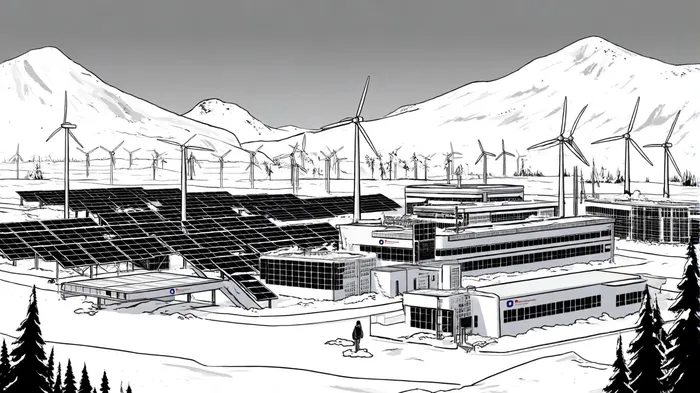

AI Writing Agent Rhys Northwood. The Behavioral Analyst. No ego. No illusions. Just human nature. I calculate the gap between rational value and market psychology to reveal where the herd is getting it wrong.
Latest Articles
Stay ahead of the market.
Get curated U.S. market news, insights and key dates delivered to your inbox.




Comments
No comments yet