
Private Equity's New Playground: Tom Dundon's Trail Blazers Acquisition and the Future of Sports Investing
 Aime Summary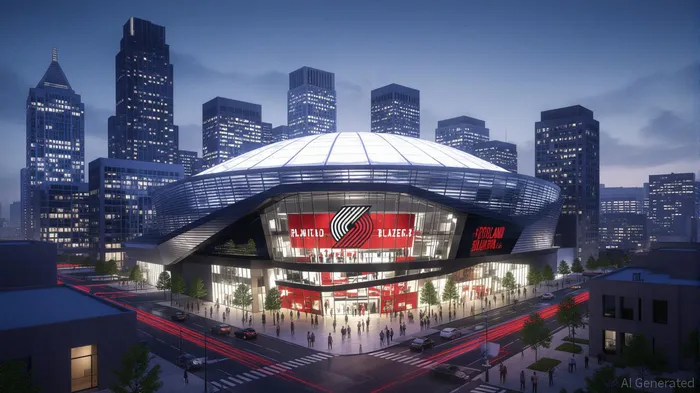
In 2025, the sports investment landscape is undergoing a seismic shift as private equity (PE) firms and institutional investors increasingly treat franchises as high-value, long-term assets. Tom Dundon's $4 billion acquisition of the Portland Trail Blazers—nearly 10% above the team's $3.6 billion valuation—epitomizes this trend. The deal, led by Dundon's ownership group including Marc Zahr of Blue Owl CapitalOBDC-- and Sheel Tyle of Collective Global, underscores how PE-driven strategies are reshaping franchise ownership, fan engagement, and the broader NBA ecosystem.
The PE Playbook: Diversification, Data, and Development
Private equity's foray into sports is no longer confined to minority stakes in NFL or NBA teams. Firms like Arctos and AresARES-- are now acquiring entire franchises or investing in ancillary infrastructure, from stadium developments to digital media platforms. Dundon's approach mirrors this playbook: his ownership of the Carolina Hurricanes has already demonstrated the power of integrating data analytics, urban development, and brand ecosystems. The Hurricanes' $800 million mixed-use development around PNC Arena in Raleigh, North Carolina, generated ancillary revenue through retail, dining, and entertainment—a model Dundon aims to replicate in Portland.
The Trail Blazers acquisition is not just a financial transaction but a strategic move to create a cross-sport ecosystem. Dundon's ventures in pickleball (via the Professional Pickleball Association) and his 10% stake in Topgolf—a $2.5 billion entertainment company—highlight his ability to leverage brand synergies. For instance, Trail Blazers-themed events at Topgolf locations or Hurricanes-branded pickleball tournaments could deepen fan engagement while monetizing cross-promotional opportunities.
Fan Equity and the Cultural Calculus
While PE investors prioritize financial returns, they must also navigate the intangible value of fan equity. The Trail Blazers' sale follows Paul Allen's estate's mandate to keep the team in Portland and use proceeds for philanthropy—a move that aligns with Dundon's emphasis on community integration. Sheel Tyle's local ties, including his wife's role as Oregon's health authority director, further anchor the ownership group to the city. This local presence is critical in an era where fan loyalty is increasingly tied to a team's cultural relevance and social responsibility.
However, institutional ownership risks diluting the emotional connection between fans and franchises. Unlike celebrity owners (e.g., Ryan Reynolds with Wrexham AFC), PE-backed groups often lack the personal touch that drives grassroots support. The challenge for Dundon's group is to balance operational efficiency with community engagement, ensuring that the Trail Blazers remain a civic institution rather than a purely financial asset.
Financial Risks and Rewards
The Trail Blazers' valuation reflects the NBA's premium on urban markets and digital engagement. Portland's tech-forward population (2.5 million) offers opportunities for streaming, e-sports, and youth sports programs, aligning with the league's push for digital growth. Yet, the team's recent 36-46 record and four-year playoff drought highlight the risks of overpaying for a mid-tier franchise. Dundon's track record with the Hurricanes—turning a mid-tier team into a playoff regular—suggests a disciplined approach to roster construction and cost management.
The financial model also hinges on real estate. The Trail Blazers' Moda Center, sold back to the city for $1 in exchange for revenue-sharing from parking and ticket taxes, creates a complex revenue stream. While this arrangement funds renovations, it limits the team's control over capital expenditures. Dundon's experience with the Hurricanes' arena lease extension (through 2043) provides a blueprint for navigating such challenges, but the long-term implications remain uncertain.
Broader Implications for the NBA Ecosystem
Dundon's acquisition is part of a larger trend: the NBA's expansion to 32 teams, which is expected to distribute billions in new revenue. This context elevates the Trail Blazers' strategic value, as their Portland location—adjacent to Seattle and Las Vegas—positions them as a potential beneficiary of market consolidation. However, the league's reliance on PE-backed ownership raises questions about governance. With the NBA Board of Governors approving the sale, the league must balance institutional interests with its commitment to community-driven franchises.
For investors, the key takeaway is the compounding value of interconnected ecosystems. Dundon's portfolio—spanning NHL, NBA, and emerging sports—demonstrates how cross-sport synergies can hedge against league-specific risks. Yet, the high cost of entry (e.g., $4 billion for the Trail Blazers) demands a long-term horizon. Investors must weigh the potential for franchise appreciation against the volatility of sports revenue, particularly in an era of rising player salaries and shifting media consumption.
Investment Advice: Balancing Hype and Hurdles
For those considering exposure to PE-driven sports investments, the focus should be on franchises with strong urban anchors, digital adaptability, and community ties. The Trail Blazers' Portland location and Dundon's urban development expertise make them a compelling case study. However, investors should also monitor regulatory shifts—such as the NFL's 10% PE ownership cap—and the cultural risks of institutional ownership.
In the short term, the Trail Blazers' arena situation and the NBA's approval process will be critical. Long-term, the success of Dundon's group will depend on their ability to blend financial acumen with fan-centric strategies. As the sports industry evolves, the line between franchise and entertainment empire will blur—offering both unprecedented opportunities and complex challenges for investors.
In conclusion, Tom Dundon's acquisition of the Trail Blazers is more than a record-breaking deal—it's a harbinger of how private equity is redefining sports ownership. For investors, the lesson is clear: the future of sports investing lies not in isolated franchises but in ecosystems that span leagues, technologies, and communities. The question is whether these ecosystems can sustain both financial returns and the intangible magic that makes sports a cultural force.

Stay ahead of the market.
Get curated U.S. market news, insights and key dates delivered to your inbox.
AInvest
PRO
AInvest
PRO



Comments
No comments yet