
Private Equity's Growing Influence in Sports Franchises: A New Era of Ownership and Strategy
 Aime Summary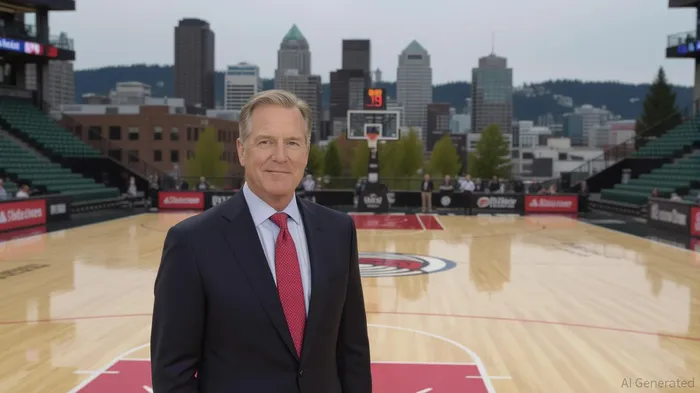
The acquisition of the Portland Trail Blazers by Tom Dundon, the billionaire owner of the NHL's Carolina Hurricanes, is more than a $4.25 billion transaction—it is a harbinger of a seismic shift in the ownership and management of professional sports franchises. This deal, finalized in 2025, reflects a broader trend where private equity (PE) firms and institutional investors are redefining the sports landscape. By treating franchises as high-value, long-term assets, these investors are not only reshaping ownership structures but also reengineering performance strategies to maximize financial returns and community impact.
The Trail Blazers Deal: A Case Study in Institutional Ownership
Dundon's purchase of the Trail Blazers, valued at over $4 billion, is one of the most significant NBA franchise sales in history. The deal, led by Dundon alongside Marc Zahr (Blue Owl Capital) and Sheel Tyle (Collective Global), underscores the growing appetite of institutional investors for sports assets. The ownership group's commitment to keeping the team in Portland—despite speculation about relocation to Seattle or Las Vegas—aligns with a strategic focus on geographic stability, a critical factor in the NBA's $77 billion media rights deals.
The financial structure of the deal is equally telling. Dundon, with a net worth of $1.2–1.7 billion, and Zahr, worth $1 billion, are leveraging their personal wealth and institutional backing to secure the franchise. While the exact financing terms remain undisclosed, the absence of public debt financing suggests a reliance on private capital, a hallmark of PE-driven acquisitions. The proceeds from the sale will flow to the Paul G. Allen Trust, which has pledged to use the funds for philanthropy, a nod to the fiduciary responsibilities of estate sales.
A Broader Trend: PE Firms as Power Brokers in Sports
The Trail Blazers acquisition is part of a larger wave of private equity involvement in sports. Firms like ArctosARCO-- Sports Partners, Ares ManagementARES--, and Blue Owl CapitalOBDC-- have emerged as dominant players, investing in franchises across the NBA, NFL, MLB, and international leagues. Arctos, for instance, holds stakes in the Golden State Warriors, Sacramento Kings, and Liverpool FC, while AresARES-- has invested in Atlético Madrid and the San Diego Padres. These firms are not passive investors; they deploy capital to enhance franchise value through operational improvements, digital innovation, and ancillary revenue streams.
The financial rationale for these investments is compelling. Sports franchises offer a unique blend of brand equity, recurring revenue, and scarcity value. With most leagues operating under capped team numbers, ownership of a franchise is akin to holding a limited-edition asset. The Ross-Arctos Sports Franchise Index (RASFI) has compounded at 14.9% annually over the past decade, outperforming the S&P 500's 12.5%. This outperformance is driven by media rights deals, which now account for a significant portion of franchise valuations. For example, the NBA's new media rights contracts, which include Amazon's $3 billion annual investment, have elevated team valuations to unprecedented levels.
Strategic Synergies and Urban Development
Dundon's approach to the Trail Blazers mirrors his success with the Hurricanes, where he leveraged data analytics, arena redevelopment, and mixed-use urban projects to boost franchise value. The Hurricanes' $800 million development around PNC Arena in Raleigh, North Carolina, generated ancillary revenue through retail, dining, and entertainment. In Portland, Dundon's group aims to replicate this model by collaborating with city officials on public-private partnerships to renovate the Moda Center and its surrounding area. This strategy not only enhances the team's financial performance but also aligns with broader urban development goals, creating a symbiotic relationship between sports and local economies.
Cross-sport and entertainment synergies are another key component. Dundon's ownership of the Pro Pickleball Association and a stake in TopgolfMODG--, a $2.5 billion entertainment company, provides opportunities for brand integration and fan engagement. Events at Topgolf locations or pickleball tournaments featuring Trail Blazers branding could deepen fan loyalty and open new revenue streams. This ecosystem-driven approach is increasingly common among PE-backed franchises, which seek to monetize their brands beyond traditional game-day activities.
Risks and Rewards for Investors
While the financial potential is substantial, investors must navigate challenges. The Trail Blazers' recent performance—a 36-46 record and a four-year playoff drought—raises questions about overpaying for a mid-tier team. However, Dundon's track record with the Hurricanes, where he turned a mid-tier franchise into a $1.2 billion asset, suggests a disciplined approach to roster construction and cost management. Additionally, the NBA's digital transformation, including streaming and e-sports, offers growth opportunities that could offset on-court underperformance.
For investors, the key is to balance financial returns with community engagement. Dundon's group has pledged to honor Paul Allen's legacy by keeping the team in Portland and supporting philanthropy. This commitment is critical in markets like Portland, where fan loyalty is deeply tied to civic identity. The success of PE-backed franchises will depend on their ability to maintain this emotional connection while driving operational efficiency.
Investment Implications and Future Outlook
The growing influence of private equity in sports presents both opportunities and risks for investors. On the one hand, the sector offers uncorrelated returns, strong brand equity, and predictable cash flows. On the other, the high valuations and reliance on media rights expose franchises to regulatory and market risks. For example, changes in media rights deals or shifts in fan behavior could impact revenue streams.
Investors should consider the following strategies:
1. Diversification: Allocate capital across multiple leagues and geographies to mitigate risks.
2. Focus on Operational Enhancements: Prioritize franchises with clear plans for urban development, digital innovation, and ancillary revenue.
3. Monitor Regulatory Changes: Stay informed about league policies on ownership and media rights, which can significantly impact valuations.
As the sports industry evolves, private equity's role will likely expand. The Trail Blazers acquisition is a microcosm of this trend, illustrating how institutional investors are reshaping the future of sports ownership. For those willing to navigate the complexities, the rewards could be substantial—but patience and a long-term horizon will be essential.
In conclusion, Tom Dundon's purchase of the Portland Trail Blazers is not an isolated event but a pivotal moment in the privatization of sports. As PE firms continue to invest in franchises, the focus will shift from isolated teams to interconnected ecosystems that span leagues, technologies, and communities. For investors, the challenge—and opportunity—lies in balancing financial acumen with the intangible value of sports as a cultural force.

Stay ahead of the market.
Get curated U.S. market news, insights and key dates delivered to your inbox.
AInvest
PRO
AInvest
PRO



Comments
No comments yet