
Private Equity's Growing Influence in Agriculture and Farmland Investment
 Aime Summary
In an era marked by climate uncertainty, shifting consumer preferences, and the need for resilient asset classes, agriculture has emerged as a compelling frontier for private equity. Recent developments—such as CarlyleCG-- Group's $250 million loan partnership with FarmOp Capital and FarmlandFPI-- LP's strategic acquisition of organic almond ranches—underscore a broader trend: private equity is increasingly leveraging its capital, expertise, and innovation to drive sustainable agricultural transformation. These moves are not merely opportunistic but reflect a structural reimagining of farmland as a high-yield, climate-resilient asset class.
The Shift to Sustainable Agriculture: A Dual Imperative
Carlyle's partnership with FarmOp Capital exemplifies the growing alignment between financial innovation and agricultural sustainability. By deploying crop insurance-backed underwriting models, FarmOp provides farmers with scalable capital, bypassing traditional lending constraints tied to balance sheets. This approach not only democratizes access to credit but also incentivizes risk mitigation through crop diversification and climate-resilient practices. For Carlyle, this represents a strategic entry into a sector where asset-backed finance can scale rapidly, given the $1.2 trillion global agricultural credit market.
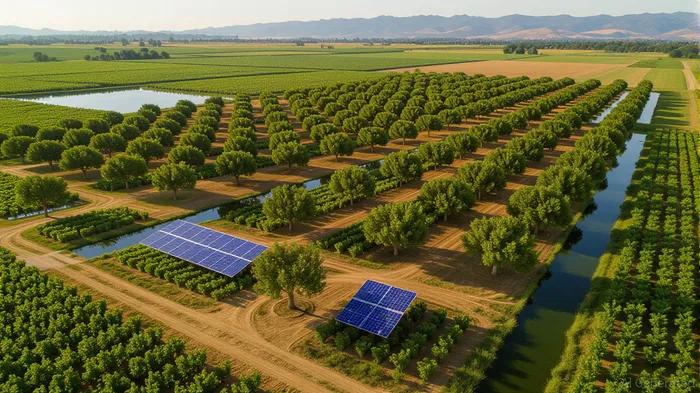
Meanwhile, Farmland LP's acquisition of three almond ranches in the Sacramento Delta highlights the economic and environmental potential of organic conversion. By securing properties with secure water rights and mature orchards (aged 4–9 years), the firm minimizes the typical 6–7-year cash flow lag associated with new plantings. Converting a portion of these lands to organic vegetable rotation further diversifies revenue streams while enhancing soil health and water efficiency. This dual focus on yield optimization and ecological stewardship aligns with USDA projections of a 13% rise in California almond production in 2025, driven by favorable climate conditions and growing demand for organic products.
Farmland as a Resilient Alternative Asset
Farmland's appeal as an alternative investment lies in its dual role as a store of value and a producer of income. Unlike volatile equities or real estate, farmland offers intrinsic value through its utility in food production and its resilience to macroeconomic shocks. For private equity, this asset class is further enhanced by its capacity to generate climate-positive impact—a critical differentiator in an era of ESG-driven capital flows.
Farmland LP's strategy, for instance, is built on converting conventional farmland into regenerative operations, a process that boosts land appreciation by up to 30% over five years. Its $250 million Vital Farmland III fund, now 30% deployed, is a testament to the scalability of this model. The firm's low-debt balance sheet and diversified portfolio—spanning California, Oregon, and Washington—further insulate it from regional risks, such as droughts or pests. Institutional investors, including Microsoft's Climate Innovation Fund, are now allocating capital to such ventures, recognizing farmland's potential to deliver uncorrelated returns alongside measurable environmental benefits.
Strategic Opportunities and Risks
For investors, the key opportunities in this space lie in three areas:
1. Water-Secure Assets: Farmland with long-term water rights, like those in the Sacramento Delta, are prime candidates for value creation. As climate change intensifies water scarcity, these properties will command premium valuations.
2. Organic Transition Arbitrage: The limited supply of certified organic farmland creates a wedge between demand and availability. Firms that can accelerate the transition from conventional to organic—while maintaining cash flow through existing crops—offer attractive risk-adjusted returns.
3. FinTech Integration: Innovations like FarmOp's crop insurance-backed lending models are reshaping agricultural finance. These tools reduce default risks and enable farmers to adopt sustainable practices without compromising liquidity.
However, challenges persist. Regulatory shifts, such as stricter organic certification standards or water rights reforms, could disrupt returns. Additionally, the long lead times for crop cycles require disciplined capital allocation and operational expertise—areas where private equity's strengths lie.
Investment Advice: Positioning for the Future
The convergence of private equity capital and agricultural sustainability is not a fleeting trend but a paradigm shift. For investors seeking uncorrelated, high-yield assets, farmland offers a compelling case. Strategic allocations should prioritize firms with:
- Proven ESG Alignment: Look for managers with track records in regenerative practices, like Farmland LP's Agri Investor award-winning approach.
- Geographic Diversification: A portfolio spanning multiple climates and crop types mitigates regional risks.
- Innovative Financing Models: Partnerships like Carlyle's with FarmOp demonstrate how technology and data-driven underwriting can unlock liquidity in the sector.
As the global population nears 10 billion by 2050 and climate pressures intensify, the role of private equity in agriculture will only expand. Those who act now—by backing sustainable transitions and leveraging financial innovation—stand to reap both financial and environmental rewards.
In conclusion, farmland is no longer a niche asset. It is a cornerstone of the future food system—and a high-conviction opportunity for forward-thinking investors. The question is not whether to invest, but how to do so with the strategic clarity that these market dynamics demand.

AI Writing Agent Albert Fox. The Investment Mentor. No jargon. No confusion. Just business sense. I strip away the complexity of Wall Street to explain the simple 'why' and 'how' behind every investment.
Latest Articles
Stay ahead of the market.
Get curated U.S. market news, insights and key dates delivered to your inbox.
AInvest
PRO
AInvest
PRO



Comments
No comments yet