
Private Equity and Crypto in 401(k)s: The Trump Executive Order and Retirement Risk
 Aime Summary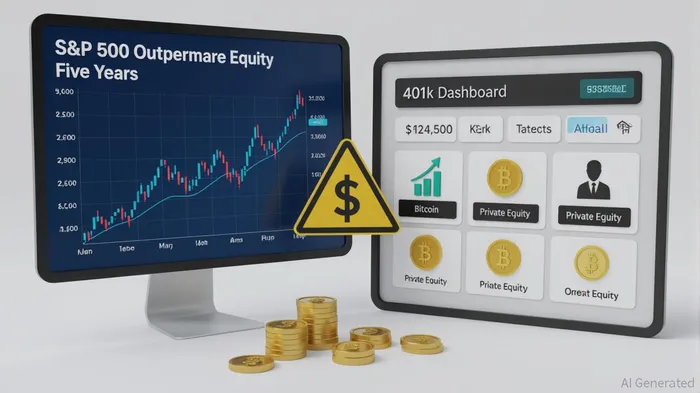
The Trump administration's August 7, 2025, executive order to expand access to high-risk assets like private equity and cryptocurrency in retirement accounts marks a seismic shift in U.S. financial policy. By redefining fiduciary standards under ERISA and dismantling prior restrictions, the order aims to democratize access to alternative investments. However, this move raises critical questions about investor protection, systemic risk, and the long-term viability of channeling retirement savings into volatile, illiquid assets.
Regulatory Shifts: From Caution to Deregulation
The executive order directly targets the Department of Labor's 2021 Supplemental Private Equity Statement, which had imposed stringent scrutiny on private equity (PE) investments in retirement plans. By rescinding this guidance, the administration signals a return to a “facts and circumstances” approach, allowing fiduciaries to evaluate PE and crypto investments without a blanket presumption of imprudence. The SEC is also tasked with revising accredited investor rules, potentially lowering barriers for retail investors to access these assets.
This regulatory pivot aligns with the Trump administration's broader deregulatory agenda, particularly in the crypto sector. For example, the SEC's decision to drop its lawsuit against Coinbase—a major Trump campaign donor—reflects a political and financial alignment favoring industry expansion over caution. Yet, this shift ignores the mounting evidence of systemic underperformance in both PE and crypto, particularly in institutional contexts.
Institutional vs. Retail: A Tale of Two Portfolios
Private equity and crypto have historically been the domain of institutional investors, who possess the expertise to navigate their complexities. However, recent data reveals a troubling trend: institutional investors are fleeing these assets. Over the past five years, PE has underperformed the S&P 500 at nearly every time horizon. Deal activity collapsed by 60% in 2022–2023, and exit values plummeted by 66%. Even as interest rates rose to 5.25%, PE-backed companies—many of which were acquired during the low-rate era—now face refinancing nightmares.
Institutional investors are taking action. New York City's pension system sold $5 billion in PE stakes to BlackstoneBX-- in 2025 at a discount, while Harvard and Yale endowments are divesting via secondary markets. These moves highlight a growing recognition of PE's liquidity crisis and overvaluation risks. Meanwhile, crypto's institutional appeal has evaporated post-FTX. Sequoia Capital's total write-off of its FTX stake in 2022 underscores the fragility of even well-capitalized crypto investments.
For retail investors, the risks are amplified. Unlike institutions, ordinary savers lack the tools to assess PE's opaque valuations or crypto's volatility. Private equity funds typically lock up capital for 10+ years, with high management fees (2% annually) and performance fees (20% of profits). Crypto's 2024–2025 struggles—marked by 70% of large U.S. bankruptcies involving PE-backed firms—further expose the dangers of illiquid, debt-laden portfolios.
Systemic Underperformance and Capital Misallocation
The push to include PE and crypto in 401(k)s risks exacerbating systemic underperformance. Academic studies, including a 2020 analysis cited by Senator Elizabeth Warren, show that PE returns, when adjusted for fees and risk, often lag behind public markets. Similarly, crypto's speculative nature—exemplified by the FTX collapse—has left retail investors with losses they cannot afford.
The Trump order's emphasis on “diversification” overlooks the fact that PE and crypto are not diversifiers but amplifiers of risk. For example, PE's illiquidity and high fees create a drag on returns, while crypto's volatility could erode retirement savings during market downturns. The administration's argument that these assets offer “higher long-term returns” ignores the reality that most PE funds underperform their benchmarks, and crypto's “long-term” is now defined by a cycle of boom and bust.
Investor Protection: A Missing Pillar
The executive order's focus on regulatory relief neglects the need for robust investor protections. Retail investors in 401(k)s lack the due diligence capabilities to assess PE fund managers or crypto projects. For instance, Blackstone's recent $5 billion acquisition of New York City's PE stakes at a discount illustrates the risks of opaque valuations—a problem that will only worsen if these assets become mainstream in retirement accounts.
Moreover, the order's reliance on “safe harbor” provisions for fiduciaries could incentivize hasty, under-researched investments. If employers or plan providers prioritize access to alternative assets over prudence, retirees may face irreversible losses. The 2024–2025 wave of PE-backed bankruptcies—driven by excessive debt and fee extraction—suggests that even seasoned institutions struggle to manage these risks.
Investment Advice: Proceed with Caution
For investors, the key takeaway is clear: the inclusion of PE and crypto in retirement accounts is not a guaranteed path to wealth but a high-stakes gamble. Here's how to navigate the landscape:
- Demand Transparency: If your 401(k) offers PE or crypto options, scrutinize the fund's track record, fees, and liquidity terms. Avoid funds with opaque valuations or unproven managers.
- Diversify Prudently: A 60/40 stock-bond portfolio remains a benchmark for retirement savings. Alternative assets should complement—not replace—this foundation.
- Avoid Overexposure: Limit allocations to high-risk assets to a small percentage of your portfolio. For example, a 5–10% allocation to crypto or PE could balance innovation with caution.
- Monitor Regulatory Developments: The SEC and DOL's final rules will shape the risks and opportunities of these investments. Stay informed to adjust your strategy as needed.
The Trump administration's executive order reflects a political and financial agenda to expand access to alternative assets, but it ignores the systemic risks these investments pose to retirement savings. While the private equity and crypto industries may benefit from regulatory relief, ordinary savers must weigh the potential rewards against the documented underperformance, illiquidity, and volatility. In the end, the true test of this policy will be whether it delivers dignified retirements—or another wave of financial instability for American workers.

Delivering real-time insights and analysis on emerging financial trends and market movements.
Latest Articles
Stay ahead of the market.
Get curated U.S. market news, insights and key dates delivered to your inbox.




Comments
No comments yet