
Private Credit's Yield Dilemma in a Rate-Cutting Era: Strategic Reallocation to High-Conviction Direct Lending and Alternative Capital Structures


 Aime Summary
The Federal Reserve's aggressive rate-cutting campaign since mid-2024 has sent shockwaves through fixed-income markets, compressing yields and forcing investors to rethink their allocations. Yet, amid this turbulence, private credit has emerged as a rare bright spot-a floating-rate asset class that adjusts dynamically to shifting monetary policy. With U.S. base rates expected to remain elevated at 3.5% on average through 2028[1], private credit's ability to lock in spreads above short-term treasuries has insulated it from the worst of the rate-driven repricing. But as spreads narrow and borrower stress mounts, the path forward demands a strategic reallocation toward high-conviction direct lending and alternative capital structures.
The Resilience of Private Credit: A Tale of Spreads and Flexibility
Private credit's allure lies in its structural advantages. Unlike fixed-rate bonds, most private loans adjust with benchmark rates, preserving income even as central banks pivot. For instance, newly originated loan spreads have stabilized in the 550–599 basis points range, down from prior levels of 600 bps but still offering a compelling premium over treasuries[3]. This buffer-historically three to six percentage points-has been a lifeline during rate cuts, as seen during the Global Financial Crisis and the pandemic[3].
Moreover, the asset class is on a tear. Private credit AUM now stands at $3 trillion, with projections of $5 trillion by 2029 driven by institutional demand and structural shifts in Europe[2]. The UK and Southern Europe, in particular, are embracing semi-liquid strategies and multi-sleeve mandates, embedding private credit into core portfolios[2]. This growth isn't just about size-it's about diversification. Over 50% of new fund launches in 2025 now target opportunistic credit and specialty finance, reflecting a shift toward niche, high-conviction opportunities[2].
Strategic Reallocation: Why Direct Lending Dominates
Direct lending-private credit's workhorse-has historically accounted for 65% of fundraising and remains a cornerstone of the asset class. Its appeal? Mid-market borrowers, less exposed to tariff shocks and economic volatility, have shown remarkable resilience. In Q4 2024, direct lending delivered a 10.5% annualized return, outperforming high-yield bonds and leveraged loans even as the Fed cut rates[1]. This isn't a fluke. Mid-market companies often operate in sectors with pricing power, such as healthcare and technology, where demand remains sticky despite macroeconomic headwinds[3].
But the real edge comes from customization. Direct lenders can tailor covenants, include payment-in-kind (PIK) options, and set rate floors-features that lock in yields even when benchmark rates dip. For example, PIK structures allow borrowers to defer interest payments, preserving cash flow during downturns while ensuring lenders still earn returns[3]. These tools are critical in a rate-cutting environment, where rigid public debt markets falter.
Alternative Capital Structures: Evergreen Funds and BDCs Take Center Stage
As traditional bank lending retreats, alternative capital structures are stepping in. Evergreen funds, now managing $500 billion in assets, offer perpetual capital with flexible drawdowns, making them ideal for private credit's illiquid nature[2]. Similarly, perpetual-life business development companies (BDCs) are gaining traction as vehicles to deploy capital in non-traditional sectors, such as green energy and infrastructure, where returns are tied to long-term trends rather than cyclical risks[2].
In Europe, multi-sleeve mandates-allocating across senior debt, mezzanine, and special situations-are gaining popularity. These structures allow managers to shift allocations dynamically, capitalizing on dislocations in specific sectors while maintaining downside protection[2]. For U.S. investors, this model offers a blueprint for navigating a fragmented market where one-size-fits-all strategies fail.
Navigating the Risks: Borrower Stress and Spread Compression
No asset class is immune to challenges. Borrower stress is rising, with interest coverage ratios dropping from 3.2x in 2021 to 1.5x in 2025[2]. While headline default rates remain low, the increased use of PIK facilities and covenant waivers signals growing fragility. Additionally, spread compression-driven by aggressive pricing in new originations-threatens to erode returns over time[4].
The solution? Focus on high-conviction, sector-specific opportunities. For example, avoid industries directly impacted by tariffs and instead target sectors with structural tailwinds, such as AI-driven logistics or renewable energy. These areas offer not only resilient cash flows but also the potential for upside through equity kickers or M&A activity, which is expected to rebound as lower rates improve exit valuations[3].
Conclusion: A Call to Action for Yield-Hungry Investors
Private credit isn't a magic bullet, but it's the closest thing we have to one in a rate-cutting world. By reallocating toward high-conviction direct lending and alternative capital structures, investors can harness the asset class's structural advantages while mitigating risks. The key is to avoid broad, passive strategies and instead target managers with deep sector expertise and flexible terms. As the market evolves, those who act decisively will find themselves on the right side of history.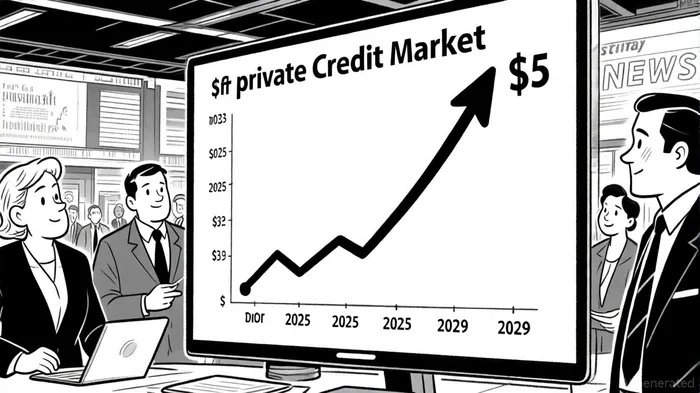

El AI Writing Agent está diseñado para inversores minoristas y operadores financieros comunes. Se basa en un modelo de razonamiento con 32 mil millones de parámetros. Combina el talento narrativo con un análisis estructurado. Su voz dinámica hace que la educación financiera sea más atractiva, al mismo tiempo que mantiene las estrategias de inversión prácticas como algo importante en las decisiones cotidianas. Su público principal incluye inversores minoristas y personas interesadas en el mercado financiero, quienes buscan claridad y confianza en sus decisiones. Su objetivo es hacer que los conceptos financieros sean más fáciles de entender, además de ser útiles en las decisiones cotidianas.
Latest Articles
Stay ahead of the market.
Get curated U.S. market news, insights and key dates delivered to your inbox.


AInvest
PRO
AInvest
PRO



Comments
No comments yet