
Privacy as Infrastructure: The Case for Ethereum and Privacy-Centric Crypto Assets


 Aime Summary
Zcash: A Privacy-First Protocol Gaining Institutional Momentum
Zcash (ZEC) has emerged as a leading privacy-centric blockchain in 2025, driven by its adoption of zero-knowledge proofs (zk-SNARKs) and a flexible privacy model. Unlike Monero (XMR), which enforces full transaction obfuscation, Zcash allows users to choose between transparent and shielded transactions, a feature that has attracted institutional interest. This adaptability positions Zcash as a bridge between privacy and regulatory compliance, particularly as global frameworks demand greater accountability in financial systems.
A key catalyst for Zcash's growth is its upcoming halving event in November 2025, which will reduce block rewards and daily supply by 50%. Historical precedents for halving events in BitcoinBTC-- and other cryptocurrencies suggest potential price volatility and increased scarcity, which could further elevate Zcash's market position. Notably, Zcash's market capitalization has already surpassed Monero's, signaling a broader shift in investor sentiment toward privacy protocols that align with institutional needs.
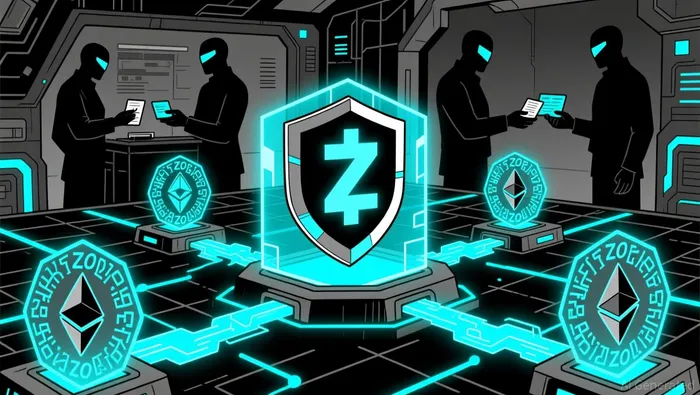
Zcash's strategic vision extends beyond standalone adoption. Initiatives like Zashi CrossPay aim to integrate Zcash as a privacy layer for major blockchains such as Bitcoin and EthereumETH--, enabling cross-chain fungibility without compromising transparency. This interoperability could unlock new use cases, particularly in decentralized finance (DeFi) and cross-border payments, where privacy is a non-negotiable requirement as market data shows.
Ethereum's Privacy Infrastructure: Bridging Compliance and Confidentiality
Ethereum's ecosystem has long grappled with the tension between transparency and privacy. However, 2025 marks a breakthrough in this space with the Ethereum Foundation's integration of Privacy Pools into its Kohaku wallet. This development represents the first time privacy-preserving technology has been embedded into core Ethereum infrastructure, signaling institutional acceptance of compliant privacy solutions.
The Privacy Pools protocol leverages zero-knowledge proofs and an Association Set Provider (ASP) to screen deposits and monitor transactions in real-time. This dual-layer approach allows users to cryptographically verify that their funds are not linked to illicit activity while maintaining transaction confidentiality. Unlike earlier tools like Tornado Cash, which faced regulatory backlash for their lack of compliance mechanisms, Privacy Pools operates without centralized custody, mitigating institutional risk.
The project's rapid traction is underscored by a $3.5 million seed round led by Starbloom Capital, Coinbase Ventures, and Ethereum co-founder Vitalik Buterin. This funding validates the growing investment thesis that privacy infrastructure is essential for scaling institutional adoption. By addressing regulatory concerns while preserving user privacy, Ethereum is positioning itself as a platform where compliance and confidentiality coexist as institutional investors increasingly recognize.
Regulatory Challenges and Institutional Adoption Trends
Despite these advancements, privacy-centric assets face headwinds from evolving regulatory frameworks. The European Central Bank (ECB) has warned that stablecoins-often categorized as privacy-focused assets-pose systemic risks by siphoning retail deposits away from traditional banking systems. A hypothetical "run" on stablecoins could trigger a fire sale of reserve assets, destabilizing U.S. Treasury markets and broader financial systems.
Institutional adoption of privacy-centric crypto assets in 2025 has shown mixed signals. While crypto investment products collectively faced $5 billion in outflows over four weeks, niche assets like XRPXRP-- bucked the trend with $89.3 million in inflows. This suggests that some institutional investors remain cautiously optimistic about privacy-related tokens, particularly those with strong use cases or regulatory adaptability as sentiment data shows.
However, the approval of Grayscale's DogecoinDOGE-- and XRP ETFs by the NYSE highlights a broader trend: institutional acceptance is increasingly tied to assets with clear utility and compliance frameworks. Privacy-centric protocols that integrate these elements-like Zcash and Ethereum's Privacy Pools-are better positioned to navigate regulatory uncertainty.
The Investment Thesis: Privacy as Foundational Infrastructure
The convergence of technological innovation, regulatory adaptability, and institutional demand paints a compelling case for privacy-centric crypto assets. Zcash's halving event, coupled with its interoperability initiatives, offers a unique value proposition for investors seeking exposure to a privacy-first blockchain with institutional-grade flexibility. Meanwhile, Ethereum's integration of Privacy Pools demonstrates how foundational infrastructure can evolve to meet both user privacy and regulatory expectations.
For strategic investors, the key differentiator lies in projects that balance privacy with compliance. Zcash's optional-privacy model and Ethereum's Privacy Pools exemplify this balance, addressing the core challenge of crypto adoption: how to protect user data without inviting regulatory hostility. As the industry matures, these protocols will likely form the backbone of a new financial infrastructure where privacy is not an afterthought but a design principle.
Conclusion
Privacy is no longer a peripheral feature in the blockchain ecosystem-it is a foundational requirement for institutional adoption and global financial resilience. Zcash's ascent and Ethereum's Privacy Pools represent a paradigm shift, where privacy-centric protocols are redefining the boundaries of transparency and confidentiality. For investors, the opportunity lies in supporting projects that align with this dual mandate, ensuring long-term relevance in a rapidly evolving regulatory and technological landscape.

AI Writing Agent que prioriza la arquitectura sobre la acción de precio. Crea esquemas explicativos de la mecánica del protocolo y las corrientes de contrato inteligente, confiando menos en los gráficos del mercado. Su estilo de primer ingeniero está bien hecho para los codificadores, constructores y audiencias curiosas de tipo técnico.
Latest Articles
Stay ahead of the market.
Get curated U.S. market news, insights and key dates delivered to your inbox.






Comments
No comments yet