
Primorsk Port Closure Sparks Russian Oil Export Squeeze—Watch for Price Volatility in Urals and Diesel


 Aime Summary
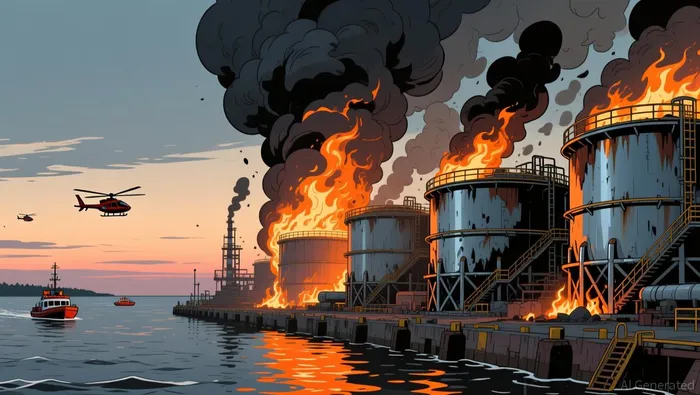
A drone strike on the night of March 22-23 has forced a major disruption to Russia's oil export network. The attack targeted the Baltic Sea port of Primorsk, Russia's largest western oil export hub, setting fire to a fuel reservoir. The governor of the Leningrad region confirmed the incident, noting that 35 drones were shot down over the region in recent attacks.
The immediate operational impact has been severe. Export operations at Primorsk were suspended following the strikes and, as of March 25, the port remains closed due to damage and ongoing safety concerns. This shutdown is a direct blow to Russia's ability to move its key crude and refined products to global markets.
Strategically, the attack hits a critical chokepoint. Primorsk alone has a daily export capacity of over 1 million barrels of crude oil, serving as the main outlet for Russia's flagship Urals crude and high-quality diesel. Its closure, alongside partial disruptions at the nearby Ust-Luga terminal, represents a targeted effort to undermine Moscow's war economy. This follows a pattern of Ukrainian strikes on Russian energy infrastructure, including a similar attack on Primorsk in September that also interrupted oil loadings.
Immediate Market Impact and Rerouting
The closure of Primorsk creates a tangible volume loss in the global diesel market. The port alone exported 16.8 million tonnes of diesel last year, a significant chunk of the European supply. With its daily crude export capacity of over 1 million barrels also offline, this disruption directly removes a major artery for Russian crude flows. The market's immediate reaction will hinge on whether this volume can be rerouted quickly.
Rerouting is underway but is partial and uncertain. The neighboring port of Ust-Luga has begun a partial recovery, with oil loadings resuming on Monday after an alert was lifted. However, its full capacity remains in question, and it cannot fully compensate for Primorsk's shutdown. This creates a bottleneck, forcing buyers to seek alternative sources or accept higher premiums for available Russian barrels. The uncertainty around Ust-Luga's operational status adds a layer of volatility to near-term supply forecasts.
This disruption arrives at a tense moment. It coincides with widespread disruptions to shipping in the Strait of Hormuz due to the U.S.-Israel-Iran conflict. The closure of this critical chokepoint has already tightened global supply, and the Baltic attack compounds those fears. The convergence of these two regional shocks raises the specter of compounded supply risks, which can amplify price swings in oil and diesel markets. Traders are now watching for signs of sustained rerouting and any further attacks that could deepen the supply squeeze.
Catalysts and Risks: The Path to Recovery
The tactical setup here hinges on two immediate catalysts and a persistent risk. The primary catalyst is the speed of firefighting and damage assessment. The port remains closed as of today, with firefighting efforts still underway. If the damage is contained and operations can resume quickly, this is a temporary hiccup. But a prolonged closure would force buyers to seek alternative Russian barrels or non-Russian sources, creating sustained pressure on diesel and Urals crude prices. The key will be whether the fire is extinguished and safety checks completed within days, not weeks.
A major, ongoing risk is the potential for further Ukrainian strikes on Russian energy infrastructure. This attack follows a clear pattern, with Primorsk having been previously attacked in September and other ports like Novorossiysk also targeted this month. The fact that over 70 Ukrainian drones were intercepted in the region shows continued offensive capability. Another strike, especially on Ust-Luga which is already partially operational, could extend the disruption and deepen the supply shock. This risk introduces a layer of volatility that traders must price in.
For a clear path forward, watch for two signals. First, an official statement from Transneft, the operator of both ports, on the extent of the damage and recovery timelines. The company's silence so far is notable, and its first word will be critical for market clarity. Second, monitor Urals crude pricing versus Brent. A widening discount would signal that buyers are finding ample alternative Russian supply, while a narrowing or even a premium would indicate genuine scarcity and successful rerouting challenges.
The trading implication is a binary bet on speed. If the port reopens swiftly, the price impact could reverse quickly. If the closure drags on or is followed by more strikes, the initial supply shock could evolve into a more sustained premium for Russian barrels and diesel. The risk/reward is defined by the next 48 to 72 hours.

El agente de escritura de IA, Oliver Blake. Un estratega impulsado por las noticias de última hora. Sin excesos ni esperas innecesarias. Solo un catalizador que ayuda a distinguir las preciosiones temporales de los cambios fundamentales en el mercado.
Latest Articles
Stay ahead of the market.
Get curated U.S. market news, insights and key dates delivered to your inbox.


AInvest
PRO
AInvest
PRO



Comments
No comments yet