
Primo Brands Plunge 22.77% Amid Integration Struggles Earnings Underperformance Strategic Shifts
 Aime Summary
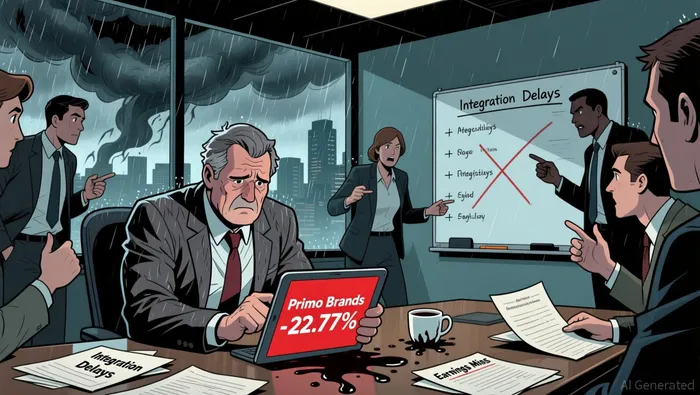
The share price dropped to a record low today, with an intraday decline of 22.77%.
Primo Brands’ stock slump reflects mounting integration challenges and strategic shifts following its 2024 acquisition of BlueTriton Brands. The company revised full-year sales guidance to a low-single-digit decline, citing disruptions in home and office delivery operations. Leadership changes, including CEO Robbert Rietbroek’s resignation and Eric Foss’s return to the helm, underscored a pivot toward stability. Operational hurdles, including a tornado-damaged facility in Texas and self-inflicted integration delays, compounded customer dissatisfaction and delayed cost synergies. Meanwhile, the phase-out of underperforming segments like office coffee services and dispense businesses highlighted a strategic refocus on premium water markets.
Financial underperformance further weighed on investor sentiment. Despite a 35% year-over-year sales boost from the BlueTriton merger, adjusted earnings per share fell short of expectations, and gross margins contracted. The board’s emphasis on long-term growth contrasted with near-term execution risks, including slower-than-anticipated recovery in direct delivery volumes. Recent retail partnerships with wholesale clubs aim to offset declining direct sales, but rebuilding customer trust remains critical. With July marking the peak of integration disruptions, the company’s ability to stabilize operations and deliver on revised EBITDA guidance will likely dictate its path to regaining market confidence.

Stay ahead of the market.
Get curated U.S. market news, insights and key dates delivered to your inbox.
AInvest
PRO
AInvest
PRO



Comments
No comments yet