
Beyond the Price Tag: Using EV/EBITDA and Free Cash Flow to Spot Real Value
 Aime Summary
Introduction
Investors are often drawn to stocks with low price-to-earnings (P/E) ratios, assuming they represent a bargain. However, a cheap stock can sometimes be a "value trap"—a company that appears undervalued but is actually facing fundamental decline. To avoid this pitfall, sophisticated investors look beyond simple earnings. This article explores two powerful metrics: Enterprise Value to Earnings Before Interest, Taxes, Depreciation, and Amortization (EV/EBITDA) and Free Cash Flow (FCF). Understanding these tools helps distinguish genuine value plays from deceptive traps.
Core Concept Explanation
To understand these metrics, we must first define them simply. EV/EBITDA is a valuation ratio that compares a company’s total value (including debt) to its operating profitability. Enterprise Value (EV) is the theoretical price to buy a company, calculated as its market capitalization plus debt minus cash. EBITDA represents the cash generated from core operations, ignoring accounting decisions like depreciation.
Free Cash Flow (FCF), on the other hand, is the cash left over after a company pays for its operating expenses and capital expenditures. Think of EBITDA as the engine’s power and Free Cash Flow as the fuel in the tank. While EBITDA shows operational efficiency, FCF shows actual liquidity available to pay dividends, buy back shares, or reinvest in growth.
Application and Strategies
When analyzing a stock, start by looking at the EV/EBITDA ratio. A low ratio suggests the company is cheap relative to its earnings power. However, this is only the first step. The critical strategy is to cross-reference this with Free Cash Flow. A true value play will have a low EV/EBITDA 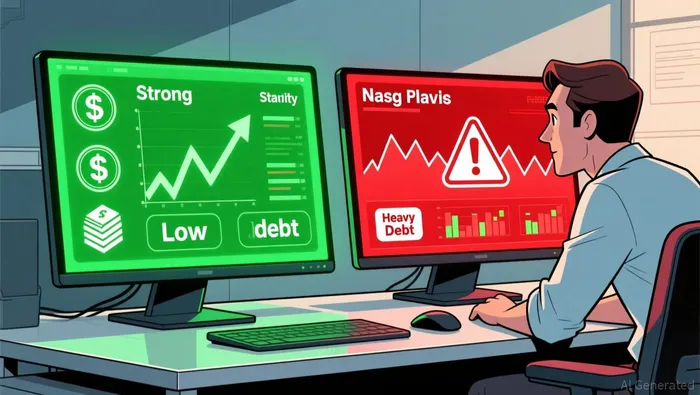 and strong, consistent Free Cash Flow. This indicates the company is not just cheap on paper but is actually generating cash.
If a company has a low P/E or EV/EBITDA but negative or shrinking Free Cash Flow, it is likely a value trap. The low valuation may be justified because the business model is deteriorating, or the company is burning cash to stay afloat. Investors should avoid these stocks unless there is a clear path to improved cash generation.
Case Study Analysis
Consider the case of a hypothetical legacy retailer, "OldStore Inc." In 2019, OldStore traded at a P/E ratio of 5 and an EV/EBITDA of 4, appearing incredibly cheap compared to its tech-savvy competitors trading at 20x multiples. On the surface, it looked like a steal. However, digging deeper revealed that OldStore’s Free Cash Flow had been negative for three consecutive years. The company was selling off assets and taking on debt to cover operational losses, not generating organic cash.
In contrast, a competitor, "NewRetail," traded at a higher EV/EBITDA of 12. Yet, NewRetail generated robust positive Free Cash Flow, allowing it to invest in new stores and digital infrastructure. While OldStore seemed like a bargain, it was a trap. Two years later, OldStore filed for bankruptcy, while NewRetail’s stock price doubled. This example illustrates that cash flow quality matters more than headline valuation multiples.
Risks and Considerations
While EV/EBITDA and FCF are powerful tools, they are not foolproof. High capital intensity industries, such as manufacturing or telecommunications, naturally have lower Free Cash Flow due to heavy infrastructure costs. In these sectors, comparing EV/EBITDA is often more reliable than looking at raw FCF.
Additionally, earnings can be manipulated through accounting tricks, though FCF is harder to fake. Investors must always read the cash flow statement carefully. Ensure that "cash from operations" is not being propped up by delaying payments to suppliers or selling off assets. Always conduct thorough research and diversify your portfolio to mitigate the risk of individual stock failures.
Conclusion
Distinguishing between value plays and value traps requires looking past superficial metrics like the P/E ratio. By combining EV/EBITDA with Free Cash Flow analysis, investors can identify companies that are not only cheap but also financially healthy. Remember, a stock is only a bargain if the business can generate real cash to sustain its future. Use these tools to dig deeper, avoid traps, and build a resilient investment portfolio.

Stay ahead of the market.
Get curated U.S. market news, insights and key dates delivered to your inbox.


AInvest
PRO
AInvest
PRO




Comments
No comments yet