
Beyond Price: Using EV/EBITDA to Spot Value in Energy Stocks
 Aime Summary
When evaluating mature energy companies, relying solely on the stock price or even the Price-to-Earnings (P/E) ratio can be misleading. These metrics often ignore the significant debt loads and capital-intensive nature of the energy sector. To get a clearer picture of a company’s true value, investors should turn to a more robust metric: Enterprise Value to Earnings Before Interest, Taxes, Depreciation, and Amortization, commonly known as EV/EBITDA. This article explores how this ratio works, why it is particularly useful for energy assets, and how you can apply it to your investment strategy.
Understanding the Core Concept
To grasp EV/EBITDA, we must first break down its two components. Enterprise Value (EV) represents the total cost to acquire a company. It is calculated by taking the market capitalization (the total value of all shares) and adding the company’s debt, while subtracting its cash. This provides a realistic snapshot of what a buyer would actually pay, including assuming the company’s liabilities.
EBITDA serves as a proxy for the company’s core operational cash flow. By excluding interest, taxes, depreciation, and amortization, it removes the effects of different financing structures, tax environments, and accounting decisions. This allows for a cleaner comparison of operational efficiency between companies. When you divide EV by EBITDA, you get a multiple that tells you how many years of current earnings it would take to pay back the enterprise value. A lower ratio generally suggests a company is undervalued relative to its cash-generating potential.
Application and Strategies
In the energy sector, companies often carry substantial debt to fund exploration, drilling, or infrastructure projects. Traditional P/E ratios can distort value because high interest payments reduce net income, making a healthy company look expensive. EV/EBITDA neutralizes this distortion.
Investors can use this metric to screen for undervalued opportunities. For instance, compare a mature oil producer with high debt against a competitor with a cleaner balance sheet. Even if the high-debt company has a higher P/E ratio, its EV/EBITDA might be significantly lower, indicating it is cheaper relative to its operational cash flow. A strategic approach involves identifying companies in the mature energy space with EV/EBITDA ratios below their historical averages or industry peers, provided their underlying asset quality remains strong.
Case Study: The Shift in Traditional Energy
Consider the period following the 2020 oil price crash. Many traditional energy firms saw their stock prices plummet, leading to seemingly attractive P/E ratios. However, many were burdened with near-bankruptcy debt levels. Investors who looked only at stock price missed the risk. Conversely, those analyzing EV/EBITDA saw that while cash flows were depressed, the enterprise value adjusted for debt offered a clearer view of long-term survivability and recovery potential. 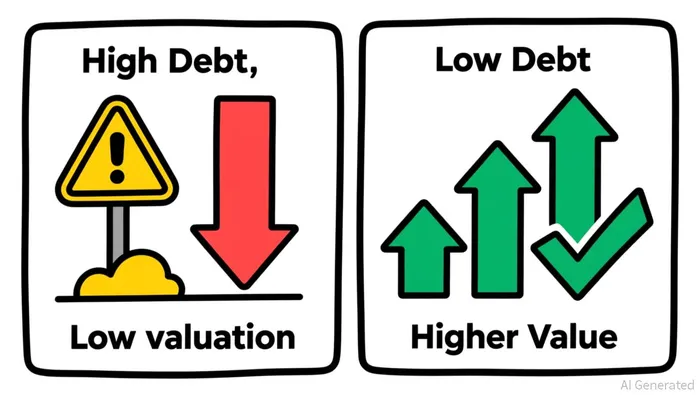 Companies that maintained disciplined capital expenditure and had manageable debt-to-EBITDA ratios were identified as safe havens. For example, during the recovery phase, firms with an EV/EBITDA below 4x were often viewed as deeply undervalued compared to renewable energy stocks trading at much higher multiples, highlighting a distinct value opportunity in the mature sector.
Risks and Considerations
While EV/EBITDA is powerful, it is not without risks. It does not account for future capital expenditures, which are crucial in energy where maintaining production requires constant reinvestment. A low ratio might mask a company that needs massive spending just to stay in business. Additionally, commodity price volatility can make EBITDA unstable from quarter to quarter.
To mitigate these risks, always combine EV/EBITDA with other metrics like free cash flow yield and debt maturity schedules. Conduct thorough research into the quality of the underlying assets. Ensure that the low multiple is not a result of impending regulatory changes or resource depletion. By using EV/EBITDA as part of a broader analytical framework, investors can better navigate the complexities of the energy market and identify genuine value opportunities.
Conclusion
EV/EBITDA offers a sophisticated yet accessible lens for evaluating mature energy assets. By accounting for debt and focusing on operational cash flow, it reveals value that traditional metrics often obscure. While it requires careful interpretation alongside capital expenditure needs and debt structures, it remains an essential tool for identifying undervalued opportunities in a volatile sector. Use it wisely, stay informed, and manage your risks to build a resilient portfolio.

Stay ahead of the market.
Get curated U.S. market news, insights and key dates delivered to your inbox.


AInvest
PRO
AInvest
PRO




Comments
No comments yet