
Presidio Property (SQFT.O) Surges 14.5% — What’s Fueling the Unusual Move?
 Aime Summary
A Sharp Intraday Move with No New Fundamental News
Presidio Property (SQFT.O) saw an unusual intraday spike, surging nearly 14.5% in volume of 3.14 million shares. With no significant fundamental news to justify the move, we turn to technical signals, order-flow patterns, and peer stock behavior to determine what might be behind the surge.
Technical Signals Suggest a Momentum-Based Trigger
Although classic reversal patterns such as the head-and-shoulders, double top, and double bottom did not trigger, SQFTSQFT--.O did see a golden cross in the KDJ oscillator, which is a widely used momentum indicator in technical analysis.
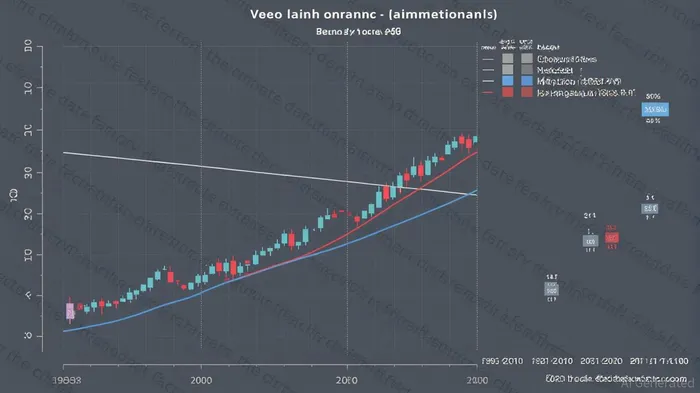
The KDJ golden cross typically signals a bullish shift in market sentiment. It suggests that the stock may be entering a short-term uptrend, driven by renewed buying interest. This could explain the sharp intraday jump, particularly if the move caught short-sellers or range-bound traders off guard.
Notably, the RSI was not in oversold territory, and there were no MACD crossovers, indicating that this move is not part of a broader trend reversal or mean reversion trade. Instead, it appears to be a short-term momentum breakout, likely fueled by traders reacting to the KDJ signal.
No Clear Order-Flow Signal or Block Trading
We had access to no block trading data or order-flow clusters. This means the surge wasn’t driven by a large institutional trade or sudden liquidity injection. However, the volume was significantly above average, suggesting retail or algorithmic traders may have been involved in pushing the price higher.
The lack of net cash-flow data means we cannot confirm if there was a net inflow or outflow. However, the rapid and sustained nature of the price movement points to buy-side pressure, possibly triggered by a breakout or reversal signal being used by high-frequency or swing traders.
Peers Show Divergence, Not Uniform Movement
The peer group for real estate and small-cap stocks showed a mixed performance. While some stocks like APL and AXL remained flat, others such as BH and BH.A dropped significantly. This divergence suggests that the SQFT.O move isn’t part of a broader sector rotation or thematic trade.
In fact, the absence of broad-based movement in related stocks implies that the SQFT.O move is stock-specific or driven by a niche group of traders reacting to internal technical signals. This reinforces the hypothesis that the KDJ golden cross played a central role in triggering the move.
Top Hypotheses Behind the Spike
KDJ Golden Cross Triggered Algorithmic or Retail Buying: The golden cross in the KDJ oscillator likely acted as a buy trigger for technical traders. The absence of other reversal signals suggests that this was not a long-term trend play, but a short-term momentum-driven trade.
Retail Trader Participation or HFT Activity: With no block trades or order-flow clusters identified, it is likely that the move was driven by either high-frequency trading or a wave of retail buying triggered by the technical signal.
Concluding Takeaways
The sharp 14.5% intraday move in Presidio PropertySQFT-- (SQFT.O) appears to have been driven by a technical signal—specifically the KDJ golden cross—which acted as a catalyst for buying activity. The absence of peer stock movement and cash-flow data implies the move is not a result of sector rotation or institutional block trading, but more likely a short-term momentum event.
As the stock remains in a relatively low market cap and with high volatility potential, traders should monitor the sustainability of the move. A retest of the breakout level could provide more clarity on whether this is the start of a new uptrend or a temporary spike.

Stay ahead of the market.
Get curated U.S. market news, insights and key dates delivered to your inbox.
AInvest
PRO
AInvest
PRO



Comments
No comments yet