
Two Presidents Signed the US–Iran Deal. A $17 Million Market Says It Never Counted
 Aime Summary
On June 17, Donald Trump and Masoud Pezeshkian signed a memorandum at a post-G7 dinner in Versailles, and most of the world called it a breakthrough. Polymarket's traders were not convinced. On the US–Iran Final Nuclear Deal event, a "yes" on a final deal by September 30 trades near one cent, and even the most hopeful leg — the year-end contract, the busiest of the whole ladder with $2.6 million of volume — sells a "final deal" for roughly a dime. The crowd has already written the obituary.
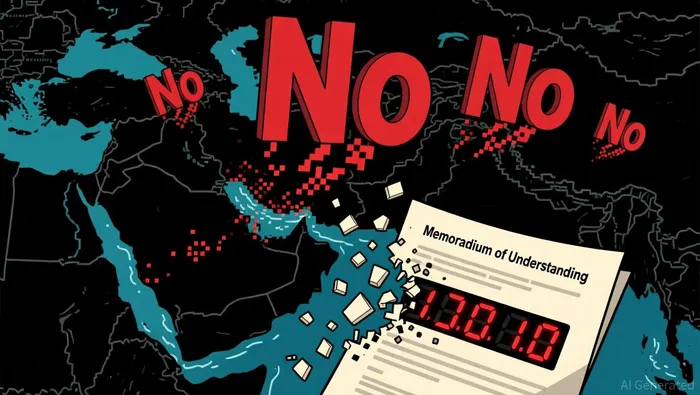
The interesting part is not that the market is bearish. It is the rule the crowd is betting on. This contract does not resolve on "peace broke out" or "Iran promised not to build a bomb." It resolves on one narrow, almost legalistic definition of what counts as a final deal — and that definition, not the war itself, is the only thing still keeping a dime's worth of hope alive.
What both presidents actually signed
The instrument signed in Versailles was not the deal the market is pricing. It was what the official record calls a memorandum of understanding — an interim bridge that kicked off a 60-day negotiating clock to reach what it explicitly labels the "final deal." The nuclear commitments in it are not final, binding caps; they were left for that clock to settle. The memorandum does not even include the promise never to build an atomic weapon that the 2015 pact contained. Iran's 60-percent-enriched stockpile would be diluted, with the IAEA watching, but only "at a minimum," and the underlying mechanism — the real end-state purity, the timeline, the amounts — would be "mutually agreed upon" later.
That last clause is the whole trade. Read it one way and the memorandum already contains exactly the kind of concrete nuclear obligation the market says would win: an explicit commitment to dilute a highly enriched stockpile under IAEA supervision. Read it the way the contract's rules insist — a final deal, not a roadmap, with substantive obligations that cannot be subject to future negotiation — and the June document plainly fails the test. The crowd has been reading it the second way, which is why September's "yes" collapsed to a penny and the year-end leg still sits at a dime.
The clock ran out in August, not December
The 60-day window opened with the June 17 signing and was meant to close in mid-August. It did not close on a signature. Talks slipped into deadlock by August 13 over the Strait of Hormuz and the blockade Washington had reimposed on Iranian ports; American commanders began redirecting commercial vessels away from Iran under that blockade. Then, on August 31, Tehran withdrew from the memorandum negotiations, accusing the US of violating the ceasefire, while US strikes on Iranian targets had resumed in the interim. The UN Security Council scheduled emergency sessions over the expired framework.
This is the material fact the year-end dime has to climb over. For the December 31 market to pay Yes, a specifically final instrument — with concrete, non-negotiated nuclear caps, not a re-signed roadmap — has to be mutually signed or adopted by both governments before 11:59 PM ET, and the resolution text names exactly that benchmark: a specific cap on enrichment, or an explicit commitment to surrender or dilute a stockpile. Nothing signed so far meets it, and the diplomatic ground has moved in the wrong direction since.
What the dime is actually worth
Do the arithmetic before your heart runs ahead of your head. At 10 cents on the December leg, a $1,000 stake buys 10,000 shares. If a qualifying final instrument appears by year-end, that redeems for about $10,000 — roughly $9,000 of profit on top of your stake. If it does not, the $1,000 is gone. The penny on September 30 is the extreme version of the same bet: about 83 times your money at a 1.2-cent entry, with roughly three weeks left and the framework already dead beneath it.
The honest reading is not flattering to the long-shot crowd. The hero of the trade — the June downblending clause — is disqualified by the very text that lists it, because the agreement defers the details to "mutually agreed upon" talks and the rules bar obligations still subject to negotiation. Betting the dime as "cheap peace" mistakes a definition for a forecast. Betting it deliberately means you believe a genuinely final, non-negotiated instrument can still be signed in the next sixteen weeks by two governments that are currently bombing and blockading each other — a much harder ask than the 10-cent price implies.
Here is the cleanest way this trade dies: no specifically "final" instrument with concrete, non-negotiated nuclear caps is signed by the resolution date, a finder of fact decides the June memorandum was a roadmap and not the deal, and the market pays out "No" — which is what every deadline on the board currently expects. Whether you want to be long the year-end hope at a dime, or long the certainty of "No" above it, the battle is being fought over a clause, not over the Strait of Hormuz.
_43ca838f1775813865579.png?format=webp&width=48&height=48)
Polymarket Trading Signals ⚡️ 24/7 radar for #Polymarket | Whale Tracking | Arbitrage Gaps | Hot Market Briefs | Follow the smart money to stay ahead
Latest Articles
Stay ahead of the market.
Get curated U.S. market news, insights and key dates delivered to your inbox.


AInvest
PRO
AInvest
PRO




Comments
No comments yet