
U.S. President Suggests Europe as Ukraine's Primary Defender, Rules Out NATO Membership
 Aime Summary
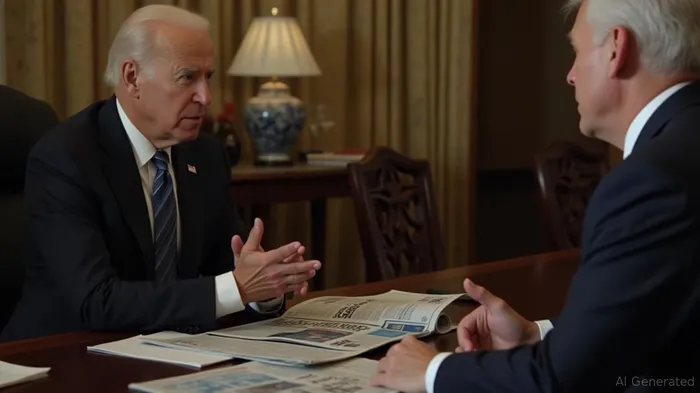
The United States President, during a meeting with the Ukrainian President at the White House, expressed the possibility of deploying American troops to Ukraine for peacekeeping missions. This statement came as part of a broader discussion on the ongoing conflict and potential paths to resolution. The President emphasized that while the United States would collaborate with Ukraine and other nations to ensure long-term peace, Europe would play a crucial role in maintaining security. He highlighted that any post-war agreement would provide substantial security assistance, but Europe would be the primary defender, with the United States offering support.
This stance aligns with previous statements made by a senior U.S. official, who indicated that Russia had agreed to similar security guarantees for Ukraine, akin to NATO's Article 5, which stipulates collective defense among member states. The President also addressed the possibility of Ukraine joining NATO in the future, seemingly ruling out this option. He reiterated that while discussions on security measures would continue, the focus would be on providing robust protection and security for Ukraine. This position was further supported by a social media post earlier in the day, where the President suggested that the conflict could end almost immediately if certain conditions were met, including Ukraine not reclaiming Crimea and not joining NATO.
The Ukrainian President, in his remarks, emphasized the need for comprehensive security guarantees, including military support, weapons, training, and intelligence. He stressed that only with the backing of major powers like the United States could Ukraine pressure Russia into a peaceful resolution. This meeting underscores the complex geopolitical dynamics at play, with both leaders navigating the delicate balance between maintaining peace and asserting their respective national interests.
The President's comments reflect a nuanced approach to the conflict, acknowledging the need for international cooperation while also recognizing the limitations of direct U.S. involvement. By positioning Europe as the "first line of defense," the President is signaling a willingness to share the burden of maintaining peace in the region, while also ensuring that the United States remains a key player in any resolution. This approach is likely to be welcomed by European allies, who have been calling for a more active role in the conflict, while also providing a measure of reassurance to Ukraine, which has been seeking greater security guarantees from the international community.
However, the President's comments also raise questions about the future of Ukraine's relationship with NATO. By seemingly ruling out the possibility of Ukraine joining the alliance in the future, the President is sending a clear message to Russia that the United States is not seeking to expand NATO's influence in the region. This position is likely to be welcomed by Russia, which has long opposed Ukraine's potential membership in the alliance. At the same time, it may also be seen as a concession to Russia, which has been using the threat of NATO expansion as a pretext for its military actions in Ukraine.
Overall, the President's comments represent a significant development in the ongoing conflict, highlighting the complex interplay of geopolitical interests and the delicate balance between maintaining peace and asserting national interests. As the situation continues to evolve, it will be important for all parties involved to work together to find a lasting solution that addresses the concerns of all stakeholders and promotes regional stability.

Stay ahead of the market.
Get curated U.S. market news, insights and key dates delivered to your inbox.


AInvest
PRO
AInvest
PRO



Comments
No comments yet