
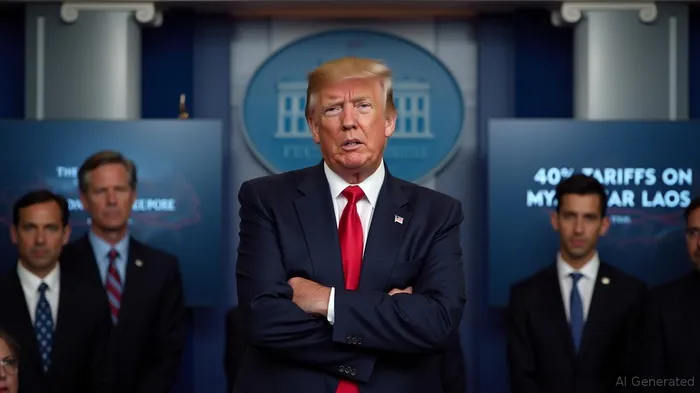
U.S. President Announces 40% Tariffs on Myanmar Laos August 1
Reports surfaced on July 8, 2025, suggesting that the U.S. was planning to impose a 40% tariff on Myanmar and Laos. However, a thorough review of official sources reveals no confirmation of such a tariff or the specific rate. The only verified information is a 10% U.S. tariff targeting countries aligned with BRICS, with no explicit mention of Myanmar or Laos.
President Donald Trump's recent statements have highlighted a 10% tariff rate for countries aligning with BRICS, but these statements do not specifically address Myanmar or Laos. The community and institutional responses reflect skepticism, with no official data supporting a 40% tariff on Myanmar or Laos. Notably, there have been no declarations from the U.S. Trade Representative or related governmental agencies confirming such a tariff.
According to President Trump, "Any Country aligning themselves with the anti-American policies of BRICS will be charged an ADDITIONAL 10% Tariff. There will be no exceptions to this policy." This statement underscores the U.S.'s stance on countries aligning with BRICS but does not provide specific details about Myanmar or Laos.
The White House has announced that the President will sign an executive order to delay the implementation of tariffs from July 9 to August 1. This decision comes amidst a series of trade announcements, including potential tariffs on various nations. Notably, the President has threatened duties of up to 40% on goods from Laos and Myanmar, along with 30% duties on goods from South Africa. Additionally, imports from Malaysia and Kazakhstan will be taxed at 25%.
The announcement of the tariff extension was not enough to alleviate investor concerns. The President's posts on his social media platform indicated that he had sent letters to officials in Japan and South Korea, threatening 25% tariffs on goods imported to the U.S. beginning August 1. These countries still have the opportunity to reach a deal with the administration to avoid these rates.
Later in the afternoon, the President posted additional letters sent to Laos and Myanmar, which will face 40% tariffs starting on August 1. Kazakhstan and Malaysia will also see 25% duties, while South Africa faces 30% tariffs. The President also signed an executive order extending a 90-day “pause” on his tariffs to August 1. This pause was originally set to expire on July 9.
The announcement of the tariff extension did not prevent a slide in the stock market. Shares of major companies such as Alphabet, AppleAAPL--, HondaHMC--, NvidiaNVDA--, and ToyotaTM-- all fell following the President’s posts. The Nasdaq was down 0.95% in the afternoon, while the S&P 500 fell 0.89% and the Dow Jones Industrial Average shed 1.1%. These losses follow several indices hitting record highs the previous week.
The President's earlier threat to impose additional tariffs on countries aligning with the Anti-American policies of BRICS also contributed to investor worries. The President wrote in a post that any country aligning with BRICS would face an additional 10% tariff, with no exceptions to this policy.
The President is expected to make several other trade announcements this week. The first set of tariff rates announced on Monday is just the beginning of a series of trade actions planned for the coming days. The new tariff rates will not apply to all goods from the affected countries. For instance, only about 54% of imports from Japan and 46% of imports from South Korea would be exposed to the 25% tariffs. This is because the new rate would not apply to goods that fall under the President’s already-implemented product-specific tariffs, such as autos, as well as exemptions for electronics and pharmaceuticals.
The President has not yet released a letter threatening higher tariffs on the European Union, suggesting that he remains satisfied with how those bilateral trade talks are going. From the European side, media reports suggest a draft framework deal is close to being agreed, which would allow time for more detailed negotiations.

Entiende rápidamente la historia y el origen de diferentes célebres monedas
Latest Articles
Stay ahead of the market.
Get curated U.S. market news, insights and key dates delivered to your inbox.


AInvest
PRO
AInvest
PRO



Comments
No comments yet