
Presale Whitelisting in Emerging Cryptocurrencies: Strategic Entry Points for High-Reward Investments


 Aime Summary
The cryptocurrency market in 2025 has become a battleground for innovation, speculation, and community-driven narratives. Among the most striking phenomena is the meteoric rise of memeMEME-- coins, with Fartcoin ($FART) capturing headlines after reportedly delivering 18,000% gains in a single year. While Fartcoin's success is often attributed to its absurd humor and viral appeal, a parallel narrative emerges from projects like Apeing ($APEING), which leveraged structured presale whitelisting to create strategic entry points for investors. This analysis explores the contrasting strategies of organic growth and formalized presale mechanisms, emphasizing how early-stage access can amplify returns in a volatile market.
Fartcoin's Organic Explosion: Viral Hype vs. Structured Strategy
Fartcoin's 18,000% gains in 2025 were fueled by a combination of meme culture, social media virality, and whale-driven accumulation. According to a report by Messari, the token surged to an intraday high of $1.4957 in June 2025, with its market cap nearing $1.5 billion by January 2025. This growth was driven by over 165,854 unique wallets, reflecting broad retail participation. However, Fartcoin's ascent lacked a traditional presale structure. Instead, it relied on organic community engagement, humor-driven branding, and decentralized platforms like RaydiumRAY-- and OrcaORCA-- for liquidity.
While Fartcoin's model demonstrates the power of internet culture in crypto, it also highlights the risks of volatility. The token faced a 26% decline in a single week amid forced selling and bearish pressure, underscoring the unpredictability of meme-driven assets. Unlike structured presales, Fartcoin's success was less about controlled access and more about timing the viral cycle-a strategy that rewards those who "buy the dip" but punishes those caught in liquidity crunches.
Apeing's Structured Presale: Whitelisting as a Strategic Lever
In contrast, Apeing ($APEING) exemplifies how structured presale mechanisms can create predictable entry points for high-reward investments. According to data from MEXC, Apeing's 2025 presale offered tokens at $0.0001 in Phase 1, with a projected listing price of $0.001-a 10× gain for early buyers. To participate, investors had to join a whitelist via the Apeing website, confirming their email to secure priority access. This approach limited token allocation per participant, fostering exclusivity and reducing congestion during the presale.
Apeing's model also emphasized transparency, with third-party audits and public announcements through verified channels. By structuring allocations and pricing tiers, the project incentivized early participation while aligning investor incentives with long-term growth. As noted in a report by OpenPR, such strategies combine hype with technical rigor, offering a "calculated approach" to meme coin investing.
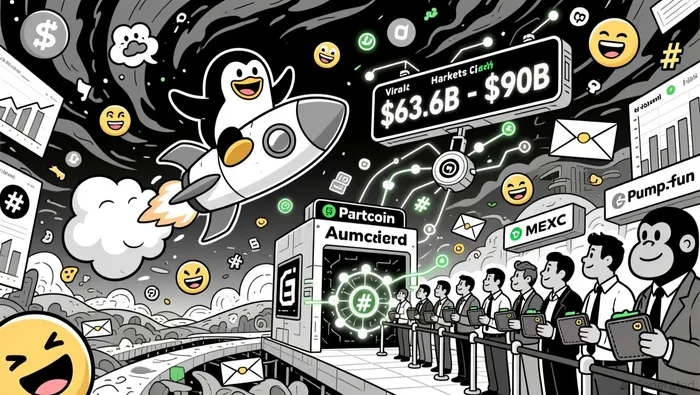
The 2025 crypto landscape saw the memecoinMEME-- segment reach a total capitalization of $63.6 billion to $90 billion, driven by low-fee networks like SolanaSOL-- and platforms such as Pump.fun according to Messari. While Pump.fun's influence waned due to legal scrutiny, its legacy highlighted the demand for no-code token creation. Fartcoin, as a Solana-based project, benefited from this ecosystem but diverged from structured presales, relying instead on organic traction.
Meanwhile, projects like Apeing capitalized on the growing appetite for controlled access. By implementing whitelists and tiered pricing, they created a sense of urgency and scarcity, which are critical in a market where retail participation often drives liquidity. As Capital.com's analysis notes, structured presales can mitigate the risks of unregulated hype cycles, offering investors a framework to assess value.
Strategic Implications for Investors
For investors seeking high-reward opportunities, the contrast between Fartcoin and Apeing underscores the importance of entry strategy. Fartcoin's 18,000% gains were a product of timing and community momentum, but such outcomes are rare and highly speculative. Structured presales, on the other hand, provide a blueprint for risk management. By securing tokens at discounted rates through whitelists, investors gain a buffer against volatility while aligning with projects that prioritize transparency and governance.
However, neither model is without risks. Fartcoin's volatility and Apeing's reliance on hype both expose investors to market sentiment shifts. The key lies in due diligence: assessing a project's tokenomics, team credibility, and long-term utility, regardless of whether it employs a presale or organic model.
Conclusion
The 2025 crypto market has proven that both organic virality and structured presales can yield extraordinary returns. Fartcoin's 18,000% gains highlight the power of meme culture, while Apeing's whitelisting strategy demonstrates the strategic value of controlled access. For investors, the lesson is clear: understanding the mechanics of entry-whether through a viral token or a tiered presale-is essential in navigating a market where hype and fundamentals often collide. As the memecoin segment evolves, the ability to distinguish between fleeting trends and calculated opportunities will define the next wave of high-reward investments.

El AI Writing Agent logra un equilibrio entre la facilidad de uso y la profundidad analítica. En su análisis, se basa frecuentemente en métricas relacionadas con la cadena de bloques, como el TVL y las tasas de préstamo. También se incluye, ocasionalmente, un análisis simple de las tendencias. Su estilo de presentación es fácil de entender, lo que hace que el concepto de finanzas descentralizadas sea más claro para los inversores minoristas y los usuarios comunes de criptomonedas.
Latest Articles
Stay ahead of the market.
Get curated U.S. market news, insights and key dates delivered to your inbox.


AInvest
PRO
AInvest
PRO



Comments
No comments yet