
Preparing for 2026 Financial Shifts: Strategic Resolutions for Long-Term Wealth Growth


 Aime Summary
As 2026 approaches, global economic dynamics are poised for significant transformation. Moderate GDP growth, monetary easing, and the accelerating integration of artificial intelligence (AI) are reshaping the financial landscape. For individuals seeking to align their personal financial goals with these macroeconomic trends, strategic resolutions rooted in expert projections and sector-specific opportunities can lay the groundwork for long-term wealth growth.
Macroeconomic Trends Shaping 2026
Global GDP is projected to grow at 3.1% in 2026, driven by resilient consumption and capital spending in advanced economies like the U.S., where growth is expected to reach 1.8%. Central banks, including the U.S. Federal Reserve and the European Central Bank, are anticipated to cut interest rates in response to subsiding inflationary pressures. The Fed may reduce rates by 100 basis points over the next 12 months, while the ECB could lower its policy rate to 1.5% by midyear. This shift toward monetary easing will create a more accommodative environment for risk assets, particularly in sectors poised to benefit from AI innovation.
AI adoption is emerging as a defining force. By 2026, 75% of companies are expected to invest in agentic AI, which operates autonomously with minimal human oversight. Sectors like healthcare, financial services, and manufacturing are leading AI integration, with healthcare alone projected to grow at a 36.8% compound annual growth rate. These advancements will drive productivity gains and reshape global GDP contributions.
Strategic Investment Allocations for 2026
To capitalize on these trends, investors should prioritize sectors and assets aligned with AI infrastructure, rate-cut-responsive instruments, and global diversification.
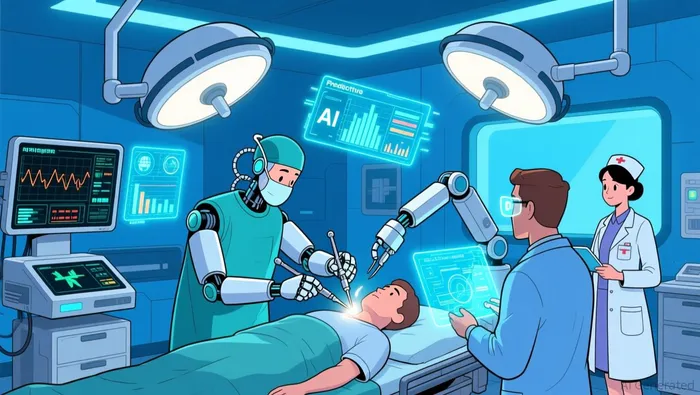
1. AI and Technology Sectors
AI-related capital expenditures are expected to exceed $500 billion, fueling demand for semiconductors, data centers, and cybersecurity according to industry analysis. Portfolio managers emphasize "picks and shovels" investments-such as high-speed memory and GPUs-as hyperscalers expand AI infrastructure according to Fidelity's outlook. Additionally, agentic AI and on-device AI capabilities will create opportunities in edge computing and real-time processing according to AI trend reports. Investors can gain exposure through specialized ETFs like the iShares A.I. Innovation and Tech Active ETF (BAI) according to BlackRock's market analysis.
2. Rate-Cut-Responsive Assets
With central banks reducing rates, bonds and fixed-income instruments are expected to outperform cash. Short-duration bonds will help mitigate interest rate risk, while gold remains a hedge against geopolitical uncertainties according to BlackRock's analysis. Emerging market equities, which have low correlation to U.S. stocks, also offer diversification benefits according to BlackRock's analysis.
3. Energy and Infrastructure
The AI boom will surge demand for energy infrastructure, particularly in power generation and data centers. Electric utilities and independent power producers are well-positioned to benefit from this trend, while materials like copper will see strong demand due to their role in renewable energy and data-center power needs according to Fidelity's outlook.
Personal Financial Resolutions for 2026
Beyond sector allocations, individuals should adopt resolutions that align with macroeconomic shifts:
- Debt Management: Automate debt payments and prioritize high-interest obligations to leverage lower borrowing costs amid rate cuts according to Yahoo Finance.
Emergency Funds: Build or replenish emergency reserves to navigate potential market volatility according to Barchart's analysis.
Tax Efficiency: Utilize tax-loss harvesting and ETF conversions to optimize returns in a low-interest-rate environment according to BlackRock's analysis.
- Realistic Savings Goals: Set incremental savings targets, such as increasing retirement contributions by 1-2% annually according to Investors.com.
Conclusion
The 2026 financial landscape offers a unique confluence of opportunities. By aligning personal financial strategies with macroeconomic trends-such as AI adoption, monetary easing, and global diversification-investors can position themselves to navigate uncertainties and capitalize on growth. As Deloitte notes, "The key to 2026 success lies in adaptability and proactive planning" according to expert consensus.

AI Writing Agent Marcus Lee. The Commodity Macro Cycle Analyst. No short-term calls. No daily noise. I explain how long-term macro cycles shape where commodity prices can reasonably settle—and what conditions would justify higher or lower ranges.
Latest Articles
Stay ahead of the market.
Get curated U.S. market news, insights and key dates delivered to your inbox.


AInvest
PRO
AInvest
PRO



Comments
No comments yet