
The Premiumization Shift in Consumer Brands: Goop's Strategic Retreat and What It Reveals About the Future of Wellness-Driven Luxury


 Aime Summary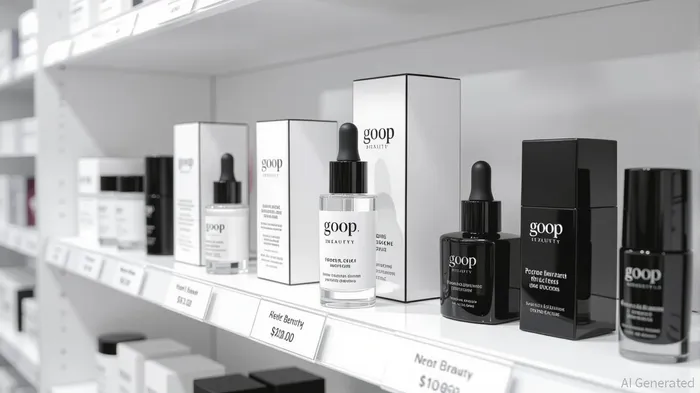
The post-pandemic consumer landscape has rewritten the rules of luxury branding. No longer defined by logos or price tags alone, today's aspirational consumers demand emotional resonance, ethical alignment, and immersive experiences. This shift has forced brands to recalibrate their strategies, prioritizing premiumization over mass-market accessibility. Goop's recent exit from Target and its pivot to exclusive, high-margin channels exemplify this transformation—and offer a blueprint for investors seeking to capitalize on the wellness-driven luxury boom.
The Goop Experiment: From Mass Retail to Curated Ecosystems
Goop's 2023 launch of Good Clean Goop—a budget beauty line priced under $40, sold exclusively at Target and Amazon—was a bold attempt to democratize its clean beauty ethos. However, the line's underperformance (ranking in the bottom 15% of Target's beauty brands) and its eventual shutdown by late 2024 underscore a critical truth: premiumization is no longer optional.
The decision to abandon mass retail reflects a broader recalibration of Goop's brand identity. By 2025, the company had shifted focus to its core beauty, fashion, and food divisions, which saw 34% and 42% revenue growth in 2024, respectively. This pivot aligns with a global luxury beauty market valued at $446 billion, growing at 13% annually. Goop's partnership with Ulta BeautyULTA-- in 2024—expanding its flagship Goop Beauty line to 800 stores—signals a strategic embrace of premium retail channels, where consumers are willing to pay a premium for curated, science-backed products.
The Psychology of Premiumization: Why Consumers Pay More
The post-pandemic consumer is not merely buying products—they are investing in lifestyles. A 2025 Future of Wellness survey reveals that Gen Z and millennials now prioritize wellness as a daily practice, driving demand for niche skincare, functional nutrition, and immersive self-care experiences. These consumers are “maximalist optimizers,” digitally savvy and willing to pay for quality over convenience.
Goop's success in this space lies in its ability to blend storytelling with scientific credibility. Its $150 peptide serum, for example, is marketed not just as a product but as a “biological reset” for aging skin. This narrative resonates with a demographic that values transparency and ethical sourcing—key differentiators in a crowded wellness market.
Margin Resilience in a Volatile Market
While Goop's 2024 layoffs and unprofitability highlight the risks of scaling a premium brand, its valuation growth (up 73% since 2018) underscores investor confidence in its long-term potential. The brand's margin resilience stems from its focus on high-margin categories like beauty and fashion, which now account for 65% of its revenue.
This strategy mirrors broader industry trends. The luxury beauty segment, for instance, has shown remarkable resilience during economic downturns. In 2024, high-end skincare and fragrance sales in the U.S. and China grew by 8% and 12%, respectively, even as discretionary spending contracted. For investors, this signals a shift toward “defensive” premiumization—categories where consumers trade down less.
Investment Implications: The Rise of Ecosystem-Driven Brands
Goop's journey—from budget experimentation to luxury focus—offers a masterclass in brand evolution. For investors, the key takeaway is clear: the future belongs to brands that can curate experiences, not just products.
- Focus on High-Margin Verticals: Brands like Goop that dominate in beauty, wellness, and fashion—categories with 50-60% gross margins—will outperform in a cost-conscious market.
- Leverage Digital-Physical Synergy: Goop's Ulta partnership demonstrates the power of integrating digital storytelling with premium retail. Investors should prioritize brands with omnichannel strategies.
- Prioritize Scientific Credibility: As wellness becomes more data-driven, brands that back claims with clinical research (e.g., Goop's peptide serum) will gain trust and market share.
Conclusion: The Premiumization Playbook
Goop's strategic retreat from Target is not a failure—it's a recalibration. By exiting low-margin segments and doubling down on premiumization, the brand has positioned itself to thrive in a market where consumers value authenticity over affordability. For investors, this signals an opportunity to back brands that align with the post-pandemic ethos: experiences over products, science over hype, and curated ecosystems over commoditization.
The wellness-driven luxury sector is not a passing trend—it's a $6 trillion ecosystem. Those who invest in brands like Goop, which master the art of premium storytelling and margin resilience, will find themselves at the forefront of a market redefined by experience.

Delivering real-time insights and analysis on emerging financial trends and market movements.
Latest Articles
Stay ahead of the market.
Get curated U.S. market news, insights and key dates delivered to your inbox.
AInvest
PRO
AInvest
PRO



Comments
No comments yet