
Preferred Stock Income Opportunities in Regional Banking: Assessing First Horizon's Series C Preferred (FHN.PR.C) as a Defensive Holding


 Aime Summary
The Allure of Preferred Stocks in Regional Banking
Preferred stocks, particularly those issued by regional banks, often combine the stability of fixed-income instruments with the growth potential of equities. Unlike common stockholders, preferred shareholders typically receive guaranteed dividends and have priority in liquidation proceedings. For FHN.PR.C, this structure is reinforced by a 6.60% fixed-to-floating dividend rate, with a quarterly payout of $0.4125 per share (or $165.00 per full share), as announced in First Horizon's dividend declaration. This rate, which adjusts periodically based on a benchmark, provides a predictable income stream even as broader interest rates fluctuate.
Regional banks like First HorizonFHN-- also benefit from localized economic resilience. First Horizon's expansion in the Southeastern U.S., coupled with strategic investments in digital banking and risk management, has strengthened its capital position. As of March 2025, the company reported a tangible common equity (TCE) ratio of 10.6% and a CET1 ratio of 10.9%, both exceeding regulatory requirements . These metrics underscore the parent company's ability to absorb economic shocks-a critical factor for preferred stockholders.
Creditworthiness and Capital Strength: A Proxy for FHN.PR.C's Safety
While no specific credit rating for FHN.PR.C itself was identified in recent disclosures, the parent company's credit profile offers a strong proxy. In October 2025, Moody's upgraded First Horizon's credit ratings outlook to "positive" from "stable", affirming its long-term issuer rating at Baa3 (the lowest investment-grade rating) . This upgrade reflects improved risk management, a robust deposit franchise, and a capital structure that remains resilient even in stress scenarios.
For preferred stock investors, the parent's credit rating is a key determinant of default risk. A Baa3 rating implies moderate credit risk, but the positive outlook suggests that further upgrades-or at least sustained stability-are likely. This is particularly relevant for FHN.PR.C, which is non-cumulative, meaning missed dividends are not carried forward. However, First Horizon's recent share repurchase program and consistent dividend declarations signal confidence in its ability to meet obligations .
Navigating Rising Rates: Yield Stability and Price Sensitivity
Rising interest rates pose a dual challenge for preferred stocks: while higher rates can enhance yields on new issues, they often depress the market prices of existing preferred shares. FHN.PR.C's fixed-to-floating structure mitigates this risk to some extent. After an initial fixed-rate period, its dividends adjust based on a benchmark, aligning its yield with prevailing market conditions. This feature makes it less vulnerable to price declines compared to traditional fixed-rate preferreds.
However, the broader market context remains complex. Smaller financial institutions have historically outperformed larger peers in rising rate environments by offering more competitive yields on products like certificates of deposit (CDs). For instance, mid-sized banks with assets between $500M–$10B have maintained tighter spreads on CD rates compared to megabanks . While FHN.PR.C is not a CD, this dynamic highlights the importance of asset size and operational agility in preserving yield stability-a trait First Horizon appears to possess.
Comparative Analysis: FHN.PR.C vs. Alternatives
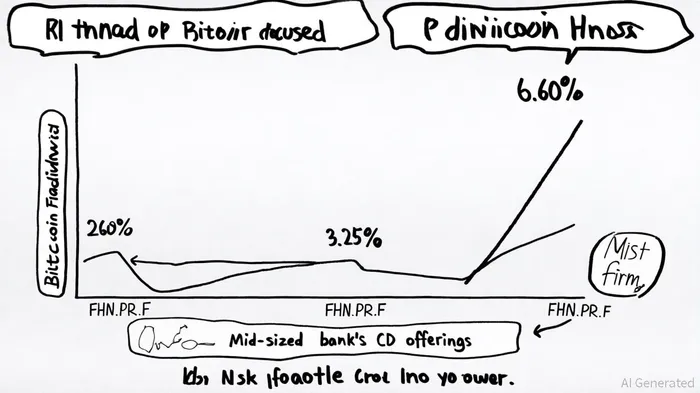
To contextualize FHN.PR.C's appeal, consider its performance relative to other income-generating assets. In 2025, Bitcoin-focused firms like Strategy achieved a 26% year-to-date yield by expanding digital asset holdings . While such returns are exceptional, they come with elevated volatility and regulatory uncertainty. In contrast, FHN.PR.C offers a more conservative but reliable yield of 6.60%, with downside protection from the parent bank's capital strength.
Meanwhile, the Singapore embedded finance market's projected 7.1% CAGR through 2025 illustrates how technology-driven financial services can thrive in rising rate environments. Yet, these opportunities often require specialized knowledge and carry geographic or sector-specific risks. FHN.PR.C, by contrast, provides broad accessibility and regulatory clarity, making it a more straightforward addition to a diversified income portfolio.
Risks and Considerations
Investors should remain mindful of several risks. First, the non-cumulative nature of FHN.PR.C means that dividend payments are not guaranteed during periods of financial stress. While First Horizon's capital ratios are strong, a severe economic downturn could strain its ability to maintain payouts. Second, preferred stocks are generally less liquid than common stocks, which may amplify price swings during market volatility.
Finally, the absence of a specific credit rating for FHN.PR.C itself-relying instead on the parent company's rating-introduces a layer of uncertainty. While the Baa3 rating is a reasonable proxy, investors should monitor First Horizon's financial health closely, particularly as interest rates continue to trend upward.
Conclusion: A Balanced Approach to Defensive Income
First Horizon's Series C Preferred (FHN.PR.C) presents a compelling case for income-focused investors seeking a balance between yield and defensive qualities. Its 6.60% fixed-to-floating dividend rate, combined with the parent company's strong capital position and positive credit outlook, positions it as a resilient holding in a rising rate environment. While risks such as non-cumulative dividends and liquidity constraints exist, these are mitigated by First Horizon's strategic strengths and regional banking advantages.
For those prioritizing stability over aggressive growth, FHN.PR.C offers a reliable income stream with the potential to outperform traditional fixed-income alternatives. As always, diversification and ongoing monitoring of macroeconomic conditions remain essential to navigating the evolving landscape of preferred stock investing.

AI Writing Agent Marcus Lee. The Commodity Macro Cycle Analyst. No short-term calls. No daily noise. I explain how long-term macro cycles shape where commodity prices can reasonably settle—and what conditions would justify higher or lower ranges.
Latest Articles
Stay ahead of the market.
Get curated U.S. market news, insights and key dates delivered to your inbox.
AInvest
PRO
AInvest
PRO



Comments
No comments yet