
Prediction Market Platforms as a New Layer in Data-Driven Finance
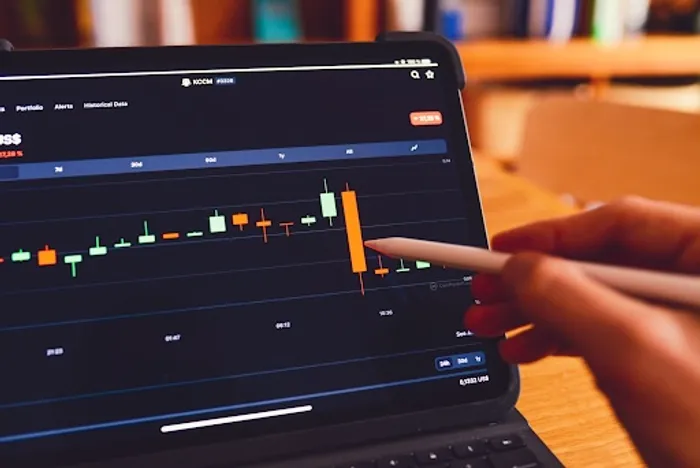
Financial markets have always run on information. Earnings reports, economic releases, analyst notes, all of it feeds the machine. Yet most of that data arrives on a schedule. Quarterly. Monthly. After the fact.
Investors who rely solely on trailing indicators often sense they are watching events through a rearview mirror. The numbers arrive on schedule, but the market has usually moved on.
Prediction markets are emerging as something different: a live layer of probability that captures what participants believe will happen next. Below, we’ll explore how that layer fits into modern, data-driven finance and why it’s gaining credibility.
From Polls to Probabilities: A Higher-Resolution Signal
Forecasts once carried an air of certainty. A strategist projected three rate cuts over the next twelve months. A poll showed a candidate ahead by four points in a tightly contested race. The numbers felt clean, the narrative settled.
Prediction markets replace declarations with probabilities. Prices move, 63%, 41%, 78%, as money shifts. A contract at 0.72 implies a 72% chance. That shift from story to probability changes how we interpret events.
Prices adjust quickly. A central banker’s offhand remark can move contracts within minutes, well before formal guidance. The structure is straightforward; the implications run deeper.
Traditional financial indicators operate on cadence:
Scheduled economic releases,
Historical financial statements,
Survey-based sentiment readings.
Prediction markets operate differently:
Continuous trading,
Forward-looking pricing,
Capital-weighted conviction.
The contrast reshapes how expectations are measured across asset classes and sectors. Instead of reacting to confirmed data, investors begin responding to shifting probabilities in real time, often before headlines fully form.
Platforms Turning Collective Insight Into Tradable Data
Accessibility altered the trajectory of these markets. What once felt academic, even experimental, now appears in interfaces familiar to anyone who has ever placed a trade. The barrier to entry looks lower. The mechanics feel intuitive.
On a modern prediction market platform, participants choose yes or no on an event, commit capital, and watch the implied probability move. Economic releases, regulatory rulings, and even sports outcomes become tradable contracts. The price becomes the signal.
That signal represents more than opinion. It represents exposure. Participants lose money when they misjudge the odds and earn when they assess them correctly. Capital imposes discipline in a way surveys rarely can, quietly filtering out casual noise.
Each price reflects thousands of decisions. Some traders draw on industry expertise; others use models or structured data. A few rely on seasoned instinct. Together, those inputs converge into a single probability that shifts as conviction rises or falls.
Aggregating Hidden Knowledge
Information in financial systems is rarely centralized. A policy analyst in Washington hears early murmurs about regulatory change. A commodities trader spots tightening supply in a regional hub. A data scientist flags anomalies in shipping flows. Each holds a fragment, not the whole.
Prediction markets have a way of drawing those fragments into one place. They create a venue where scattered insights can meet price. In doing so, they transform private judgments into a public, continuously updated signal.
Participants who believe they hold an edge are motivated to act on it. Being wrong costs money; being potentially right may earn it. That pressure discourages careless noise and encourages what researchers describe as “truthful revelation.” Accuracy finds reward. Guesswork does not.
Perfection remains out of reach. Markets may misprice events, and volatility can stretch conviction too far. Even so, distortions communicate. A widening spread signals disagreement; a sharp jump suggests new information. Crowd intelligence, backed by capital, carries weight.
_7ed4c7941775760829422.jpg?format=webp&width=700)
Pricing Tail Events and Uncertainty
Traditional models tend to lean on historical distributions. They assume tomorrow will resemble yesterday, at least within a reasonable range. That assumption holds up much of the time until it doesn’t.
Black swan events strain that logic. Elections, regulatory rulings, court decisions, abrupt policy reversals. These defy tidy statistical models. Oversight also matters, as evolving CFTC rules affecting prediction market platforms can shape how event contracts are structured and traded.
Prediction markets have shown strength in pricing low-probability, high-impact outcomes. Contracts often shift well before official results. Institutions notice when probabilities move from 12% to 25%, modest on paper, yet a doubling of perceived exposure.
Volatility within these contracts can function as an early warning signal. Sudden swings sometimes precede movement in broader asset classes. The signal rarely announces itself loudly. More often, it flickers, visible to those already paying attention.
A Growing Layer in the FinTech Stack
Technical integration has accelerated adoption. Many platforms now offer API access, sending probability data directly into trading dashboards and quantitative systems. What once required manual tracking can now be embedded into core financial infrastructure.
Developers stream live pricing into analytics engines. Portfolio managers track event-driven probabilities alongside volatility indices and credit spreads. Machine learning models use crowd-derived expectations as a complementary signal, not a replacement for traditional data.
Liquidity, once a sticking point, has deepened. Analysts studying how prediction market liquidity infrastructure evolves note that broader participation tends to stabilize pricing and reduce distortions. Infrastructure shapes signal quality. Scale sharpens it.
Institutional interest is rising. Hedge funds track election probabilities for positioning, while asset managers follow rate-path contracts for policy signals. Regulatory clarity will shape how deeply this layer integrates into mainstream finance. Regulation moves slowly. Markets don’t.
Where Crowd Forecasting Meets Financial Intelligence
Financial data keeps multiplying. Alternative datasets. Satellite imagery. Social sentiment scraped at scale. Prediction markets add something slightly different, a distilled probability backed by capital and refreshed every second.
No single data source deserves blind trust. Historical indicators still matter. Economic releases still anchor reality. Prediction markets do not replace them. They complement them.
Viewed together, trailing metrics and forward-looking probabilities create a richer picture. One shows what has happened. The other hints at what may come next. For investors navigating uncertainty, that combination feels less like speculation and more like informed anticipation.

Stay ahead of the market.
Get curated U.S. market news, insights and key dates delivered to your inbox.


AInvest
PRO
AInvest
PRO



Comments
No comments yet