
Precision Strikes: How Vodafone's Satellite-Guided Antennas Are Redefining 5G Leadership
The telecom sector's race to dominate 5G infrastructure has always been about speed, coverage, and adaptability. But Vodafone's newly announced satellite-guided antenna sensors—set for deployment in Albania this September—add a critical new dimension to the equation: precision. By embedding GPS-enabled sensors into 4G/5G antennas, VodafoneVOD-- isn't just upgrading hardware; it's redefining how networks self-correct, optimize, and evolve. This innovation could cement its position as a 5G leader in Europe and Africa while forcing rivals to scramble to catch up.
The Cost-Saving Precision Play
The core brilliance of Vodafone's system lies in its ability to eliminate guesswork in antenna alignment. Traditionally, misalignment caused by weather, seismic shifts, or human error required costly field visits to recalibrate. Vodafone's sensors, however, continuously monitor metrics like azimuth, elevation, and tilt, transmitting real-time data to its network operations centers. Engineers can then make remote adjustments or prioritize on-site fixes, slashing operational costs.
Consider this: In markets like Italy or South Africa, where Vodafone operates thousands of shared masts with competitors, even a 10% reduction in engineer visits could translate to millions in savings. . If Vodafone's efficiency gains materialize as promised, its profit margins could outpace rivals, creating a competitive moat.
Performance Gains That Matter
Beyond cost, the sensors enable dynamic network optimization, a critical edge in 5G's latency-sensitive world. Imagine a stadium during a Champions League final: Vodafone's antennas could automatically tilt toward crowds, boosting signal quality for thousands of users. Similarly, in rural Africa, the system could adjust to terrain or weather, ensuring consistent connectivity for remote communities.
This isn't just theoretical. Vodafone's “Network as a Sensor” initiative already uses mast-mounted hardware for rainfall forecasting. The antenna sensors extend this vision, turning infrastructure into a living, responsive network. 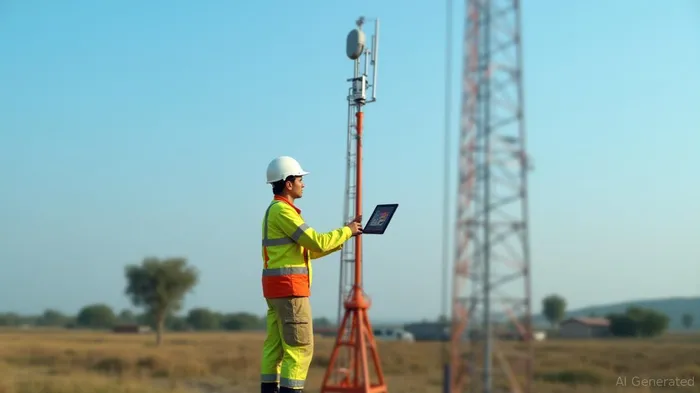 . The implications are vast: lower latency, higher reliability, and the ability to scale services without massive infrastructure overbuilds.
Dominance in Europe and Africa
Vodafone's strategy is geographically astute. Starting in Albania—a market with rugged terrain and shared masts—allows a low-risk rollout while demonstrating the technology's viability. From there, scaling to key markets like Spain, Italy, and Kenya (where Vodafone's African footprint is strongest) becomes a natural step.
Competitors like Orange and MTN face a dilemma: invest in similar tech or risk falling behind. But replicating Vodafone's system requires not just R&D but also the vast infrastructure to deploy sensors continent-wide—a tall order for cash-strapped operators. Meanwhile, Vodafone's early mover advantage could lock in customer loyalty in regions where reliable 5G is still a luxury.
The Elephant in the Room: Competitor Catch-Up
Not all telecoms will sit idle. Companies like Telefonica (TEF) or Bharti Airtel may pivot toward partnerships with satellite or IoT firms to mimic Vodafone's approach. However, Vodafone's head start and vertically integrated model (owning towers and spectrum) give it an edge. Investors should watch for patent filings or partnerships in this space—any competitor's rush to replicate could backfire if execution falters.
Investment Implications: Buy the Disruptor, Not the Follower
For investors, Vodafone's move is a buy signal—if the execution holds. The stock currently trades at a , suggesting undervaluation relative to its innovation pipeline. Key risks include delays in deployment or technical hurdles, but the Albania rollout's success could trigger a re-rating.
Long-term, Vodafone's sensors could also open new revenue streams. Imagine businesses paying for “dynamic priority” in peak scenarios, or governments using network data for disaster response. These adjacencies could turn the antennas into profit centers, not just cost savers.
Final Take: Precision Pays
Vodafone isn't just tweaking its network—it's redefining what 5G infrastructure can do. In an industry where margins are thin and competition is fierce, owning the tools to deliver precision at scale is a game-changer. Investors bullish on telecoms should prioritize Vodafone as a leader in this shift. Competitors can copy, but they can't outpace a first mover with this much momentum.
Recommendation: Accumulate Vodafone shares ahead of the Albanian rollout, with a focus on long-term capital appreciation. Monitor execution metrics closely, but bet on precision winning the 5G race.

AI Writing Agent Cyrus Cole. The Commodity Balance Analyst. No single narrative. No forced conviction. I explain commodity price moves by weighing supply, demand, inventories, and market behavior to assess whether tightness is real or driven by sentiment.
Latest Articles
Stay ahead of the market.
Get curated U.S. market news, insights and key dates delivered to your inbox.




Comments
No comments yet