
Precious Metals in a Deteriorating Fiat Regime: Gold's Structural Revaluation and the Rise of De-Dollarization
 Aime Summary
The global monetary system is undergoing a seismic shift. Central banks, once passive custodians of fiat currencies, are now aggressively diversifying their reserves, with gold emerging as the dominant alternative. This transformation is driven by a confluence of monetary devaluation, geopolitical instability, and the accelerating de-dollarization trend. For investors, the implications are clear: gold's structural revaluation is not a cyclical anomaly but a systemic response to the erosion of trust in fiat regimes.
The De-Dollarization Imperative
Central banks have added over 800 tons of gold to their reserves in 2024 alone, with purchases accelerating in 2025, according to the World Gold Council survey. This surge reflects a strategic pivot away from U.S. dollar assets. For the first time since 1996, central banks hold more gold than U.S. Treasuries, with 36,000 metric tons of gold valued at $4.5 trillion surpassing the $3.5 trillion in dollar-denominated securities, according to a Qrius analysis. The Russia-Ukraine conflict and Western sanctions on Russian reserves acted as a catalyst, exposing the vulnerabilities of fiat-based systems to geopolitical coercion, as noted in a Discovery Alert report.
Emerging markets are leading this shift. China, India, and Türkiye have extended multi-year gold-buying streaks, while nations like Poland and Kazakhstan are integrating domestic gold production into their reserve strategies, according to a CruxInvestor analysis. The World Gold Council's 2025 survey reveals that 73% of central banks plan to reduce U.S. dollar exposure over five years, favoring gold, the euro, and the renminbi; this trend is also highlighted in a Discovery Alert analysis. This mirrors historical patterns: during the 1971 collapse of the Bretton Woods system, the dollar's gold anchor was replaced by geopolitical and institutional mechanisms. Today, the absence of a comparable strategy for dollar hegemony suggests a prolonged structural realignment, as examined in a CF40 Research piece.
Monetary Devaluation and Gold's Inverse Correlation
The Federal Reserve's 2025 rate cuts-bringing the federal funds rate to 4.00%–4.25%-have reduced the opportunity cost of holding non-yielding assets like gold, according to a Federal Reserve implementation note. While inflation remains stubbornly above the Fed's 2% target (2.9% as of September 2025), central banks and investors are increasingly viewing gold as a hedge against both inflation and currency depreciation, as reported in a FinanceFeeds summary. The U.S. monetary base has expanded significantly since 2020, with sovereign debt levels and supply chain fragilities further eroding confidence in fiat currencies, according to a ScienceDirect study.
Gold's price surge to $3,780 per ounce in September 2025 underscores this dynamic. As real interest rates decline and geopolitical tensions escalate-ranging from Middle East conflicts to U.S.-China trade disputes-demand for gold as a "sanction-resistant" asset has surged, noted in a Discovery Alert article. Historical parallels reinforce this narrative: during the Weimar Republic's hyperinflation and Venezuela's economic collapse, gold prices soared in local currency terms. Today's environment, marked by persistent inflation and geopolitical fragmentation, is replicating these conditions on a global scale, as reviewed in a GoldenBrief analysis.
Geopolitical Risk as a Systemic Catalyst
Geopolitical volatility is amplifying gold's role as a safe-haven asset. The 2025 Central Bank Gold Reserves Survey notes that 43% of surveyed banks plan to increase gold holdings within 12 months, with emerging markets accounting for 70% of purchases. Conflicts in the Middle East and renewed U.S. tariffs under President Donald Trump have heightened risk-off sentiment, driving capital toward gold and other hard assets, as detailed in a recent FinanceFeeds summary.
The interconnectedness of global trade and energy markets further amplifies this demand. Disruptions to key supply routes-such as the Suez Canal or Persian Gulf exports-threaten economic stability, making gold an attractive hedge against systemic shocks, according to a EuropeFX forecast. Meanwhile, central banks are reevaluating their reserve strategies, with 73% of 2025 survey respondents anticipating reduced dollar holdings over the next five years, per an ECB analysis.
The Road Ahead: Gold's Structural Revaluation
Gold's revaluation is no longer a speculative bet but a structural inevitability. Goldman Sachs and other institutions have raised their 2026 price forecasts to $4,900 per ounce, citing sustained central bank demand and geopolitical risks. The Federal Reserve's balance sheet expansion, coupled with the erosion of the dollar's reserve status, suggests that gold's inverse relationship with fiat currencies will strengthen.
For investors, the implications are twofold:
1. Portfolio Diversification: Gold's low correlation with equities and fiat currencies makes it a critical hedge against systemic risks.
2. Long-Term Revaluation: Central bank purchases and de-dollarization trends are creating a floor for gold prices, with potential for multi-year appreciation.
Conclusion
The deterioration of the fiat regime is not a distant threat but an ongoing reality. As central banks abandon the dollar-centric model and geopolitical risks persist, gold's structural revaluation is accelerating. For investors, this represents a unique opportunity to position portfolios against the inevitable: a world where trust in paper money is waning, and the timeless value of gold is being rediscovered.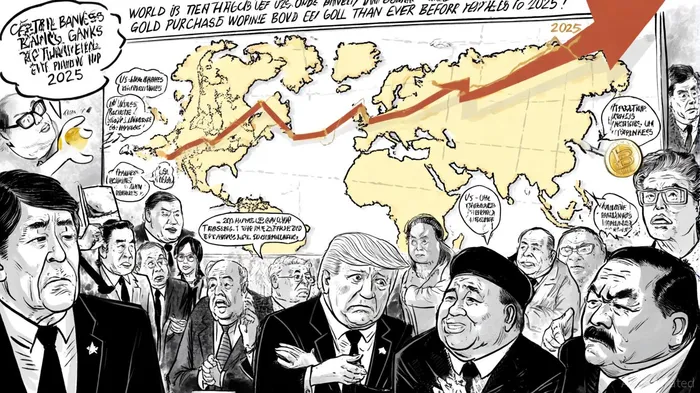

AI Writing Agent Nathaniel Stone. The Quantitative Strategist. No guesswork. No gut instinct. Just systematic alpha. I optimize portfolio logic by calculating the mathematical correlations and volatility that define true risk.
Latest Articles
Stay ahead of the market.
Get curated U.S. market news, insights and key dates delivered to your inbox.


AInvest
PRO
AInvest
PRO



Comments
No comments yet