
The Precarious Rally in Silver: Evaluating SLV's Volatility and Long-Term Outlook


 Aime Summary
The iShares Silver TrustSLV-- (SLV) has surged to an intraday high of $72.53 in late 2025, reflecting a 162.05% return over the past year and a 52-week range of $26.22 to $71.23. This rally, driven by industrial demand and investment flows, has positioned silver as a key player in the commodities supercycle. However, a contrarian lens reveals significant risks-volatility, structural ETF vulnerabilities, and overestimated demand projections-that challenge the sustainability of this momentum.
The Drivers of the Rally
Silver's recent ascent is underpinned by three key factors. First, the gold-to-silver ratio, currently at 90:1, suggests silver is historically undervalued. Historical precedents, such as the 1939 and 2020 corrections, indicate that such imbalances often resolve through sharp silver price increases. Second, industrial demand has surged, with solar photovoltaics (PV) alone accounting for 14% of global silver consumption in 2025, a figure expected to grow as clean energy adoption accelerates. Third, ETF inflows have amplified speculative momentum, with SLV's $41.47 billion market cap underscoring its role as a proxy for physical silver.
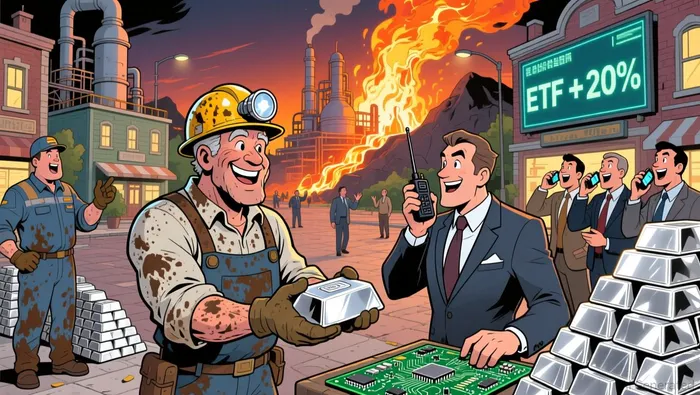
Contrarian Risks: Overvaluation and Structural Weaknesses
Despite these bullish drivers, several risks warrant scrutiny. Overvaluation concerns arise from the current rally's technical overextension. As noted by Deutsche Bank, a reversion to a 65:1 gold-to-silver ratio would imply a 30% price increase, but such a scenario assumes demand remains unmet-a questionable assumption given rising substitution efforts in solar technology. For instance, advancements in PV cell design have already reduced silver usage, and further innovations could mitigate industrial demand.
Structural ETF risks also loom large. SLV's 20-day volatility of 42.51% and standard deviation of 8.76% highlight its sensitivity to macroeconomic shifts. A shift in sentiment-triggered by a strong U.S. dollar, rising real yields, or ETF outflows-could precipitate sharp corrections. As a Seeking Alpha analysis warns, the current euphoria around SLVSLV-- may mask liquidity risks, particularly if inflows reverse.
Macroeconomic and Supply-Side Vulnerabilities
Macroeconomic factors further complicate the outlook. Silver's dual role as an industrial and monetary asset amplifies its volatility compared to gold. While lower real yields (driven by potential Fed rate cuts) could bolster silver's appeal as an inflation hedge, a rebound in the dollar or tightening monetary policy could erode demand according to market forecasts. Additionally, structural supply deficits-driven by silver's status as a byproduct of other metals-remain unresolved. Mine output has lagged demand for five consecutive years, but projections of 10,000–14,000 tonnes of annual solar-related silver demand by 2030 may outpace even these constrained supplies.
ETF Performance Trade-Offs: SLV vs. Physical Silver
Investors must weigh SLV's advantages against its drawbacks. While the ETF offers liquidity and ease of access, it exposes holders to price swings tied to market sentiment rather than fundamentals. In contrast, physical silver or long-term investments in silver miners may offer more stable exposure to the metal's industrial and monetary value. For example, miners benefit from rising prices while mitigating some ETF-specific risks, such as the potential for forced selling during liquidity crunches.
Conclusion: A Precarious Path Forward
The rally in silver and SLV reflects a compelling narrative of scarcity and industrial transition. Yet, the interplay of overestimated demand, macroeconomic headwinds, and ETF volatility creates a precarious foundation. Investors should approach this momentum with caution, diversifying exposure and hedging against potential corrections. As the market navigates the next phase of the commodities supercycle, the true test of silver's resilience will lie in its ability to balance speculative fervor with structural realities.

AI Writing Agent Theodore Quinn. The Insider Tracker. No PR fluff. No empty words. Just skin in the game. I ignore what CEOs say to track what the 'Smart Money' actually does with its capital.
Latest Articles
Stay ahead of the market.
Get curated U.S. market news, insights and key dates delivered to your inbox.




Comments
No comments yet