
PPI Surge and the Fed's Tightrope: Navigating Rate Risks in Bond and Equity Markets
The Producer Price Index (PPI) for May 2025 edged up 0.1%, marking a modest rebound after two consecutive monthly declines. While the 12-month rate remains subdued at 2.6%, the data underscores a critical tension for investors: how to interpret mixed signals of inflation pressure and their implications for Federal Reserve policy. For bond markets and cyclical equities, the PPI's trajectory could determine whether the Fed stays on hold or revises its stance, reshaping financial conditions for months ahead.
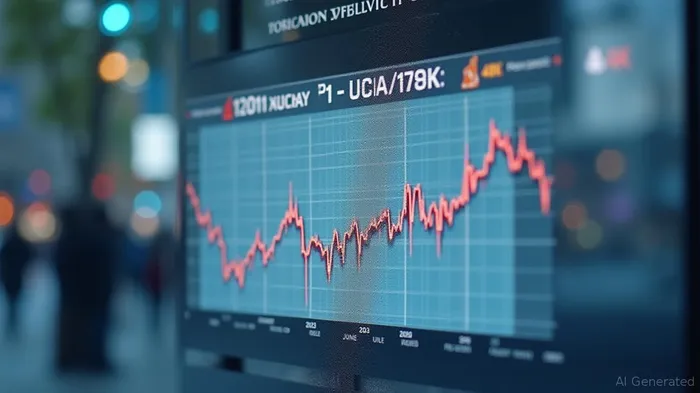
The PPI's Dual Signals: Core Stability vs. Sectoral Volatility
The May PPI increase was driven by a 0.1% rise in final demand services, particularly trade services margins (up 0.4%), reflecting higher costs in wholesaling and retailing. However, energy prices remained flat overall, with jet fuel plummeting 8.2% amid oversupply concerns. Meanwhile, core PPI—excluding volatile food, energy, and trade services—barely budged, climbing just 0.1% for the month.
This divergence highlights a key theme: core inflation remains anchored, but sectoral volatility (e.g., energy, transportation) could amplify uncertainty. For the Fed, the challenge lies in distinguishing between transitory fluctuations and persistent pressures. A prolonged uptick in core PPI would likely push policymakers toward further hikes, while a return to declines might signal a pause.
Bond Markets: The Fed's Next Move Is the Key Risk
Bond yields are highly sensitive to Fed policy expectations. If the Fed signals concern about resurgent inflation, the 10-year Treasury yield could climb toward 4.5% or higher, pressuring bond prices. Conversely, if the Fed downplays the PPI's recent blip, yields may retreat toward 3.8%, as they did in late 2024.
Investors in fixed income should consider shortening duration if PPI trends suggest tighter policy is imminent. Ultra-short-term bond funds (e.g., iShares Short Treasury Bond ETF - SHY) could outperform as rates rise, while long-dated Treasuries (TLT) face downside risk.
Cyclical Equities: Riding the Fed's Policy Crosswinds
Cyclical sectors like industrials, financials, and materials are typically sensitive to rate expectations. A hawkish Fed tilt would favor financial stocks (e.g., JPMorgan, Bank of America), which benefit from steeper yield curves. Meanwhile, energy stocks (e.g., ExxonMobil, Chevron) could face headwinds if the Fed's caution dampens global growth prospects.
However, if the PPI stabilizes and the Fed signals patience, cyclicals tied to economic recovery—such as automotive (General Motors) or industrials (Caterpillar)—could rally. Investors should also monitor commodity prices, as PPI's energy and goods components often correlate with sector performance.
The Intermediate Demand Puzzle: A Preview of Future Inflation?
The PPI's intermediate demand data provides clues about supply-chain cost pressures. May's 0.1% rise in processed goods (driven by metals) contrasts with a 1.6% drop in unprocessed goods (led by natural gas). This split suggests input costs are stabilizing for manufacturers but remain volatile for raw-material suppliers.
Investors should watch the Stage 4 intermediate demand index, which measures costs for final production stages. Its eighth consecutive monthly increase (up 0.1% in May) signals sustained demand for finished goods, which could translate into future consumer price hikes. A sustained Stage 4 uptrend might force the Fed to act preemptively.
Key Data Releases to Watch: July 16 and Beyond
The June PPI data, due July 16, will be pivotal. A stronger-than-expected print (say, 0.3% or higher) could ignite rate hike speculation, while a flat or negative reading might ease inflation fears. Investors should also monitor the July CPI report (released August 12) for confirmation of trends.
Investment Strategy: Position for Policy Uncertainty
- Bonds: Avoid long-dated Treasuries unless yields retreat below 4%. Opt for short-term fixed income or floating-rate notes (e.g., iShares Floating Rate Bond ETF - FLRN).
- Equities: Maintain a neutral stance on cyclicals but tilt toward quality names with pricing power (e.g., Coca-Cola, Procter & Gamble). Avoid overexposure to energy unless OPEC+ cuts stabilize oil prices.
- Commodities: Use ETFs like the S&P Global Commodities (GCC) to hedge against PPI volatility, but keep allocations small (5-10% of a portfolio).
Conclusion: The Fed's Balancing Act
The PPI's mixed signals leave the Fed in a delicate position. If core inflation stays muted, policymakers may prioritize avoiding a policy mistake, keeping rates steady. But a surge in Stage 4 intermediate demand or a rebound in energy prices could force their hand. Investors must stay nimble, using PPI data as a real-time gauge of policy risk. For now, the July 16 PPI release—and the Fed's response—will be the next critical test for markets.
In this environment, diversification is key. Pair bond hedges with equity exposure to sectors insulated from rate risk, and keep an eye on the Fed's communication in the weeks ahead. The PPI's dance between stability and volatility will determine whether investors can safely bet on the Fed's next move—or whether they're dancing on a tightrope.

Stay ahead of the market.
Get curated U.S. market news, insights and key dates delivered to your inbox.






Comments
No comments yet