
PPI’s Shock 0.9% Jump Sparks Inflation Fears
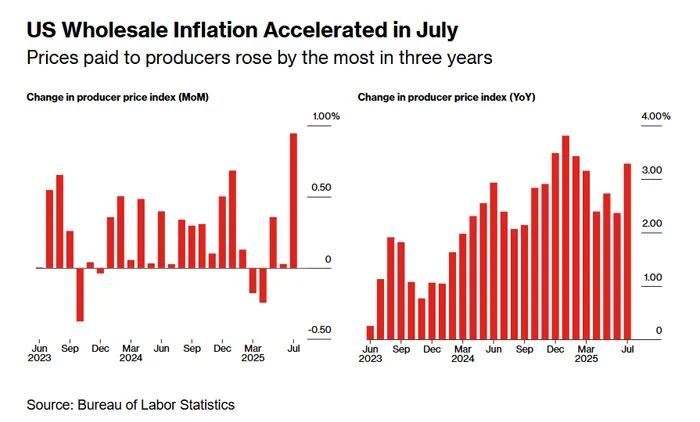
The U.S. Bureau of Labor Statistics reported Thursday that the Producer Price Index (PPI) rose 0.9% month-on-month in July — the largest increase since June 2022, when inflation peaked. On a year-on-year basis, PPI rose 3.3%.
While CPI growth was modest in July, the sharp and unexpected jump in PPI revived worries about a renewed inflationary wave.
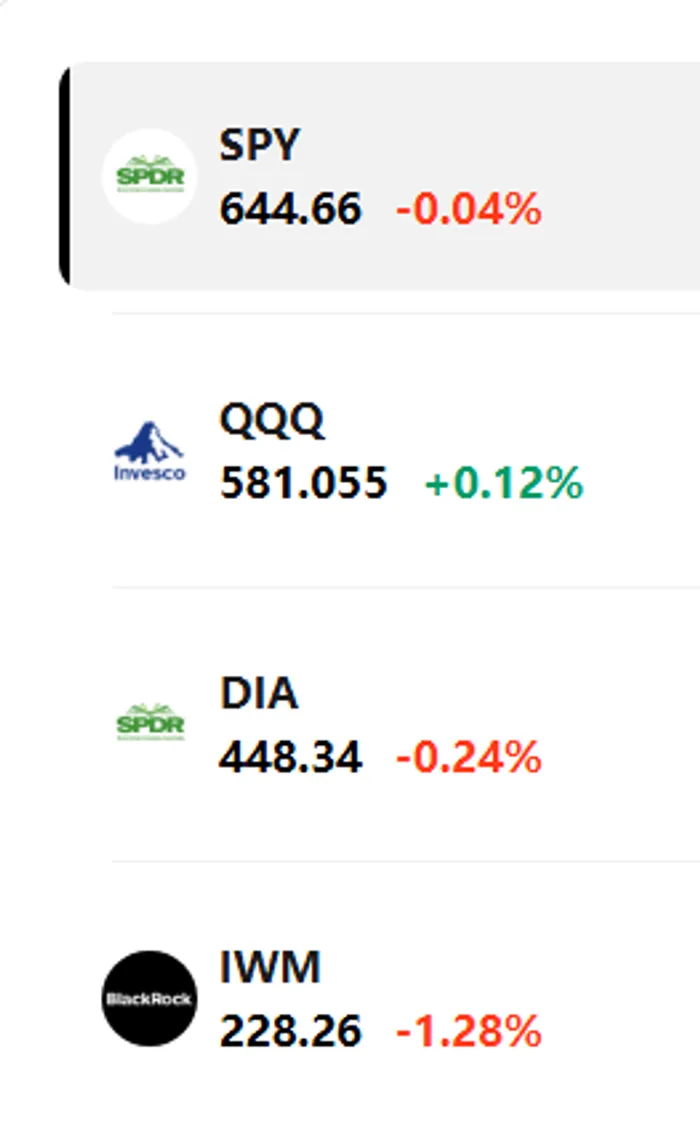
Following the release, U.S. stocks fell in early trading as markets grew concerned that inflation could rebound, prompting the Federal Reserve to maintain restrictive interest rates for a longer period.
Although Fed officials broadly expect tariffs to push inflation higher in the second half of the year, they remain divided on whether the impact will be a one-off shock or a more lasting pressure.
On Thursday, San Francisco Fed President Mary Daly opposed a large 50-basis-point rate cut at the September meeting, arguing that it could send an unnecessary signal of urgency.
Chicago Fed President Austan Goolsbee urged the Fed not to “rush” into cutting rates before inflation is fully under control.
Fed’s Musalem said there is a reasonable possibility that the tariff impact could prove more persistent.
Market Analysts’ Views
“The question for policymakers, still to be resolved, is how much of these price increases are absorbed by wholesalers, retailers, and resellers,” said Carl Weinberg, chief economist at High Frequency Economics. “This report is a strong validation of the Fed’s wait-and-see stance on policy changes.”
“While businesses have assumed the majority of tariff cost increases so far, margins are being increasingly squeezed by higher costs for imported goods,” noted Ben Ayers, senior economist at Nationwide. “We expect a stronger pass-through of levies into consumer prices in coming months, with inflation likely to climb modestly over the second half of 2025.”
Deutsche Bank economist Justin Weidner compared the situation to 2018, when Trump imposed tariffs on imported washing machines. “They took effect at the end of January, and then in April, May, and June, prices rose for three straight months. This suggests there’s often a delay between tariff implementation and price increases,” he said.
Small Businesses Already Raising Prices — Inflation Could Rebound
Businesses surveyed by the Financial Times in St. Louis, a Midwestern city, reported that suppliers had raised prices for a broad range of products in recent weeks — sometimes by as much as 30% — leaving them little choice but to pass the costs on to customers.
Before tariffs took effect, many companies had stockpiled goods and continued selling them at original prices, avoiding sharp price hikes. But now, those inventories have been depleted.
“I believe inflation will rise as low-cost inventory is replaced by high-cost new goods,” said Justin Breckle, CEO of Authorized Appliance, a St. Louis retailer of premium kitchenware, barbecue equipment, and washing machines.

Nick Colombo, head of operations at Switchgrass, said his company was relatively shielded because it had ordered a large consignment of glass before tariffs hit. “We’ll try to keep prices stable,” he said, “but once we run out of stock and need to reorder, prices will almost certainly rise.”
Trinita Rhodes, co-owner of Beauty Supply Refresh in suburban Florissant, said most of her retail prices jumped significantly after Trump imposed a 145% tariff on all Chinese goods in April.

Rhodes noted that tariffs on Chinese imports would raise the price of human hair by 30%. Wigs that once cost $50 now sell for $75, and synthetic braiding hair is expected to rise from $5.99–$7.99 to $9.99. “We’ve been sourcing from China for years, so cutting off supply suddenly is difficult. The government hasn’t considered the impact of tariffs on small businesses,” she said.

Expert analysis on U.S. markets and macro trends, delivering clear perspectives behind major market moves.
Latest Articles
Stay ahead of the market.
Get curated U.S. market news, insights and key dates delivered to your inbox.


AInvest
PRO
AInvest
PRO



Comments
No comments yet