
U.S. PPI Report: Inflation Surges to 5.4% as Diesel Prices Jump
 Aime Summary
The U.S. economy is grappling with a resurgence of wholesale inflation that is testing the resilience of the Federal Reserve's monetary policy. The latest Producer Price Index data for August 2026 reveals a 0.4% monthly increase in final-demand prices, pushing the annual rate to 5.4%. This figure not only exceeded market expectations of a 5.3% annual rate but also marks a significant acceleration from July’s 4.8% reading. For investors, this data serves as a stark reminder that while consumer prices have shown signs of cooling, the upstream costs that eventually trickle down to household wallets remain stubbornly high.
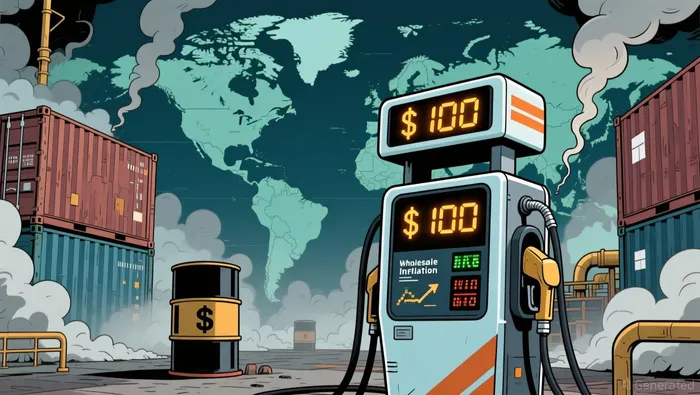
The primary catalyst for this inflationary spike is the energy sector, which saw a dramatic 4.2% monthly increase. At the heart of this surge is diesel fuel, which jumped 24.1% in August, accounting for more than a third of the total increase in final demand goods. This sharp rise in energy costs is not merely a domestic anomaly but a reflection of broader global supply chain vulnerabilities. With U.S. crude oil prices recently topping $100 a barrel and Brent crude futures exceeding $105, the link between geopolitical instability and domestic inflation is becoming increasingly difficult to ignore.
What Does the Latest PPI Report Reveal About Inflation?
The August PPI report provides a granular look at where price pressures are building within the U.S. economy. While headline inflation was driven by energy, the core PPI—which strips out volatile food and energy prices—rose by 0.2% to 0.3% for the month, ending the 12-month period at 4.7%. This indicates that while the immediate shock is coming from energy, underlying inflationary pressures are still present across various sectors of the economy.
Crucially, the data shows a divergence between final demand and intermediate stages of production. The index for processed goods for intermediate demand rose 1.8%, while unprocessed goods for intermediate demand climbed 1.1%. This suggests that businesses are facing significant cost pressures earlier in the supply chain, which have yet to fully dissipate. For example, electronic component costs leapt 3.4% monthly, attributed largely to the ongoing buildout of AI infrastructure. These upstream costs are a leading indicator of future consumer price inflation, as companies eventually pass these higher input costs onto shoppers.
The services sector, which typically drives long-term inflation, remained relatively stable with a modest 0.1% monthly increase. However, transportation and warehousing prices rose by 2.3%, reflecting the broader logistical challenges. Portfolio management costs, a closely watched metric in PPI calculations, fell 1.6% for the month but remained up 18.8% year-over-year, highlighting persistent inflation in financial services. These mixed signals suggest that while the inflationary spike is currently energy-driven, the underlying machinery of the economy is still experiencing significant friction.
How Is Geopolitics Affecting U.S. Inflation?
Geopolitical tensions are playing a pivotal role in shaping the current inflationary landscape. The ongoing conflict involving the United States and Iran has severely disrupted global energy shipments. The Strait of Hormuz, a critical chokepoint through which about 20% of the world’s oil supply previously flowed, has seen stifled shipping activity. This disruption has created a supply shock that is directly translating into higher wholesale prices for American businesses.
In addition to energy, ongoing tariff conflicts between the U.S. and various global partners are threatening to send prices higher. These trade frictions add layers of complexity to an already strained supply chain, making it difficult for businesses to absorb costs or find alternative suppliers. The combination of geopolitical conflict and trade barriers is creating a perfect storm for inflation, forcing the Federal Reserve to navigate a much more challenging economic environment than anticipated.
The market reaction to the PPI report was immediate and negative. Stock market futures turned negative following the release, and Treasury yields moved sharply higher as investors priced in a higher probability of continued monetary tightening. The data has led to a significant shift in market expectations, with the probability of a Federal Reserve rate hike rising to 70%. This underscores the delicate balance the central bank must maintain as it attempts to cool inflation without triggering a severe economic downturn.
What Should Investors Watch Next?
As the Federal Reserve prepares for its upcoming interest rate decision, the focus shifts to the Consumer Price Index (CPI) report. Economists expect the upcoming CPI data to show annual consumer inflation slowing to 3.3% from 3.4%, with a monthly jump of 0.4%. While this represents a deceleration from recent highs, it remains well above the Fed's 2% target. The divergence between wholesale and consumer inflation will be closely scrutinized to determine if upstream energy costs are beginning to trickle down to the broader economy.
Federal Reserve officials, including Governor Christopher Waller, have indicated that stubborn inflation would prompt consideration of a rate hike. This suggests that the central bank is prepared to act decisively if inflation data continues to run hot. Investors should monitor not just the headline inflation numbers but also the underlying components, particularly energy and core services, for signs of persistent price pressures.
Furthermore, the trajectory of oil prices will remain a critical variable. With crude oil hovering near $100 a barrel, any further escalation in geopolitical tensions could push prices higher, reigniting inflationary pressures. Conversely, a de-escalation could lead to a rapid decline in energy costs, providing some relief to the broader economy. For now, the path forward remains uncertain, and investors must remain vigilant as the Federal Reserve navigates these complex economic headwinds.
The August PPI report is a clear signal that the fight against inflation is far from over. While core inflation remains relatively contained, the surge in energy prices and the persistent pressures in the supply chain present significant challenges. As the Federal Reserve weighs its next move, the data suggests that a return to the 2% inflation target will require sustained effort and potentially higher interest rates for longer than many investors hope. The coming weeks will be critical in determining the ultimate trajectory of U.S. economic policy and market performance.

Stay ahead of the market.
Get curated U.S. market news, insights and key dates delivered to your inbox.


AInvest
PRO
AInvest
PRO




Comments
No comments yet