
U.S. PPI (MoM) Surpasses Forecasts, Unveiling Asymmetric Sector Impacts
 Aime Summary
The U.S. Producer Price Index (PPI) for August 2025 delivered a mixed message: a 0.1% monthly decline in headline prices, driven by a sharp 3.9% drop in machinery and vehicle wholesaling margins, yet a 0.1% rise in goods prices, led by a 2.3% surge in tobacco products. By September, energy prices rebounded 3.5%—largely due to an 11.8% spike in gasoline—while services inflation remained flat. This asymmetric performance underscores a fragmented inflationary landscape, where sector-specific dynamics are reshaping investment opportunities. For investors, the key lies in identifying which industries are absorbing cost pressures and which are passing them on, creating a mosaic of risks and rewards.
The Winners and Losers in the PPI Data
The most striking divergence emerged between goods and services. While goods prices have risen for four consecutive months, services inflation—accounting for two-thirds of the PPI—has stagnated. This reflects a critical shift: businesses in the services sector, particularly wholesalers and retailers, are absorbing input costs to maintain demand. For example, trade margins fell 0.2% in August, the largest drop since April, as companies prioritized volume over margin. Conversely, energy and food sectors are amplifying inflation at the producer level, with gasoline prices alone accounting for two-thirds of the 0.9% rise in final demand goods in September.
Sector Rotation: A Strategic Imperative
In this environment, a sector rotation strategy becomes essential. Investors should overweight industries benefiting from inflationary tailwinds while underweighting those facing margin compression.
Energy and Commodity Producers: The 3.5% September surge in energy prices highlights the resilience of this sector. Companies in oil and gas, as well as agricultural producers (e.g., corn, which rose 8.3% year-over-year), are positioned to capitalize on elevated demand and supply constraints.
Food and Beverage: With food prices rising 1.1% in September and processed poultry, beef, and ethanol seeing consistent gains, this sector offers defensive appeal. However, margins may face pressure as input costs (e.g., corn) climb.
Trade Services (Underweight): The 0.2% decline in trade margins in August signals a sector under strain. Wholesalers and retailers are absorbing costs to avoid price hikes, which could erode profitability. Investors should monitor inventory levels and pricing power in these firms.
Intermediate Goods (Watch for Spillovers): Processed goods for intermediate demand rose 3.8% year-over-year, the largest increase since early 2023. While this is currently confined to upstream sectors, it signals potential inflationary spillovers. Investors in manufacturing or logistics may need to hedge against rising input costs.
The Core PPI: A Signal of Stability
The core PPI, excluding food, energy, and trade services, edged up 0.1% in September, maintaining a 2.9% annualized rate. This “super core” metric suggests that broad-based inflation remains subdued, aligning with the Federal Reserve's disinflation narrative. For now, this stability supports a gradual easing cycle, with markets pricing in 25–100 basis points of rate cuts through 2026. However, the 3.8% annualized rise in processed goods for intermediate demand—a proxy for future consumer inflation—demands vigilance.
Investment Implications
The asymmetric inflationary environment calls for a nuanced approach:
- Long Energy/Short Services: A relative long position in energy and commodity producers, paired with short exposure to trade services, could capitalize on divergent trends.
- Hedge with TIPS and Commodities: Treasury Inflation-Protected Securities (TIPS) and inflation-linked commodities (e.g., gold, copper) offer protection against spillovers from upstream cost pressures.
- Sector ETFs for Precision: ETFs like the Energy Select Sector SPDR (XLE) or the Consumer Discretionary Select Sector SPDR (XLY) allow targeted exposure to high-conviction sectors.
Conclusion: Navigating the New Normal
The U.S. PPI data for late 2025 reveals a landscape where inflation is no longer a monolithic force. Instead, it is a mosaic of sector-specific pressures, with energy and food driving headline gains while services inflation remains subdued. For investors, this asymmetry demands agility. By rotating into sectors with pricing power and hedging against those absorbing costs, portfolios can navigate the new normal with resilience. The key is to stay attuned to the PPI's sectoral breakdown—not just the headline number—as the roadmap to opportunity in an uneven inflationary environment.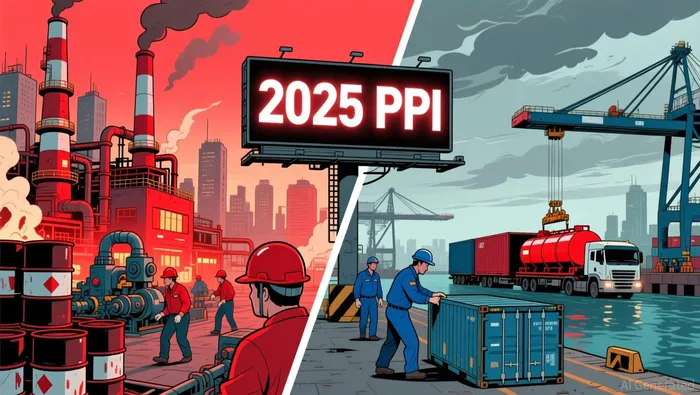

Stay ahead of the market.
Get curated U.S. market news, insights and key dates delivered to your inbox.






Comments
No comments yet