
U.S. PPI Inflation and Sector Rotation: Metals/Mining vs. Automobiles in 2025
 Aime Summary
The U.S. Producer Price Index (PPI) for November 2025 painted a nuanced picture of inflationary pressures, with headline PPI rising 3.0% year-over-year (YoY), surpassing the 2.7% forecast. While core PPI (excluding food and energy) also hit 3.0%, its flat monthly performance highlighted divergent trends across sectors. This data underscores a critical inflection point for investors: the interplay between industrial resilience and consumer-driven volatility. Nowhere is this clearer than in the contrasting trajectories of the Metals/Mining and Automobiles sectors, where PPI dynamics are reshaping capital allocation strategies.
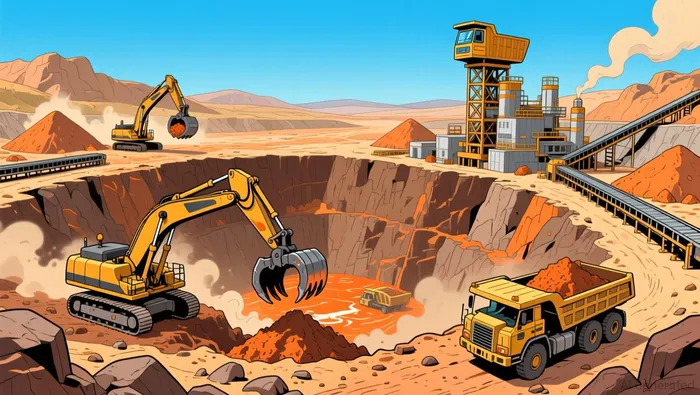
Metals/Mining: The Inflation Hedge Reinvented
The Metals/Mining sector has long been a barometer of industrial health, and 2025's PPI data reaffirms its strategic value. With energy prices surging—gasoline and diesel fuel contributing significantly to the 0.2% monthly rise in final demand PPI—input costs for raw materials have spiked. This has amplified the sector's pricing power, particularly for commodities like copper, aluminum, and iron ore, which are critical to infrastructure and manufacturing.
Historical patterns reinforce this narrative. In July 2025, primary metals orders rose 1.5% to $27 billion, outperforming the 2.8% decline in overall durable goods. This divergence is not new: since 1992, the sector has averaged 0.34% growth, with sharp rebounds during periods of industrial stress. For instance, in July 2014, a 29.30% surge in primary metals followed a 32.7% plunge in non-defense aircraft orders. The sector's foundational role in global supply chains—coupled with its exposure to U.S. infrastructure spending and green energy transitions—positions it as a natural beneficiary of inflationary environments.
Investors should focus on equities with direct exposure to industrial metals and machinery. BHP GroupBHP-- (BHP) and Rio TintoRIO-- (RIO) have demonstrated resilience amid rising input costs, while industrial machinery firms like CaterpillarCAT-- (CAT) are capitalizing on infrastructure tailwinds. Capacity utilization metrics in the metals sector, currently trending upward, suggest further upside as demand for materials in EVs and renewable energy projects accelerates.
Automobiles: A Sector at a Crossroads
The Automobiles sector, by contrast, faces a more precarious outlook. While the PPI for finished goods climbed 1.2% in November, reversing a 0.6% October decline, the core PPI for finished goods stagnated at 3.2% YoY. This reflects a broader struggle: transportation equipment demand—a key proxy for automotive activity—grew only 0.4% in September 2025, down from 8.0% in August.
The sector's vulnerability is rooted in its sensitivity to macroeconomic shocks. Tariffs on imported vehicles, supply chain bottlenecks, and shifting consumer preferences (e.g., toward EVs) have created a volatile landscape. In August 2025, for example, transport equipment gains were partially driven by tariff-driven cost inflation rather than organic demand. Historically, the sector has underperformed during durable goods contractions, as seen in the -22.20% plunge in August 2014.
While niche opportunities in EV supply chains remain intact, the broader sector requires caution. TeslaTSLA-- (TSLA) and legacy automakers alike face margin pressures from raw material costs and regulatory shifts. For now, overexposure to automakers and parts suppliers is ill-advised until durable goods data signals sustained demand.
Strategic Allocation: Balancing Cyclical and Defensive Bets
The November PPI data underscores a clear sector rotation playbook: overweight Metals/Mining for cyclical outperformance and underweight Automobiles until fundamentals stabilize. A backtested strategy from 1992 to 2025 shows that periods of durable goods growth (e.g., 29.30% in July 2014) are reliably followed by Metals/Mining outperformance. Conversely, Automobiles underperforms during contractions, as seen in August 2014.
Investors should monitor two key indicators:
1. Durables Ex Defense Orders: A rebound in this metric could signal a broader industrial recovery.
2. Metals Sector Capacity Utilization: Rising utilization rates would validate ongoing strength in the sector.
For those seeking defensive exposure, primary metals and industrial machinery equities offer a hedge against inflation. Meanwhile, the Automobiles sector remains a high-beta play, best approached with caution until affordability and policy risks abate.
Conclusion: Navigating the 2025-2026 Transition
As the U.S. economy transitions into 2026, the interplay between Metals/Mining and Automobiles will shape market dynamics. The former's resilience in the face of PPI-driven inflation and infrastructure tailwinds positions it as a cornerstone of a balanced portfolio. The latter, however, remains at a crossroads, with its fortunes hinging on demand normalization and policy clarity.
For investors, the message is clear: align capital with the sectors best positioned to weather—and profit from—the evolving inflationary landscape. The November PPI data is not just a number—it's a signal to rebalance portfolios for the cycles ahead.

Stay ahead of the market.
Get curated U.S. market news, insights and key dates delivered to your inbox.




Comments
No comments yet