
Powering Through Outages: How Grid Modernization Creates Investment Gold Mines
The recent power outages in Easton, Pennsylvania, caused by Met-Ed's aging infrastructure, have become a stark symbol of a nationwide crisis: the U.S. grid is nearing its breaking point. With extreme weather, rising demand, and a reliance on outdated systems, utilities face a $1.5 trillion modernization bill by 2030—a figure that presents a once-in-a-generation opportunity for investors. From smart grid technologies to renewable storage, companies positioned to address grid reliability risks are primed for growth.
The Met-EdMET-- Outage: A Microcosm of Systemic Risks
The January 2025 outage in Easton's Pine Street area, caused by simultaneous failures in underground equipment, revealed vulnerabilities in both urban and rural grids. Met-Ed's response—upgrading substations, installing remote control switches, and relocating equipment—illustrates the costly fixes required to meet modern demands. Yet, these localized fixes are a drop in the bucket. The utility's $382 million infrastructure plan, approved by regulators, hints at the scale of investment needed to avert blackouts.
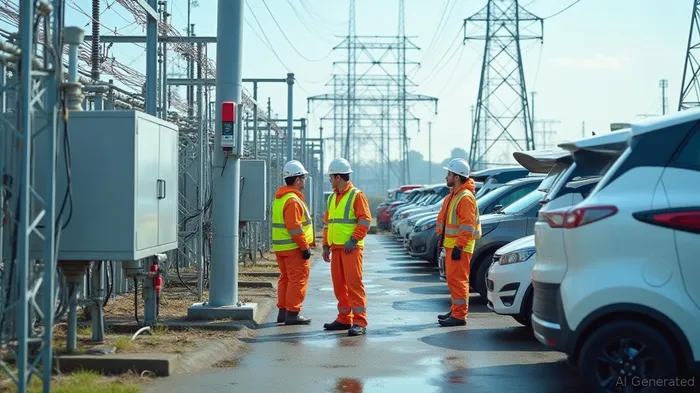
Why Grid Reliability Matters Now
The North American ElectricAEP-- Reliability Corporation (NERC) warns of elevated risks across six regions in 2025, including PJM Interconnection, which supplies power to 65 million people. Key drivers include:
- Resource Adequacy Gaps: Retiring coal plants are outpacing additions of renewables and storage, leaving grids vulnerable to heatwaves.
- Weather Volatility: Extreme temperatures and storms are straining aging equipment.
- Inverter-Based Resources (IBRs): Solar and wind power, while critical to decarbonization, require robust grid management to prevent instability.
PJM's summer outlook underscores the urgency: peak demand could exceed 166,000 MW, surpassing available capacity in extreme heat scenarios. The result? Blackouts, rolling brownouts, or higher prices—events that will push regulators and investors to act.
Investment Plays: Where to Find Resilience
The path to grid resilience is paved with opportunities. Here's where to look:
1. Smart Grid Technologies
Utilities are racing to install sensors, automation tools, and data analytics to preempt failures. Companies like Eaton (ETN), which supplies grid automation solutions, and Schneider Electric (SBFG.PA), a leader in smart grid software, stand to benefit.
2. Renewable Energy Storage
Batteries and hydrogen storage are critical to balancing variable renewables. Tesla (TSLA), with its Powerwall and grid-scale Megapacks, and NextEra Energy (NEE), investing in solar-plus-storage projects, are positioned to capture this $100 billion market by 2030.
3. Regulated Utilities with Growth CapEx
Utilities with approved rate cases and modernization plans offer stable returns. Dominion Energy (D) and American Electric Power (AEP), which have multi-billion-dollar grid upgrade plans, are favored by income-focused investors. Regulated utilities typically enjoy guaranteed returns, shielding them from commodity price swings.
The Federal Infrastructure Tailwind
The Inflation Reduction Act and bipartisan infrastructure bill have allocated $65 billion for grid modernization, with states like Pennsylvania fast-tracking projects. Companies with federal project pipelines, such as GridPoint (acquired by Siemens Energy) or Invenergy, are well-positioned to secure grants and contracts.
Risks and Considerations
- Regulatory Delays: Permitting and rate case approvals can slow execution.
- Execution Risks: Overloaded grids may still falter despite upgrades.
- Policy Volatility: Federal energy mandates could shift under new administrations.
Conclusion: Bet on the Grid's Lifeline
The Met-Ed outages are a wake-up call: grid modernization is no longer optional. Investors should prioritize companies with scalable solutions—smart grid tech, storage, and regulated utilities with clear CapEx plans—to capitalize on this $1.5 trillion transition. While risks exist, the combination of federal funding, rising demand, and climate-driven urgency ensures this is a multi-year growth story.
Investment Thesis: Overweight utilities with modernization pipelines and tech enablers like Eaton and NextEra. Avoid laggards still reliant on outdated infrastructure. The grid's future is being built today—and the spoils will go to those who act now.

Stay ahead of the market.
Get curated U.S. market news, insights and key dates delivered to your inbox.




Comments
No comments yet