
Powering Through Crisis: Renewable Grid Resilience Investments for a Volatile World
The recent power outages in New Orleans—a city already reeling from Hurricane Ida's devastation—paint a stark picture of the fragility of America's aging energy infrastructure. When a combination of high demand, generator failures, and grid mismanagement left over 100,000 customers in the dark for hours in May 2025, it underscored a critical truth: the old ways of powering cities are failing. But this crisis is also an opportunity. Companies building smarter, decentralized, and renewable-centric energy systems are poised to capitalize on a global shift toward grid resilience.
The New Orleans Case Study: A Microcosm of Systemic Failure
The May 2025 outage was triggered by a trifecta of factors:
1. Demand Surges: Scorching temperatures drove electricity use beyond forecasts, even before summer's peak.
2. Generator Failures: Entergy's offline units—some under routine maintenance, others due to unplanned breakdowns—exposed single points of failure in a centralized system.
3. Grid Inflexibility: MISO's last-resort “load-shed” measure, which cut power to prevent collapse, highlighted how outdated transmission systems struggle to balance supply and demand in real time.
The outage's ripple effects were immediate: hospitals on backup generators, schools closed, and businesses scrambling to protect perishables. But the deeper issue is systemic. Louisiana's grid, like much of the U.S. system, relies on centralized fossil fuel plants and aging infrastructure. Over the past decade, outage durations have risen by 50%, and the state's Public Service Commission now admits it lacks the expertise and resources to enforce modern standards.
The Investment Opportunity: Building Grids That Don't Break
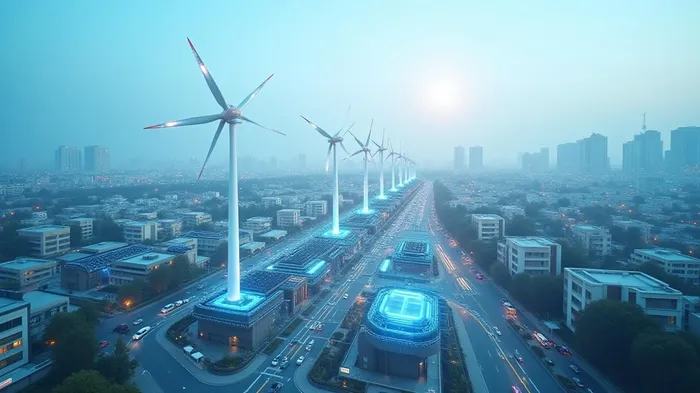
The solution lies in renewables-driven grid resilience—a shift from monolithic, fossil-fuel-dependent systems to decentralized networks powered by solar, wind, and storage, managed by AI-driven smart grids. Companies leading this transition are not just future-proofing energy supplies but creating multi-billion-dollar markets. Here's why investors should act now:
1. Smart Grids: The Nervous System of the New Energy Era
Traditional grids are passive; smart grids are adaptive. By integrating IoT sensors, AI, and real-time data analytics, these systems can predict outages, reroute power, and balance supply and demand dynamically.
The market is projected to exceed $200 billion by 2030, growing at a 9% CAGR. Companies like GE Digital (a unit of GEHC) and Schneider Electric (SU) are already pioneers, with contracts to modernize grids in Texas, California, and the EU.
2. Decentralized Energy: Power Where You Need It
The New Orleans outage revealed a critical flaw: reliance on distant centralized plants leaves communities vulnerable. Decentralized systems—such as community solar, microgrids, and rooftop storage—offer redundancy.
Take Tesla (TSLA): Its Powerwall home batteries and utility-scale Megapacks allow homes and businesses to operate independently during outages. In 2023, Tesla's energy storage revenue surged 50%, and its Autobidder software (which optimizes grid resources) is now deployed in 18 states.
Meanwhile, NextEra Energy (NEE)—the world's largest renewable operator—is building hybrid solar-plus-storage projects that can island themselves during grid failures. Its stock has outperformed the S&P 500 by 40% over five years.
3. Renewables Integration: The End of Fossil Fuel Dependence
Natural gas, which fuels 72% of Louisiana's power, is both unreliable (prone to freeze-offs and supply bottlenecks) and a climate liability. Solar and wind, paired with storage, are now cheaper than gas in most U.S. regions.
Pattern Energy (PEGI) is a standout play here. Its 1.2 GW solar project in West Texas, paired with 600 MW of storage, can power 200,000 homes reliably—even during peak demand.
Regulatory Tailwinds and Rising Demand
The writing is on the wall for utilities. Louisiana's Public Service Commission is mandating energy efficiency programs, while federal policies like the Inflation Reduction Act offer tax credits for grid modernization. Meanwhile, corporations like Meta (META)—which plans an AI data center in Louisiana—are demanding 24/7 renewable power, accelerating the shift.
Investors ignoring this trend risk missing out. Utilities like Dominion Energy (D) and Orsted (ORSTED.CO), which are diversifying into offshore wind and storage, are already attracting institutional capital.
Act Now: The Grid's Evolution is Irreversible
The New Orleans outages were a wake-up call. The companies building grids that can withstand extreme weather, demand spikes, and aging infrastructure are not just mitigating risk—they're creating it.
Portfolio Moves to Consider:
- Buy: NextEra Energy (NEE), Tesla (TSLA), Schneider Electric (SU).
- Hold for Growth: Pattern Energy (PEGI), GEHC, Dominion Energy (D).
- Avoid: Fossil-fuel-dependent utilities lacking grid modernization plans.
The era of “set it and forget it” energy systems is over. The next decade belongs to the companies turning grid resilience into a competitive advantage—and investors who back them.
Investors: The time to act is now. The grid of the future won't wait.

Delivering real-time insights and analysis on emerging financial trends and market movements.
Latest Articles
Stay ahead of the market.
Get curated U.S. market news, insights and key dates delivered to your inbox.
AInvest
PRO
AInvest
PRO



Comments
No comments yet