
Powering Through Crisis: Grid Resilience as the Next Big Investment Theme
The recent power outages in Portland, Oregon, during June 2025, which left thousands without electricity amid record heat, underscore a pressing reality: the U.S. grid is aging, overstretched, and increasingly vulnerable to extreme weather and rising demand. This crisis has become a catalyst for rethinking energy infrastructure—a shift that opens compelling investment opportunities in grid modernization, renewable storage, and smart technology. Here's why investors should pay attention.
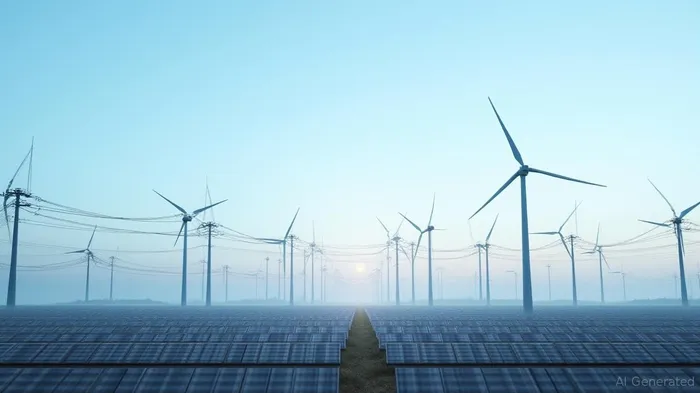
The Portland Outages: A Microcosm of Systemic Risks
The June 2025 outages were triggered by heatwaves pushing air conditioning demand to extremes, overwhelming an already strained grid. Portland General Electric (PGE) reported 72,000 customers affected at peak, with lingering issues resolved only after midnight. While immediate causes included surging demand, the root problem lies deeper:
- Aging Infrastructure: PGE's grid, like much of the U.S. system, relies on equipment over 30 years old, designed for 20th-century demand.
- Transmission Bottlenecks: The Bonneville Power Administration (BPA), which manages regional high-voltage lines, has approved only one major renewable project since 2015, creating grid congestion.
- Climate Stress: Heatwaves, wildfires, and storms are intensifying, stressing systems unprepared for extreme conditions.
A 2024 seismic risk study by PGE highlighted how even a 6.8-magnitude earthquake on the Portland Hills Fault could cause $180 million in economic losses—a figure reduced to $117 million with targeted upgrades to eight critical substations. This illustrates how infrastructure modernization directly mitigates risk.
The Investment Case: Sectors to Watch
The Portland crisis is not an outlier. Utilities nationwide face a $1.5 trillion modernization bill by 2030, per the Edison Foundation. Investors should focus on three areas:
1. Smart Grid Technologies
Smart grids use AI, sensors, and automation to balance supply and demand in real time. Companies like General Electric (GE) and Schneider Electric are leaders in grid management systems.
Why invest? Smart grids reduce outages and integrate renewables efficiently. Portland's grid, for instance, could use dynamic load management to prevent future overloads.
2. Energy Storage Solutions
Batteries and pumped hydro storage are critical to stabilizing grids with intermittent renewables. Firms like Tesla (TSLA) and NextEra Energy (NEE) dominate this space.
Why invest? Without storage, solar/wind power cannot meet peak demand. Portland's reliance on hydropower, which is declining due to droughts, makes storage investments like Tesla's Megapack systems vital.
3. Utility-Scale Infrastructure Funds
Infrastructure funds like Brookfield Renewable Partners (BEP) and BlackRock Global Utilities Fund (BGU) provide diversified exposure to grid projects.
Why invest? Utilities are boosting capital expenditures (capex) on transmission and resilience. PGE's 2024 capex rose 15% to $1.2 billion, with 40% allocated to grid hardening and digitization.
Regulatory Tailwinds and Expert Forecasts
- Policy Push: The Inflation Reduction Act (IRA) offers $370 billion in clean energy subsidies, including grid resilience grants. Oregon's 2025立法 failed to penalize missed renewable targets, but federal funding is now filling gaps.
- Expert Projections: BloombergNEF estimates $1.2 trillion will be spent globally on grid modernization by 2030, with U.S. utilities accounting for 30%.
Risks and Considerations
- Regulatory Delays: BPA's slow permitting process remains a bottleneck.
- Capital Intensity: Upgrades require long-term commitments from utilities and investors.
Conclusion: Allocate Strategically to Reshape Energy's Future
The Portland outages are a wake-up call. Investors ignoring grid resilience risk missing a decade-long boom in infrastructure spending. Focus on companies and funds that enable smarter, more flexible grids—like smart tech leaders (GE, Schneider), storage innovators (Tesla, NEE), and infrastructure funds (BEP).
As climate volatility and demand rise, the grids that survive will be those built to adapt. The Portland case isn't just about power lines—it's about the next generation of energy security.
Investment Takeaway: Add 5-10% of your portfolio to smart grid ETFs (e.g., SPDR S&P Infrastructure ETF (INFRA)) or sector-specific stocks. The grid's transformation is underway—don't miss the ride.

Delivering real-time insights and analysis on emerging financial trends and market movements.
Latest Articles
Stay ahead of the market.
Get curated U.S. market news, insights and key dates delivered to your inbox.


AInvest
PRO
AInvest
PRO



Comments
No comments yet