
Powering Through Chaos: The Rise of Decentralized Energy and Its Investment Potential
The U.S. power grid faces an existential crisis. Extreme weather, aging infrastructure, and rising demand have turned once-rare outages into a routine threat, costing the economy $150 billion annually and pushing businesses and households to seek alternatives. Enter decentralized energy systems—solar+storage, microgrids, and distributed generation—positioned to redefine resilience. This is not just about avoiding blackouts; it's a multi-billion-dollar opportunity for investors betting on companies enabling grid independence.
The Grid's Vulnerabilities Are Fueling Innovation
Recent data paints a stark picture. In 2023, the average U.S. consumer endured 5.5 hours of outages, with prolonged “medically significant” outages (over 8 hours) rising sharply. These disruptions cost businesses more than just downtime: a 2025 study by the USC Price School found that indirect costs—like backup generators, hotel stays, and supply chain delays—account for 70% of total outage-related losses. For example, a two-week outage in Chicago could slash GDP by $17.1 billion, with most losses from resilience measures. This underscores a critical shift: resilience is now a core business need, not a luxury.
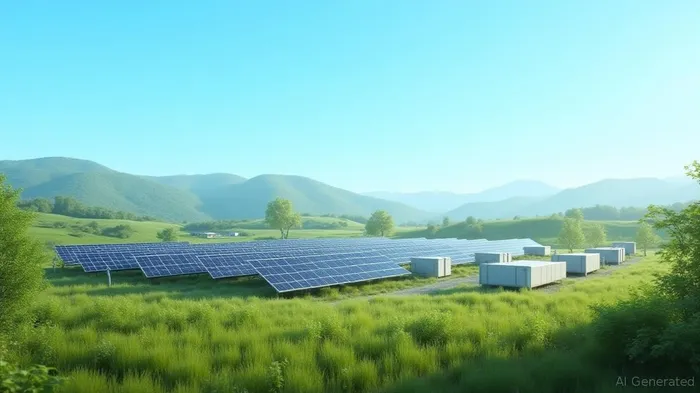
Enter decentralized energy systems, which bypass centralized grids entirely. Solar+storage systems allow households and businesses to generate and store their own power, while microgrids (small-scale grids serving communities or campuses) offer redundancy. Both are seeing explosive growth. The U.S. solar capacity pipeline has surged to 2,600 GW, and utility-scale battery storage now accounts for 48% of energy storage, up from 30% in 2020. The global microgrid market is projected to grow at a 7.3% CAGR, reaching $50 billion by 2030.
Policy and Profitability: A Dual Catalyst
Federal and state policies are accelerating adoption. The Infrastructure Investment and Jobs Act (IIJA) allocated $73 billion for grid modernization, while the Inflation Reduction Act (IRA) offers tax credits for residential and commercial solar+storage (up to 30%). State-level mandates, such as California's requirement for new homes to include solar panels, further drive demand. These subsidies reduce upfront costs, making decentralized systems economically viable even without outages.
For investors, the ROI case is compelling. A home solar+storage system pays for itself in 6–8 years through energy savings and avoided outage costs, while commercial installations offer 5–7-year paybacks. Microgrids, though costlier to build, deliver 10–15% annual returns over 20 years by combining energy savings, avoided outages, and federal incentives. The Texas 2021 winter storm, which caused $130 billion in losses, has become a rallying cry for resilience investments: companies like NextEra Energy (NEE) and Tesla (TSLA) now see microgrid and storage projects as core growth engines.
Where to Invest: The Decentralization Stack
- Solar Hardware & Storage:
- Tesla (TSLA): Leading in residential Powerwall batteries and utility-scale Megapacks. Its vertical integration from panels to storage gives it a cost edge.
- Enphase Energy (ENPH): Microinverter specialist enabling efficient rooftop solar systems, critical for distributed generation.
First Solar (FSLR): Dominates utility-scale solar panels, with thin-film technology ideal for large storage projects.
Microgrid & Energy Management Software:
- Gridscape (GRID): Developing AI-driven microgrid controllers to optimize energy use in real time.
PowerSecure (POWR): Specializes in critical infrastructure microgrids for hospitals and data centers.
Utilities Embracing Decentralization:
- NextEra Energy (NEE): The largest U.S. renewable generator, expanding into storage and grid resilience.
Dominion Energy (D): Investing in offshore wind and microgrid pilots to diversify its portfolio.
Infrastructure Firms:
- Ameresco (AMRC): Builds solar+storage projects for municipalities and corporations, benefiting from IRA tax credits.
- Fluor (FLR): Leverages its engineering expertise to design and deploy large-scale microgrids.
Risks and Considerations
- Regulatory Hurdles: Permitting delays for projects and utility resistance to “lost customers” could slow adoption.
- Supply Chain Volatility: Solar panel and battery component shortages (e.g., lithium, cobalt) remain a risk.
- Weather Uncertainty: Extreme events may outpace current decentralized systems' capabilities, requiring ongoing innovation.
Conclusion: A Shift in Power Dynamics
The grid's fragility is rewriting the rules of energy investment. Companies enabling decentralized systems are no longer niche players—they're strategic partners for businesses and governments seeking to avoid the $150 billion outage toll. With federal subsidies, corporate net-zero commitments, and consumer demand converging, this sector offers high growth, low correlation to macroeconomic downturns, and a hedge against grid instability. Investors who allocate capital now to solar+storage, microgrids, and enabling software stand to profit as the world moves from a single point of failure to a distributed network of resilience.

Stay ahead of the market.
Get curated U.S. market news, insights and key dates delivered to your inbox.


AInvest
PRO
AInvest
PRO



Comments
No comments yet