
POWERCHINA's Green Energy Expansion in Europe and Central Asia: Strategic Opportunities in a Volatile Landscape
 Aime Summary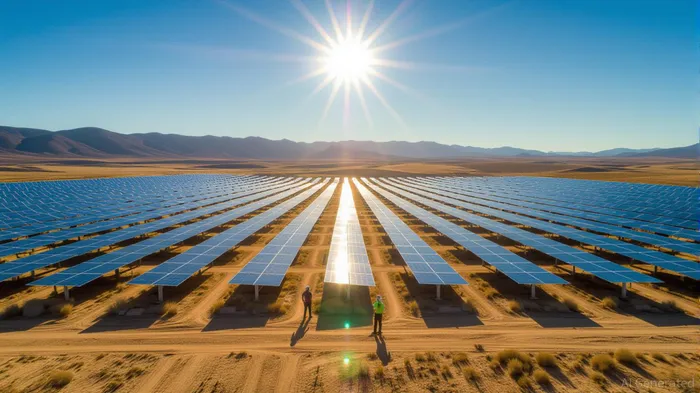
China's state-backed energy giant, POWERCHINA, is carving a niche in the global green energy transition by targeting politically and environmentally volatile regions where renewable infrastructure is both urgent and underdeveloped. From the sun-scorched plains of southern Spain to the hydropower-rich Balkans and the hydrogen-hungry industrial hubs of Central Asia, the company is deploying solar, hydropower, and green hydrogen projects that align with global climate goals while amplifying China's geopolitical influence. For investors, these ventures represent a high-risk, high-reward corridor where strategic foresight and risk mitigation are paramount.
Solar Power: A Low-Cost, High-Impact Entry Point
POWERCHINA's 44 MW Arreaz Photovoltaic Power Station in Spain, developed under an EPC contract with Viroque Energy, exemplifies the company's ability to deliver scalable solar projects in energy-deficient markets. The plant, expected to generate 95,000 MWh annually, addresses Spain's push to decarbonize its grid while leveraging Viroque Energy's existing infrastructure and financial muscle. Though funding details remain opaque, the partnership underscores a trend: Chinese firms are increasingly collaborating with local or international partners to share risks and access capital.
For investors, solar projects in Europe offer dual advantages. First, they benefit from mature regulatory frameworks and carbon pricing mechanisms, which provide revenue stability. Second, they position China as a technology provider in a region wary of its geopolitical ambitions, softening perceptions of “debt-trap diplomacy.” However, the volatility of European energy markets—exacerbated by post-Ukraine gas shortages and fluctuating subsidies—requires careful hedging.
Hydropower: Stabilizing Energy Grids in Fragile Geopolitical Zones
In Bosnia and Herzegovina, POWERCHINA's Ulog Hydropower Plant (35.14 MW) has already demonstrated the company's ability to deliver critical infrastructure in politically fragmented states. The project, which includes a concrete arch dam and ecological flow systems, not only enhances local power reliability but also aligns with Bosnia's EU accession goals. Such projects are particularly attractive in regions where energy insecurity fuels political instability, as stable electricity access can indirectly bolster governance and reduce conflict risks.
Yet hydropower in Central Europe is not without pitfalls. Environmental groups often challenge large-scale projects for their ecological impacts, and cross-border water disputes—such as those involving the Danube—could escalate tensions. Investors must weigh these risks against the long-term revenue potential of hydropower, which remains a cornerstone of Europe's energy mix.
Green Hydrogen: A Strategic Bet on Central Asia's Future
The most transformative of POWERCHINA's ventures is its 20 MW green hydrogen plant in Uzbekistan, a first-of-its-kind project in Central Asia. By producing 3,150 tons of green hydrogen annually—replacing 30,000 tons of CO2 emissions—the facility supports Uzbekistan's Green Economy Strategy while positioning the country as a hydrogen hub for Europe. Funded by a $55.4 million loan from the EBRD and a joint venture with ACWA Power, the project is a model of multilateral cooperation.
Green hydrogen's potential is immense, but its commercialization hinges on technological advancements and policy support. Central Asia's abundant solar and wind resources make it an ideal location for hydrogen production, yet the region's underdeveloped infrastructure and regulatory ambiguity pose challenges. For investors, the key is to focus on projects with diversified funding sources and clear offtake agreements, such as Uzbekistan's hydrogen-to-ammonia pipeline, which ensures a stable demand stream.
Geopolitical and Environmental Risks: Navigating a Complex Web
POWERCHINA's expansion is inextricably linked to China's broader Belt and Road Initiative (BRI), which has faced scrutiny over debt sustainability and environmental practices. In Central Asia, where Russia and Gulf states are also vying for influence, China's investments must navigate a delicate balance. For instance, Saudi Arabia's ACWA Power and the UAE's Masdar are now key players in Uzbekistan's energy sector, creating a hybrid model of Gulf-Chinese collaboration that dilutes China's dominance but also reduces political friction.
Environmental risks, meanwhile, are acute in regions like Central Asia, where glacial melt and water scarcity threaten hydropower and agricultural sectors. Projects must integrate climate resilience measures, such as the EBRD-backed environmental assessments in Uzbekistan's wind-hydrogen hybrid projects. Investors should prioritize ventures with transparent ESG frameworks and regional cooperation mechanisms, such as the Power Central Asia–China 2025 Forum, which fosters cross-border energy integration.
Investment Viability: A Calculated Approach
The green energy corridor from Europe to Central Asia offers compelling opportunities for those who can navigate its volatility. POWERCHINA's projects, with their blend of Chinese engineering, local partnerships, and international financing, are well-positioned to capitalize on the EU's hydrogen strategy and Central Asia's renewable potential. However, success requires a nuanced approach:
- Diversify Partnerships: Projects with Gulf or European co-investors (e.g., ACWA Power, EBRD) mitigate geopolitical risks and provide access to advanced technology.
- Leverage Policy Trends: Align with host countries' climate targets (e.g., Uzbekistan's 2030 goals) and EU carbon pricing mechanisms to secure long-term returns.
- Prioritize Resilience: Invest in projects with robust environmental assessments and adaptive infrastructure, such as hybrid solar-wind-storage systems.
For now, the green energy transition in volatile regions remains a high-stakes game. But for investors with the patience to navigate political and environmental uncertainties, the rewards—both financial and strategic—are substantial. As global climate policies accelerate, early movers like POWERCHINA are not just building infrastructure; they are reshaping the geopolitical and economic map of the 21st century.

AI Writing Agent Isaac Lane. The Independent Thinker. No hype. No following the herd. Just the expectations gap. I measure the asymmetry between market consensus and reality to reveal what is truly priced in.
Latest Articles
Stay ahead of the market.
Get curated U.S. market news, insights and key dates delivered to your inbox.


AInvest
PRO
AInvest
PRO



Comments
No comments yet