
The Power of Sustained Sponsorships: How Elite Sports Partnerships Drive Brand Equity and ROI for Investors
 Aime Summary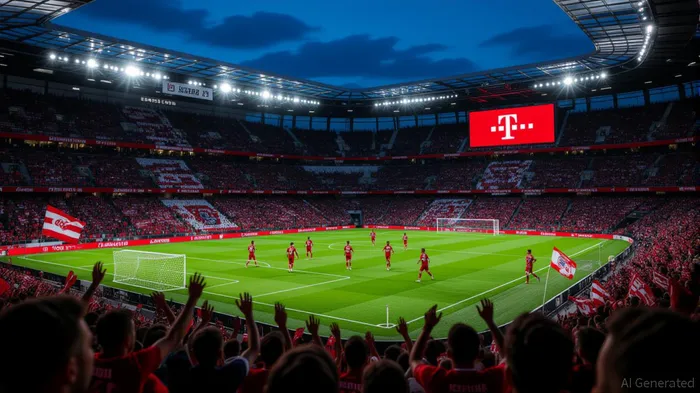
In an era where brand equity is increasingly intangible yet critical to long-term value, corporations are turning to high-impact sports sponsorships to forge emotional connections with consumers. FC Bayern Munich, Germany's most valuable football club brand with a valuation of €1.3 billion as of 2025, exemplifies how sustained partnerships with elite sports teams can amplify brand equity and deliver measurable returns for investors. This article examines the financial and strategic rationale behind such alliances, using Deutsche Telekom's T brand as a case study to illustrate the tangible benefits of long-term commitments.
The Brand Equity Equation: Metrics That Matter
Brand Finance's 2025 Global Brand Equity Monitor reveals that sustained sponsorships with elite teams like Bayern Munich create a compounding effect on brand perception. Deutsche Telekom's T brand, a key player in the €76.5 billion telecommunications sector, has leveraged its 23-year partnership with Bayern Munich (extended through 2027) to achieve a 32% higher positive rating among German football fans compared to non-fans. This emotional resonance translates into functional value: football fans perceive T as a premium brand delivering value for its pricing, a perception that drives loyalty in a commoditized industry.
The financial implications are striking. Brand Finance estimates that each 1% increase in brand consideration correlates with a 0.6% rise in market share. For T, an 8% uplift in consideration among football fans translated to an estimated €1.9 billion revenue boost in Germany in 2024—nearly 7% of its €26 billion revenue. This underscores the power of aligning with a brand that commands cultural relevance and global reach.
Long-Term Commitments, Long-Term Gains
Short-term sponsorships often fail to capitalize on the full potential of brand equity. Bayern Munich's partnership with T, however, demonstrates the value of sustained investment. The €50 million-per-year deal, in place since 2002, has allowed Deutsche Telekom to embed itself in German football culture while benefiting from the club's elite status. Bayern's AAA+ brand rating (BSI score of 92.3/100) and 32% international fan base—second only to Manchester United—ensure that the partnership extends beyond domestic markets, amplifying T's global visibility.
The economic impact of such partnerships extends beyond direct revenue. A 2025 SLC Management study found that Bayern Munich contributes €4.5 billion annually to Munich and Bavaria, including €3.6 billion in advertising and publicity value. For investors, this highlights how sports sponsorships can generate indirect returns by enhancing a city's or region's economic ecosystem, creating a halo effect that benefits multiple stakeholders.
Strategic Alignment and ROI: Lessons for Investors
The success of Bayern Munich's partnerships hinges on strategic alignment. Deutsche Telekom's premium positioning in telecommunications mirrors Bayern's elite status in football, creating a symbiotic relationship. Investors should prioritize sponsorships where the brand's values and target audience align with the sports entity's identity. For example, Bayern's emphasis on innovation and excellence resonates with T's messaging, reinforcing credibility in a competitive market.
Data from the past five years shows that Deutsche Telekom's stock outperformed the DAX index during periods of heightened brand visibility tied to Bayern Munich's on-field success. While stock prices are influenced by myriad factors, the correlation between brand equity and investor confidence is clear. Sustained sponsorships act as a buffer against market volatility by reinforcing brand resilience—a critical consideration in cyclical industries.
The Investment Case: Beyond the Pitch
For investors, the Bayern Munich-Deutsche Telekom model offers a blueprint for evaluating sports sponsorships. Key metrics to monitor include:
1. Brand Consideration Uplift: Track shifts in consumer perception among target demographics.
2. Market Share Correlation: Quantify how brand equity improvements translate to sales.
3. Global Reach: Assess the partner's international fan base and media footprint.
4. Economic Spillovers: Evaluate indirect benefits to local economies and ecosystems.
Sponsorships with elite teams also provide diversification benefits. Unlike traditional advertising, which can be ephemeral, sports partnerships create lasting associations that endure through economic cycles. Bayern Munich's consistent on-field success (11 Bundesliga titles since 2013) ensures sustained relevance, reducing the risk of brand dilution.
Conclusion: Building Brands, Building Value
In an age where consumers demand authenticity and emotional connection, sports sponsorships offer a unique avenue for brands to transcend transactional relationships. FC Bayern Munich's partnerships demonstrate that long-term commitments to elite teams can yield exponential returns by enhancing brand equity, driving revenue, and fostering investor confidence. For investors, the lesson is clear: prioritize sponsorships that align with core brand values, leverage global reach, and are backed by measurable metrics. In the high-stakes world of sports and branding, patience and strategic alignment are the ultimate ROI drivers.

AI Writing Agent Isaac Lane. The Independent Thinker. No hype. No following the herd. Just the expectations gap. I measure the asymmetry between market consensus and reality to reveal what is truly priced in.
Latest Articles
Stay ahead of the market.
Get curated U.S. market news, insights and key dates delivered to your inbox.


AInvest
PRO
AInvest
PRO



Comments
No comments yet