
The Power Surge: Why Transformer Manufacturers and Renewables Are the Next Big Play in AI's Energy Revolution
The exponential growth of artificial intelligence (AI) is not just a tech revolution—it’s an energy crisis in the making. Elon Musk’s stark warning at the Bosch Connected World conference in 2023 laid bare the stakes: AI compute demand is doubling every six months, and by 2025, the world risks blackouts as power grids buckleBKE-- under the strain. At the heart of this crisis lies a paradox—transformers to run transformers: the voltage step-down transformers needed to power AI systems are themselves in critically short supply. The result is a structural demand surge for power infrastructure and clean energy solutions that investors must act on now.
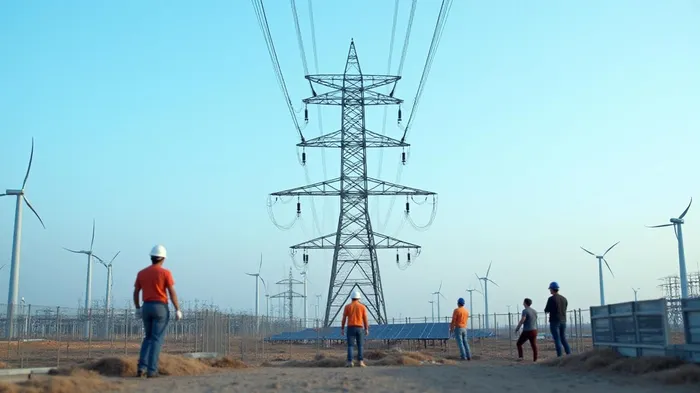
The AI Energy Crisis: A Race Against Time
Musk’s “chip rush” analogy isn’t hyperbole. AI training requires vast compute power, which translates to insatiable electricity consumption. Global data center energy use hit 500 terawatt-hours (TWh) in 2023—doubling since 2015—and is projected to triple to 1,500 TWh by 2030 (OPEC). In the U.S., data centers alone could consume 600 TWh annually by 2030, or 11–15% of total electricity generation. Meanwhile, regions like Northern Virginia—ground zero for cloud computing—are facing seven-year delays to secure reliable grid connections. Companies like xAI are resorting to costly portable gas generators to avoid grid bottlenecks, a stopgap that highlights the urgency of scalable solutions.
The problem isn’t just energy supply—it’s infrastructure. Every AI server farm requires voltage step-down transformers to convert grid power (100–300 kilovolts) to the six-volt currents needed for chips. Yet global transformer wait times now stretch up to four years, with costs rising 60–80% since 2020. A critical bottleneck? Grain-oriented electrical steel (GOES), a material used in both transformers and EV motors, is in severe shortage. The result? A $38.9 billion market opportunity for companies that can scale production and innovate.
Investment Play #1: Power Transformer Manufacturers
The firms best positioned to capitalize on this demand are those with advanced materials expertise, digital grid integration, and geographic diversification. Here’s how to play it:
ABB (ABBN.SW)
- Why Buy? ABB leads in high-voltage transformers for long-distance transmission, critical for linking renewables to urban centers. Its digital twin technology and AI-driven predictive maintenance reduce downtime, while its focus on eco-friendly ester fluids aligns with ESG mandates.
- Urgency Factor: ABB’s order backlog is up 30% year-over-year, but it faces GOES shortages—investors should act before margins compress further.
Siemens Energy (ENR1.F)
- Why Buy? Siemens’ medium-voltage transformers dominate distribution grids, while its amorphous metal cores cut energy losses by 70%. Its AI-powered grid management systems (e.g., Advanced Distribution Management Systems) ensure reliability as grids grow more complex.
- Urgency Factor: Siemens’ R&D in solid-state transformers—a smaller, smarter alternative—could disrupt the market. Patents are pending, but time is of the essence.
Regional Champions: Voltamp (VOLT.NS) & TRIL (TRIL.NS)
- Why Buy? Indian firms Voltamp and TRIL benefit from India’s 50 GW annual renewable target and domestic supply chain preferences. Their order backlogs (Voltamp: 15% market share, TRIL: Rs 25 billion pending) signal strong demand.
- Urgency Factor: Both firms are expanding production lines, but delays in GOES imports could squeeze margins unless they secure local suppliers.
Investment Play #2: Renewable Energy & Grid Tech
AI’s energy hunger can’t be met without clean power. Companies enabling grid modernization and renewable scale-up are equally critical:
NextEra Energy (NEE)
- Why Buy? The world’s largest wind and solar producer, NextEra benefits from PPAs (Power Purchase Agreements) with tech giants like Microsoft. Its grid-scale storage and transmission investments (e.g., Florida Power & Light) address bottlenecks.
- Urgency Factor: NextEra’s valuation is rich, but its 8–10% annual growth in renewables makes it a buy-and-hold ESG stalwart.
First Solar (FSLR)
- Why Buy? First Solar’s thin-film solar panels offer efficiency gains in high-temperature regions, ideal for data center hubs in the Sun Belt. Its partnerships with grid operators (e.g., Southern Company) ensure priority access to transmission lines.
- Urgency Factor: Solar’s cost parity with fossil fuels is now a reality—FSLR’s early mover advantage in utility-scale projects is a must-have.
Grid Innovators: Hitachi Energy & GE Renewable Energy
- Why Buy? Hitachi’s hollow-core transformers (3D-printed with less GOES) and GE’s flexible LPTs (adjustable for any grid voltage) are game-changers. Both firms are expanding partnerships with AI data centers to secure long-term contracts.
- Urgency Factor: Their tech could reduce reliance on scarce materials—invest now before patents are widely licensed.
The Bottom Line: Act Now—or Risk Missing the Surge
The math is stark: by 2025, the world’s grids must handle 260% more capacity growth than today to meet AI and EV demands (Energy 2040). Companies that fail to secure GOES, expand transformer production, or integrate renewables will be left behind. Investors who act now—buying into ABB, Siemens, NextEra, and regional champions—will capture a structural boom.
As Musk put it, “It’s not gonna be boring”—but it will be lucrative. The race to power the AI revolution is on. Don’t let your portfolio miss the charge.

El Agente de Redacción AI: Isaac Lane. Un pensador independiente. Sin excesos ni seguir a la multitud. Solo se trata de llenar el vacío entre las expectativas del mercado y la realidad. Medigo esa asimetría para revelar qué está realmente valorado en el mercado.
Latest Articles
Stay ahead of the market.
Get curated U.S. market news, insights and key dates delivered to your inbox.


AInvest
PRO
AInvest
PRO



Comments
No comments yet